












Influence of ionizing dopants on charge transport in organic semiconductors
Literature Information
Publication Date
2013-11-20
DOI
10.1039/C3CP53834F
Impact Factor
3.676
Authors
Antonio Abate, Daniel R. Staff, Derek J. Hollman, Henry J. Snaith, Alison B. Walker
View Original
Abstract
Ionizing chemical dopants are widely used in organic semiconductors to enhance the charge transport properties by increasing the number of mobile charge carriers. However, together with mobile charges, chemical doping produces anion–cation pairs in the organic matrix. In this work we use experimental and computational analysis to study the influence of these ionic species on the charge transport. We show that the anion–cation pairs introduced upon doping have a detrimental, doping-level dependent effect on charge mobility. For doping levels of 0.02–0.05% molar ratio with respect to the molecular organic semiconductor, the increase in conductivity from the extra mobile charges is partially cancelled by a reduction in charge mobility from traps introduced by the anion–cation pairs. As the doping concentration increases, anion–cation pairs start to overlap, resulting in a comparatively smoother potential landscape, which increases the charge mobility to values closer to the undoped semiconductor. This result has a significant, practical impact, as it shows the need to dope at or slightly above a threshold level, which depends on the specific host-dopant combination.
Recommended Journals
Related Literature
Secondary-structure phase formation for semiflexible polymers by bifurcation in hyperphase space
Michael Bachmann
2023-10-18
Paper
DOI: 10.1039/D3CP02815A
Use of bound state methods to calculate partial and total widths of shape resonances
Michael F. Falcetta, Mark C. Fair, Stephen R. Slimak, Kenneth D. Jordan, Thomas Sommerfeld
2023-10-31
Paper
DOI: 10.1039/D3CP04154A
Stannaborates: tuning the ion conductivity of dodecaborate salts with tin substitution
Thomas A. Hales, Terry D. Humphries, Anita M. D’Angelo, Craig E. Buckley, Mark Paskevicius
2023-11-06
Paper
DOI: 10.1039/D3CP03725H
The metal atomic substitution induced half-metallic properties, metallic properties and semiconducting properties in X–N4 nanoribbons
Dong Fan, Zhihao Wang, Maoye Yin, Hengshuai Li, Haiquan Hu, Feng Guo, Zhenbao Feng, Jun Li, Dong Zhang, Zhi Li, Minghui Zhu
2023-10-07
Paper
DOI: 10.1039/D3CP03983H
Origin of the enantioselectivity of alcohol dehydrogenase
Jiahui Zhou, Tao Han, Qi Wu, Meilan Huang
2023-11-06
Paper
DOI: 10.1039/D3CP04019D
High-field and fast-spinning 1H MAS NMR spectroscopy for the characterization of two-dimensional covalent organic frameworks
Nikolaj Lopatik, Ankita De, Silvia Paasch, Andreas Schneemann, Eike Brunner
2023-10-17
Paper
DOI: 10.1039/D3CP04144A
Exploring correlation effects and volume collapse during electride dimensionality change in Ca2N
Artem R. Oganov
2023-11-08
Paper
DOI: 10.1039/D3CP04472F
Thermal and electrical transport properties of two-dimensional Dirac graphenylene: a first-principles study
Changhong Zhang, Chengyi Hou, Yi Lu, Le Zhao, Haorong Wu, Hongyuan Song, Ju Rong, Lan Yu, Xiaohua Yu
2023-11-03
Paper
DOI: 10.1039/D3CP04512A
Collision-induced state-changing rate coefficients for cyanogen backbones NCN 3Σ− and CNN 3Σ− in astrophysical environments
Lola González-Sánchez, Ersin Yurtsever, Jorge Alonso de la Fuente, Cristina Sanz-Sanz, Roland Wester, Francesco A. Gianturco
2023-10-25
Paper
DOI: 10.1039/D3CP03316C
Raman scattering and spectroscopic ellipsometry studies of Sb2S3 and Sb2Se3 bulk polycrystals
Elena Hajdeu-Chicarosh, Victoria Rotaru, Sergiu Levcenko, Rosalia Serna, Ivan A. Victorov, Maxim Guc, José Manuel Merino, Máximo León
2023-10-31
Paper
DOI: 10.1039/D3CP04490D
You might also like
Compound Q&A
How should 2-Methylbenzene-1,4-diamine dihydrochloride (CAS: 615-45-2) be stored?
2-Methylbenzene-1,4-diamine dihydrochloride (CAS: 615-45-2) should be stored in ...
615-45-22-Methylbenzene-1,4-...
Compound Q&A
Is (1S,4S)-2,5-Diazabicyclo[2.2.1]heptane dihydrobromide (CAS: 132747-20-7) safe?
(1S,4S)-2,5-Diazabicyclo[2.2.1]heptane dihydrobromide is generally considered sa...
132747-20-7(1S,4S)-2,5-Diazabic...
Compound Q&A
What industries use (6-Chloropyridazin-3-YL)methanamine (CAS: 871826-15-2)?
(6-Chloropyridazin-3-YL)methanamine finds applications in the pharmaceutical ind...
871826-15-2(6-Chloropyridazin-3...
Compound Q&A
What are the main uses of 2-Fluoro-3-methylphenol (CAS: 77772-72-6)?
2-Fluoro-3-methylphenol is primarily used in the synthesis of pharmaceuticals, p...
77772-72-62-Fluoro-3-methylphe...
Compound Q&A
What precautions should be taken when handling 3-Methoxy-4-nitrobenzonitrile (CAS: 177476-75-4)?
When handling 3-Methoxy-4-nitrobenzonitrile, it is important to wear appropriate...
177476-75-43-Methoxy-4-nitroben...
Compound Q&A
What precautions should be taken when handling 1,3-Oxazolo[4,5-b]pyridine-2(3H)-thione (CAS: 211949-57-4)?
When handling 1,3-Oxazolo[4,5-b]pyridine-2(3H)-thione (CAS: 211949-57-4), it is ...
211949-57-4[1,3]Oxazolo[4,5-b]p...
Compound Q&A
What regulatory guidelines apply to 4-Ethynylbenzamide (CAS: 90347-86-7)?
4-Ethynylbenzamide (CAS: 90347-86-7) falls under various regulatory guidelines i...
90347-86-74-Ethynylbenzamide
Compound Q&A
What are the main uses of 3-(2-Ethylphenyl)-2-thioxo-4-imidazolidinone (CAS: 186822-57-1)?
3-(2-Ethylphenyl)-2-thioxo-4-imidazolidinone is primarily used as an intermediat...
186822-57-13-(2-Ethylphenyl)-2-...
Compound Q&A
What is (2-Fluoro-6-methoxyphenyl)acetic acid (CAS: 500912-19-6)?
(2-Fluoro-6-methoxyphenyl)acetic acid, also known as 4-fluoro-3-methoxybenzoic a...
500912-19-6(2-Fluoro-6-methoxyp...
Compound Q&A
What is the market or research trend for 2-[4-(Hydroxymethyl)phenoxy]ethanol (CAS: 102196-18-9)?
Market trends for 2-[4-(Hydroxymethyl)phenoxy]ethanol (CAS: 102196-18-9) indicat...
102196-18-92-[4-(Hydroxymethyl)...
Source Journal
Physical Chemistry Chemical Physics

CiteScore:
5.5
Self-citation Rate:
10.3%
Articles per Year:
3036
Physical Chemistry Chemical Physics (PCCP) is an international journal co-owned by 19 physical chemistry and physics societies from around the world. This journal publishes original, cutting-edge research in physical chemistry, chemical physics and biophysical chemistry. To be suitable for publication in PCCP, articles must include significant innovation and/or insight into physical chemistry; this is the most important criterion that reviewers and Editors will judge against when evaluating submissions. The journal has a broad scope and welcomes contributions spanning experiment, theory, computation and data science. Topical coverage includes spectroscopy, dynamics, kinetics, statistical mechanics, thermodynamics, electrochemistry, catalysis, surface science, quantum mechanics, quantum computing and machine learning. Interdisciplinary research areas such as polymers and soft matter, materials, nanoscience, energy, surfaces/interfaces, and biophysical chemistry are welcomed if they demonstrate significant innovation and/or insight into physical chemistry. Joined experimental/theoretical studies are particularly appreciated when complementary and based on up-to-date approaches.
Recommended Compounds

2,3,6-Tri-O-acetyl-4-O-(2,3,4,6-tetra-O-acetyl-beta-D-galactopyranosyl)-alpha-D-glucopyranosyl bromide
CAS Number:
4753-07-5
Molecular Formula:
C26H35BrO17
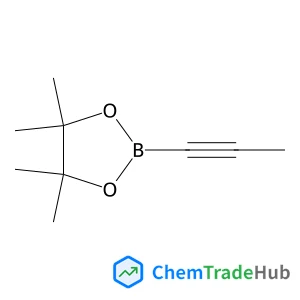
4,4,5,5-Tetramethyl-2-(1-propyn-1-YL)-1,3,2-dioxaborolane
CAS Number:
347389-75-7
Molecular Formula:
C9H15BO2

Recommended Suppliers






Disclaimer
This page provides academic journal information for reference and research purposes only. We are not affiliated with any journal publishers and do not handle publication submissions. For publication-related inquiries, please contact the respective journal publishers directly.
If you notice any inaccuracies in the information displayed, please contact us at support@chemtradehub.com. We will promptly review and address your concerns.