












Femtosecond fluorescence study of the reaction pathways and nature of the reactive S1 state of cis-stilbene
Literature Information
Publication Date
2012-01-25
DOI
10.1039/C2CP23959K
Impact Factor
3.676
Authors
Takumi Nakamura, Satoshi Takeuchi, Tetsuya Taketsugu, Tahei Tahara
View Original
Abstract
We report a femtosecond time-resolved fluorescence study of cis-stilbene, a prototypical molecule showing ultrafast olefinic photoisomerization and photocyclization. The time-resolved fluorescence signals were measured in a nonpolar solvent over a wide ultraviolet-visible region with excitation at 270 nm. The time-resolved fluorescence traces exhibit non-single exponential decays which are well fit with bi-exponential functions with time constants of τA = 0.23 ps and τB = 1.2 ps, and they are associated with the fluorescence emitted from different regions of the S1 potential energy surface (PES) in the course of the structural change. Quantitative analysis revealed that the two fluorescent components exhibit similar intrinsic time-resolved spectra extending from 320 nm to 700 nm with the (fluorescence) oscillator strength of fA = 0.32 and fB = 0.21, respectively. It was concluded that the first component is assignable to the fluorescence from the untwisted S1 PES region where the molecule reaches immediately after the initial elongation of the central CC bond, while the second component is the fluorescence from the substantially twisted region around a shallow S1 potential minimum. The quantitative analysis of the femtosecond fluorescence data clearly showed that the whole isomerization process proceeds in the one-photon allowed S1 state, thereby resolving a recent controversy in quantum chemical calculations about the reactive S1 state. In addition, the evaluated oscillator strengths suggest that the population branching into the isomerization/cyclization pathways occurs in a very early stage when the S1 molecule still retains a planar Ph–CC–Ph skeletal structure. On the basis of the results obtained, we discuss the dynamics and mechanism of the isomerization/cyclization reactions of cis-stilbene, as well as the electronic structure of the reaction precursor.
Related Literature
Radiation treatment response and hypoxia biomarkers revealed by machine learning assisted Raman spectroscopy in tumour cells and xenograft tissues
Xinchen Deng, Kirsty Milligan, Alexandre Brolo, Jeffrey L. Andrews, Andrew Jirasek
2022-09-26
Paper
DOI: 10.1039/D2AN01222G
Chemiluminescence resonance energy transfer as a simple and sensitive readout mode for a CRISPR/Cas12a-based biosensing platform
Yuyuan Zhang, Jing Lei, Wei Liu, Yan Jin, Baoxin Li
2022-11-16
Paper
DOI: 10.1039/D2AN01735K
Selective UV-filter detection with sensors based on stainless steel electrodes modified with polyaniline doped with metal tetrasulfonated phthalocyanine films
Luiz Fernando Moreira, Marcos Roberto de Vasconcelos Lanza, Auro Atsushi Tanaka, Maria Del Pilar Taboada Sotomayor
2009-04-28
Paper
DOI: 10.1039/B902273B
Nanoparticle-induced potentiometric biosensing of NADH at copper ion-selective electrodes
Karin Y. Chumbimuni-Torres, Joseph Wang
2009-05-15
Paper
DOI: 10.1039/B902171J
Impact of fixation on in vitro cell culture lines monitored with Raman spectroscopy
Melissa M. Mariani, Peter Lampen, Bayden R. Wood
2009-04-28
Paper
DOI: 10.1039/B822408K
Rapid detection and classification of hongmu by atmospheric pressure ionization mass spectrometry
Dehua Yu
2022-09-08
Paper
DOI: 10.1039/D2AN01169G
A highly selective chromogenic and fluorogenic chemodosimeter for dual detection of Cu2+ based on a redox-active calix[4]arene with isoxazolylchloroanthracene
Kai-Chi Chang, Chan-Yu Chen, Li-Wei Lee
2022-10-11
Paper
DOI: 10.1039/D2AN01201D
An electroactive fiber optic chip for spectroelectrochemical characterization of ultra-thin redox-active films
Brooke M. Beam, Neal R. Armstrong, Sergio B. Mendes
2008-12-19
Paper
DOI: 10.1039/B814338B
UV dosimeter based on dichloroindophenol and tin(IV) oxide
Andrew Mills, Pauline Grosshans
2009-02-27
Paper
DOI: 10.1039/B820288E
Sputter-induced chemical transformation in oxoanions by combination of C60+ and Ar+ ion beams analyzed with X-ray photoelectron spectrometry
Yu-Chin Lin, Ying-Yu Chen, Bang-Ying Yu, Wei-Chun Lin
2009-03-10
Paper
DOI: 10.1039/B814729A
You might also like
Compound Q&A
What precautions should be taken when handling 4-(2-Furylmethyl)thiomorpholine 1,1-dioxide (CAS: 79206-94-3)?
When handling 4-(2-Furylmethyl)thiomorpholine 1,1-dioxide (CAS: 79206-94-3), it ...
79206-94-34-(2-Furylmethyl)thi...
Compound Q&A
What precautions should be taken when handling 4-Chloro-N-[2-(4-morpholinyl)ethyl]benzamide (CAS: 71320-77-9)?
When handling 4-Chloro-N-[2-(4-morpholinyl)ethyl]benzamide (CAS: 71320-77-9), it...
71320-77-94-Chloro-N-[2-(4-mor...
Compound Q&A
How should waste containing 2-[2-(2-Methoxyethoxy)ethoxy]ethyl 4-methylbenzenesulfonate (CAS: 62921-74-8) be handled?
Waste containing this compound (CAS: 62921-74-8) should be handled according to ...
62921-74-82-[2-(2-Methoxyethox...
Compound Q&A
How should waste containing (S)-Methyl 2-amino-3-cyclohexylpropanoate be handled?
Waste containing (S)-Methyl 2-amino-3-cyclohexylpropanoate should be collected i...
40056-18-6(S)-Methyl 2-amino-3...
Compound Q&A
How is 5-({4-[(2S,4R)-4-Hydroxy-2-methyltetrahydro-2H-pyran-4-yl]-2-thienyl}sulfanyl)-1-methyl-1,3-dihydro-2H-indol-2-one (CAS: 166882-70-8) typically synthesized?
This compound can be synthesized using a multi-step process involving the conjug...
166882-70-85-({4-[(2S,4R)-4-Hyd...
Compound Q&A
Are there alternatives to (2E)-3-(3,4-Dichlorophenyl)acrylic acid (CAS: 7312-27-8) in synthesis?
There are several alternatives to (2E)-3-(3,4-Dichlorophenyl)acrylic acid in syn...
7312-27-8(2E)-3-(3,4-Dichloro...
Compound Q&A
How should Ethyl 6-(2-nitrophenyl)imidazo[2,1-b][1,3]thiazole-3-carboxylate (CAS: 925437-84-9) be stored?
Ethyl 6-(2-nitrophenyl)imidazo[2,1-b][1,3]thiazole-3-carboxylate (CAS: 925437-84...
925437-84-9Ethyl 6-(2-nitrophen...
Compound Q&A
How should waste containing 2-(1,3-Thiazol-2-yl)ethanamine (CAS: 18453-07-1) be handled?
Waste containing 2-(1,3-Thiazol-2-yl)ethanamine (CAS: 18453-07-1) should be coll...
18453-07-12-(1,3-Thiazol-2-yl)...
Compound Q&A
How is Methyl 5-iodo-2-methylbenzoate (CAS: 103440-54-6) typically synthesized?
Methyl 5-iodo-2-methylbenzoate can be synthesized through the iodination of meth...
103440-54-6Methyl 5-iodo-2-meth...
Compound Q&A
How is 5-Chloro[1,2,4]triazolo[1,5-a]pyridine (CAS: 1427399-34-5) typically synthesized?
5-Chloro[1,2,4]triazolo[1,5-a]pyridine is commonly synthesized via the condensat...
1427399-34-55-Chloro[1,2,4]triaz...
Source Journal
Physical Chemistry Chemical Physics

CiteScore:
5.5
Self-citation Rate:
10.3%
Articles per Year:
3036
Physical Chemistry Chemical Physics (PCCP) is an international journal co-owned by 19 physical chemistry and physics societies from around the world. This journal publishes original, cutting-edge research in physical chemistry, chemical physics and biophysical chemistry. To be suitable for publication in PCCP, articles must include significant innovation and/or insight into physical chemistry; this is the most important criterion that reviewers and Editors will judge against when evaluating submissions. The journal has a broad scope and welcomes contributions spanning experiment, theory, computation and data science. Topical coverage includes spectroscopy, dynamics, kinetics, statistical mechanics, thermodynamics, electrochemistry, catalysis, surface science, quantum mechanics, quantum computing and machine learning. Interdisciplinary research areas such as polymers and soft matter, materials, nanoscience, energy, surfaces/interfaces, and biophysical chemistry are welcomed if they demonstrate significant innovation and/or insight into physical chemistry. Joined experimental/theoretical studies are particularly appreciated when complementary and based on up-to-date approaches.
Recommended Compounds
![4-{2-[4-(2-Methyl-2-propanyl)phenyl]ethoxy}quinazoline structure](https://static.chemtradehub.com/structs/120/120928-09-8-d3db.webp "4-{2-[4-(2-Methyl-2-propanyl)phenyl]ethoxy}quinazoline structure")
4-{2-[4-(2-Methyl-2-propanyl)phenyl]ethoxy}quinazoline
CAS Number:
120928-09-8
Molecular Formula:
C20H22N2O
![[4-Amino-2-(methylsulfanyl)-5-pyrimidinyl]methanol structure](https://static.chemtradehub.com/structs/588/588-36-3-fc73.webp "[4-Amino-2-(methylsulfanyl)-5-pyrimidinyl]methanol structure")

Methyl 2-cyano-3,12-dioxooleana-1,9(11)-dien-28-oate
CAS Number:
218600-53-4
Molecular Formula:
C32H43NO4
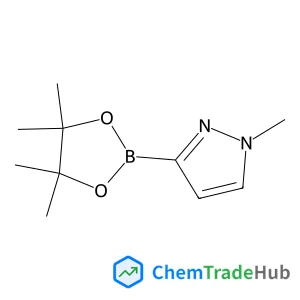
1-Methyl-3-(4,4,5,5-tetramethyl-1,3,2-dioxaborolan-2-yl)-1H-pyrazole
CAS Number:
1020174-04-2
Molecular Formula:
C10H17BN2O2
Recommended Suppliers





Disclaimer
This page provides academic journal information for reference and research purposes only. We are not affiliated with any journal publishers and do not handle publication submissions. For publication-related inquiries, please contact the respective journal publishers directly.
If you notice any inaccuracies in the information displayed, please contact us at support@chemtradehub.com. We will promptly review and address your concerns.