


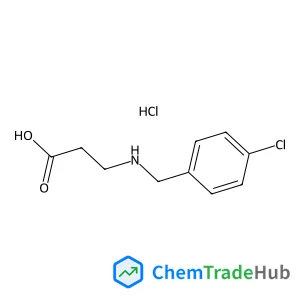
N-(4-Chlorobenzyl)-beta-alanine hydrochloride (1:1)
CAS Number:
1172479-10-5
Molecular Formula:
C10H13Cl2NO2
Iván Cabanillas-Vidosa, Maximiliano Rossa, Gustavo A. Pino, Juan C. Ferrero, Carlos J. Cobos
An experimental and theoretical study of the photoionization energies (IE's) of Ba(H2O)n clusters containing up to n = 4 water molecules has been performed. The clusters were generated by a pick-up source combining laser vaporization with pulsed supersonic expansion, and then photoionized by radiation of 272.5–340 nm. The experimentally determined IEe's for n = 1 to 4 are 4.56 ± 0.05, 4.26 ± 0.05, 3.90 ± 0.05 and 3.71 ± 0.05 eV. This cluster size dependence of IE is reproduced within ±0.06 eV employing the mPW1PW91 density-functional and CCSD(T, Full) quantum-chemical methods combined with the 6-311++G(d,p) basis set for the H and O atoms and three different relativistic effective core potentials for Ba atoms. The calculations indicate that the lowest energy hydration structures represent the most relevant contributions to both the vertical and adiabatic ionization energies. Experimental and theoretical evidence correlates with the progressive surface-delocalization of the electron from the hydration cavity around the Ba atom and suggests that the intra-cluster electron transfer is possible even for small aggregates.

Heteroatom Chemistry

Bioorganic & Medicinal Chemistry Letters

Journal of the Indian Institute of Science

Chinese Journal of Chemistry

Medicinal Chemistry Research

Herald of the Russian Academy of Sciences

Journal of Chemical Sciences

Critical Reviews in Solid State and Materials Sciences

NDT & E International

Electroanalysis
Elena F. Belogolova, Tamara I. Vakul'skaya, Valery F. Sidorkin
DOI: 10.1039/C4CP06046F
Yushi Wen, Chaoyang Zhang, Xianggui Xue, Xinping Long
DOI: 10.1039/C5CP00006H
Yi Bao, Richard L. Martin, Maciej Haranczyk
DOI: 10.1039/C5CP00002E
Haoyu S. Yu, Pragya Verma, Donald G. Truhlar
DOI: 10.1039/C5CP01425E
Bo Cai, Shengli Zhang, Ziyu Hu, Yonghong Hu, Yousheng Zou, Haibo Zeng
DOI: 10.1039/C5CP00563A
T. Menanteau, E. Levillain, A. J. Downard, T. Breton
DOI: 10.1039/C5CP01401H
Yu-Hsiu Wang
DOI: 10.1039/C5CP00862J
Arpan Kool, Biswajoy Bagchi, Nur Amin Hoque, Sukhen Das, Papiya Nandy
DOI: 10.1039/C5CP01207D
Zheyun Liu, Lijuan Wang, Dongping Zhong
DOI: 10.1039/C4CP05286B
Waste containing N-Methoxy-N-methyl-1,3-thiazole-5-carboxamide (CAS: 898825-89-3...
N-(4-Biphenylyl)dibenzo[b,d]furan-4-amine should be stored in a tightly sealed c...
The market for 3-Acetamido-5-amino-2,4,6-triiodobenzoic acid (CAS: 1713-07-1) is...
Benzyl 2-O-acetyl-3,4,6-tri-O-benzyl-beta-D-galactopyranoside (CAS: 61820-03-9) ...
2-Ethylpiperazine dihydrochloride (CAS: 438050-52-3) is regulated under the Glob...
1,1'-[1,3-Phenylenebis(methylene)]bis(3-methyl-1H-pyrrole-2,5-dione) (CAS: 11946...
Several alternatives can be used in the synthesis of 5-Fluoro-2-(1-pyrrolidinyl)...
Proper personal protective equipment (PPE) must be worn when handling this compo...
When handling 6-Bromoimidazo[1,2-a]pyridin-8-amine, it is important to wear appr...
Alternatives to (2S,4R)-4-(4-Nitrobenzyl)pyrrolidine-2-carboxylic acid hydrochlo...

Physical Chemistry Chemical Physics (PCCP) is an international journal co-owned by 19 physical chemistry and physics societies from around the world. This journal publishes original, cutting-edge research in physical chemistry, chemical physics and biophysical chemistry. To be suitable for publication in PCCP, articles must include significant innovation and/or insight into physical chemistry; this is the most important criterion that reviewers and Editors will judge against when evaluating submissions. The journal has a broad scope and welcomes contributions spanning experiment, theory, computation and data science. Topical coverage includes spectroscopy, dynamics, kinetics, statistical mechanics, thermodynamics, electrochemistry, catalysis, surface science, quantum mechanics, quantum computing and machine learning. Interdisciplinary research areas such as polymers and soft matter, materials, nanoscience, energy, surfaces/interfaces, and biophysical chemistry are welcomed if they demonstrate significant innovation and/or insight into physical chemistry. Joined experimental/theoretical studies are particularly appreciated when complementary and based on up-to-date approaches.
![tert-Butyl 6-chloro-4-oxospiro[chroman-2,4'-piperidine]-1'-carboxylate structure](https://static.chemtradehub.com/structs/101/1011482-37-3-88a5.webp "tert-Butyl 6-chloro-4-oxospiro[chroman-2,4'-piperidine]-1'-carboxylate structure")
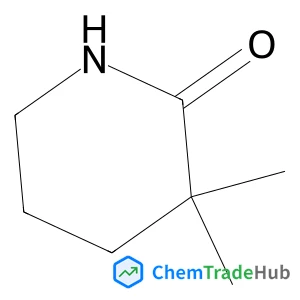
![2-Methylbenzo[h]quinoline structure](https://static.chemtradehub.com/structs/605/605-88-9-ac43.webp "2-Methylbenzo[h]quinoline structure")
![4-[(2-{2-[2-(2-Aminoethoxy)ethoxy]ethoxy}ethyl)amino]-2-(2,6-dioxo-3-piperidinyl)-1H-isoindole-1,3(2H)-dione structure](https://static.chemtradehub.com/structs/209/2093416-31-8-3162.webp "4-[(2-{2-[2-(2-Aminoethoxy)ethoxy]ethoxy}ethyl)amino]-2-(2,6-dioxo-3-piperidinyl)-1H-isoindole-1,3(2H)-dione structure")



