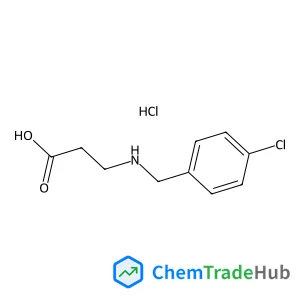
N-(4-Chlorobenzyl)-beta-alanine hydrochloride (1:1)
CAS Number:
1172479-10-5
Molecular Formula:
C10H13Cl2NO2
Mingjie Li, Guichuan Xing, Lloyd Foong Nien Ah Qune, Guozhong Xing, Tom Wu, Cheng Hon Alfred Huan, Xinhai Zhang, Tze Chien Sum
Post-fabrication thermal-annealed ZnO nanowires (NWs) in an oxidizing (or a reducing) ambient were investigated using transient photoluminescence and X-ray photoelectron spectroscopy. Our findings reveal an ultrafast hole-transfer process to the surface adsorbed oxygen species (e.g., O2−) occurring within a few hundred picoseconds (ps) in the air-annealed samples; and an ultrafast electron-transfer process to charged oxygen vacancies (i.e., VO2+) occurring within tens of ps in the H2-annealed samples. Contrary to the common perception that the band edge emission (BE) dynamics are strongly influenced by the carrier trapping to the green emission related defect states (i.e., VZn), these above processes compete effectively with the ZnO BE. Hole trapping by ionized VZn, which occurs in an ultrashort sub-ps-to-ps timescale (and hence limits its effective hole capture radius), however, has less influence on the BE dynamics. Importantly, our findings shed new light on the photoinduced charge transfer processes that underpins the novel properties of enhanced photocatalytic activity, photovoltaic performance, and photoconductivity response of ZnO NWs, thereby suggesting a strategy for tailoring the ultrafast carrier dynamics in ZnO NW-based devices.

Medicinal Chemistry Research

Atomization and Sprays

Herald of the Russian Academy of Sciences

Acta Metallurgica Sinica-English Letters

Biocatalysis and Biotransformation

Heteroatom Chemistry

Chinese Journal of Chemistry

Journal of Asian Natural Products Research

Cellulose

Bioorganic & Medicinal Chemistry Letters
Yushi Wen, Chaoyang Zhang, Xianggui Xue, Xinping Long
DOI: 10.1039/C5CP00006H
F. Terenziani, A. Painelli
DOI: 10.1039/C5CP01485A
A. D. Godbeer, J. S. Al-Khalili, P. D. Stevenson
DOI: 10.1039/C5CP00472A
Yuan Li
DOI: 10.1039/C5CP00928F
Qing-Yun Xiang, Yu Wang, Shi-Yu Li, Lan-Hua Wang, Li-Bin Mo, Wen-Qing Yao, Li Zhang
DOI: 10.1039/C5CP00878F
Kada Yesudas, Eluvathingal D. Jemmis, Kotamarthi Bhanuprakash
DOI: 10.1039/C5CP01410G
Zheyun Liu, Lijuan Wang, Dongping Zhong
DOI: 10.1039/C4CP05286B
Annarosa Gugliuzza, Valentino Pingitore, Domenico Miriello
DOI: 10.1039/C5CP00750J
Diego Cortés-Arriagada, Alejandro Toro-Labbé
DOI: 10.1039/C5CP01313E
Dalibor Hršak, Lotte Holmegaard, Anton S. Poulsen, Nanna H. List, Jacob Kongsted, M. Paula Denofrio, Rosa Erra-Balsells, Franco M. Cabrerizo, Ove Christiansen, Peter R. Ogilby
DOI: 10.1039/C5CP00773A
Waste containing N-Methoxy-N-methyl-1,3-thiazole-5-carboxamide (CAS: 898825-89-3...
N-(4-Biphenylyl)dibenzo[b,d]furan-4-amine should be stored in a tightly sealed c...
The market for 3-Acetamido-5-amino-2,4,6-triiodobenzoic acid (CAS: 1713-07-1) is...
Benzyl 2-O-acetyl-3,4,6-tri-O-benzyl-beta-D-galactopyranoside (CAS: 61820-03-9) ...
2-Ethylpiperazine dihydrochloride (CAS: 438050-52-3) is regulated under the Glob...
1,1'-[1,3-Phenylenebis(methylene)]bis(3-methyl-1H-pyrrole-2,5-dione) (CAS: 11946...
Several alternatives can be used in the synthesis of 5-Fluoro-2-(1-pyrrolidinyl)...
Proper personal protective equipment (PPE) must be worn when handling this compo...
When handling 6-Bromoimidazo[1,2-a]pyridin-8-amine, it is important to wear appr...
Alternatives to (2S,4R)-4-(4-Nitrobenzyl)pyrrolidine-2-carboxylic acid hydrochlo...

Physical Chemistry Chemical Physics (PCCP) is an international journal co-owned by 19 physical chemistry and physics societies from around the world. This journal publishes original, cutting-edge research in physical chemistry, chemical physics and biophysical chemistry. To be suitable for publication in PCCP, articles must include significant innovation and/or insight into physical chemistry; this is the most important criterion that reviewers and Editors will judge against when evaluating submissions. The journal has a broad scope and welcomes contributions spanning experiment, theory, computation and data science. Topical coverage includes spectroscopy, dynamics, kinetics, statistical mechanics, thermodynamics, electrochemistry, catalysis, surface science, quantum mechanics, quantum computing and machine learning. Interdisciplinary research areas such as polymers and soft matter, materials, nanoscience, energy, surfaces/interfaces, and biophysical chemistry are welcomed if they demonstrate significant innovation and/or insight into physical chemistry. Joined experimental/theoretical studies are particularly appreciated when complementary and based on up-to-date approaches.