












Spot morphology of non-contact printed protein molecules on non-porous substrates with a range of hydrophobicities
Literature Information
Publication Date
2012-10-31
DOI
10.1039/C2AN36104C
Impact Factor
4.616
Authors
Aart van Amerongen
View Original
Abstract
Non-contact inkjet printing technology is one of the most promising tools for producing microarrays. The quality of the microarray depends on the type of the substrate used for printing biomolecules. Various porous and non-porous substrates have been used in the past, but due to low production cost and easy availability, non-porous substrates like glass and plastic are preferred over porous substrates. On these non-porous substrates, obtaining spot uniformity and a high signal to noise ratio is a big challenge. In our research work, we have modified pristine glass slides using various silanes to produce a range of hydrophobic glass substrates. The hydrophobicities of the slides expressed in the contact angle (θ) of a sessile drop of water were 49°, 61°, 75°, 88° and 103°. Using a non-contact inkjet printer, microarrays of biotinylated biomolecules (BSA and IgG) were produced on these modified glass substrates, pristine (untreated) glass and also on HTA polystyrene slides. The uniformity of the spots, reflecting the distribution of the biomolecules in the spots, was analyzed and compared using confocal laser scanning microscopy (CLSM). The quality of the spots was superior on the glass slide with a contact angle of ∼75°. We also investigated the influence of the hydrophobicity of the substrate on a two-step, real diagnostic antibody assay. This nucleic acid microarray immunoassay (NAMIA) for the detection of Staphylococcus aureus showed that on highly hydrophilic (θ < 10°) and hydrophobic substrates (θ > 100°) the assay signal was low, whereas an excellent signal was obtained on the substrates with intermediate contact angles, θ ∼ 61° and θ ∼ 75°, respectively.
Recommended Journals
Related Literature
To what extent can charge localization influence electron injection efficiency at graphene–porphyrin interfaces?
Manas R. Parida, Shawkat M. Aly, Erkki Alarousu, Aravindan Sridharan, Doddahalli H. Nagaraju, Husam N. Alshareef, Omar F. Mohammed
2015-04-28
Paper
DOI: 10.1039/C5CP02362A
Structure of a liquid/liquid interface during solvent extraction combining X-ray and neutron reflectivity measurements
E. Scoppola, E. Watkins, G. Li Destri, L. Porcar, R. A. Campbell, O. Konovalov, G. Fragneto, O. Diat
2015-05-07
Communication
DOI: 10.1039/C5CP01809A
Correction: Evaluation of water displacement energetics in protein binding sites with grid cell theory
G. Gerogiokas, M. W. Y. Southey, M. P. Mazanetz, A. Hefeitz, M. Bodkin, R. J. Law, J. Michel
2015-05-29
Correction
DOI: 10.1039/C5CP90084K
Orbital entanglement and CASSCF analysis of the Ru–NO bond in a Ruthenium nitrosyl complex
Leon Freitag, Stefan Knecht, Sebastian F. Keller, Mickaël G. Delcey, Thomas Bondo Pedersen, Roland Lindh, Markus Reiher, Leticia González
2015-03-10
Paper
DOI: 10.1039/C4CP05278A
Metastable charge-transfer state of californium(iii) compounds
Guokui Liu, Samantha K. Cary, Thomas E. Albrecht-Schmitt
2015-05-27
Paper
DOI: 10.1039/C5CP01855B
Tuning of electron transfer reactions in pluronic–surfactant supramolecular assemblies
Poonam Verma, Haridas Pal
2015-05-18
Paper
DOI: 10.1039/C5CP01480H
Kinks in experimental diffusion profiles of a dissolving semi-crystalline polymer explained by a concentration-dependent diffusion coefficient
Helen E. Hermes, Christoph E. Sitta, Burkhard Schillinger, Hartmut Löwen, Stefan U. Egelhaaf
2015-05-11
Paper
DOI: 10.1039/C5CP01082A
The role of the shape resonance state in low energy electron induced single strand break in 2′-deoxycytidine-5′-monophosphate
Renjith Bhaskaran, Manabendra Sarma
2015-05-14
Paper
DOI: 10.1039/C5CP00126A
You might also like
Compound Q&A
What are the main uses of (5-Sulfamoyl-3-pyridinyl)boronic acid (CAS: 951233-61-7)?
(5-Sulfamoyl-3-pyridinyl)boronic acid is primarily used in chemical synthesis, p...
951233-61-7(5-Sulfamoyl-3-pyrid...
Compound Q&A
How is Benzyl 2-methyl-2-(methylsulfonyl)-4-pentenoate (CAS: 1942858-50-5) typically synthesized?
Benzyl 2-methyl-2-(methylsulfonyl)-4-pentenoate is typically synthesized via est...
1942858-50-5Benzyl 2-methyl-2-(m...
Compound Q&A
What precautions should be taken when handling 8-Fluoroquinolin-6-ol (CAS: 209353-22-0)?
When handling 8-Fluoroquinolin-6-ol (CAS: 209353-22-0), it is important to use p...
209353-22-08-Fluoroquinolin-6-o...
Compound Q&A
What are the physical and chemical properties of 1,3-Dibromo-5-(2-methyl-2-propanyl)benzene (CAS: 129316-09-2)?
1,3-Dibromo-5-(2-methyl-2-propanyl)benzene (CAS: 129316-09-2) is a crystalline c...
129316-09-21,3-Dibromo-5-(2-met...
Compound Q&A
What industries use Ethyl 7-chloro-4-oxo-1-(1,3-thiazol-2-yl)-1,4-dihydro-1,8-naphthyridine-3-carboxylate (CAS: 174726-87-5)?
Ethyl 7-chloro-4-oxo-1-(1,3-thiazol-2-yl)-1,4-dihydro-1,8-naphthyridine-3-carbox...
174726-87-5Ethyl 7-chloro-4-oxo...
Compound Q&A
What precautions should be taken when handling Delta-7-Avenasterol (CAS: 23290-26-8)?
When handling Delta-7-Avenasterol (CAS: 23290-26-8), it is important to wear app...
23290-26-8Delta-7-Avenasterol
Compound Q&A
What precautions should be taken when handling N-({(5R)-3-[3-Fluoro-4-(4-morpholinyl)phenyl]-2-oxo-1,3-oxazolidin-5-yl}methyl)acetamide (CAS: 872992-20-6)?
Proper handling involves the use of personal protective equipment such as gloves...
872992-20-6N-({(5R)-3-[3-Fluoro...
Compound Q&A
What precautions should be taken when handling 2-Methyl-2-proanyl 4-[(2-aminophenyl)amino]-1-piperidinecarboxylate (CAS: 79099-00-6)?
When handling 2-Methyl-2-proanyl 4-[(2-aminophenyl)amino]-1-piperidinecarboxylat...
79099-00-62-Methyl-2-propanyl ...
Compound Q&A
What is N-Methyl-4-chlorobenzylamine hydrochloride (CAS: 65542-24-7)?
N-Methyl-4-chlorobenzylamine hydrochloride (CAS: 65542-24-7) is a organic compou...
65542-24-7N-Methyl-4-chloroben...
Compound Q&A
Is [2-(Dodecyloxy)ethoxy]acetic acid (CAS: 27306-90-7) safe?
[2-(Dodecyloxy)ethoxy]acetic acid (CAS: 27306-90-7) is generally considered safe...
27306-90-7[2-(Dodecyloxy)ethox...
Source Journal
Analyst

CiteScore:
7.8
Self-citation Rate:
5.6%
Articles per Year:
653
Analyst publishes analytical and bioanalytical research that reports premier fundamental discoveries and inventions, and the applications of those discoveries, unconfined by traditional discipline barriers.
Recommended Compounds
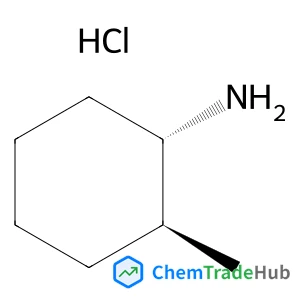
(1R,2R)-2-Methylcyclohexanamine hydrochloride (1:1)
CAS Number:
39558-31-1
Molecular Formula:
C7H16ClN
Recommended Suppliers





Disclaimer
This page provides academic journal information for reference and research purposes only. We are not affiliated with any journal publishers and do not handle publication submissions. For publication-related inquiries, please contact the respective journal publishers directly.
If you notice any inaccuracies in the information displayed, please contact us at support@chemtradehub.com. We will promptly review and address your concerns.