












Chemical dynamics of the CH(X2Π) + C2H4(X1A1g), CH(X2Π) + C2D4(X1A1g), and CD(X2Π) + C2H4(X1A1g) reactions studied under single collision conditions
Literature Information
Publication Date
2011-11-23
DOI
10.1039/C1CP22350J
Impact Factor
3.676
Authors
Fangtong Zhang, Pavlo Maksyutenko, Ralf I. Kaiser
View Original
Abstract
The crossed beam reactions of the methylidyne radical with ethylene (CH(X2Π) + C2H4(X1A1g)), methylidyne with D4-ethylene (CH(X2Π) + C2D4(X1A1g)), and D1-methylidyne with ethylene (CD(X2Π) + C2H4(X1A1g)) were conducted at nominal collision energies of 17–18 kJ mol−1 to untangle the chemical dynamics involved in the formation of distinct C3H4 isomers methylacetylene (CH3CCH), allene (H2CCCH2), and cyclopropene (c-C3H4) viaC3H5 intermediates. By tracing the atomic hydrogen and deuterium loss pathways, our experimental data suggest indirect scattering dynamics and an initial addition of the (D1)-methylidyne radical to the carbon–carbon double bond of the (D4)-ethylene reactant forming a cyclopropyl radical intermediate (c-C3H5/c-C3D4H/c-C3H4D). The latter was found to ring-open to the allyl radical (H2CCHCH2/D2CCHCD2/H2CCDCH2). This intermediate was found to be long lived with life times of at least five times its rotational period and decomposed via atomic hydrogen/deuterium loss from the central carbon atom (C2) to form allenevia a rather loose exit transition state in an overall strongly exoergic reaction. Based on the experiments with partially deuterated reactants, no compelling evidence could be provided to support the formation of the cyclopropene and methylacetylene isomers under single collision conditions. Likewise, hydrogen/deuterium shifts in the allyl radical intermediates or an initial insertion of the (D1)-methylidyne radical into the carbon–hydrogen/deuterium bond of the (D4)-ethylene reactant were found to be—if at all—of minor importance. Our experiments propose that in hydrocarbon-rich atmospheres of planets and their moons such as Saturn's satellite Titan, the reaction of methylidyne radicals should lead predominantly to the hitherto elusive allene molecule in these reducing environments.
Related Literature
In situ PM-IRRAS of a glassy carbon electrode/deep eutectic solvent interface
Robert Schennach
2015-04-16
Paper
DOI: 10.1039/C5CP00070J
Dynamics of aqueous binary glass-formers confined in MCM-41
Khalid Elamin, Helén Jansson, Jan Swenson
2015-04-20
Paper
DOI: 10.1039/C5CP00751H
Potential-dependent structures investigated at the perchloric acid solution/iodine modified Au(111) interface by electrochemical frequency-modulation atomic force microscopy
Toru Utsunomiya, Shoko Tatsumi, Yasuyuki Yokota, Ken-ichi Fukui
2015-04-09
Paper
DOI: 10.1039/C5CP01156F
Competitive excited-state single or double proton transfer mechanisms for bis-2,5-(2-benzoxazolyl)-hydroquinone and its derivatives
Jinfeng Zhao, Junsheng Chen, Jianyong Liu, Mark R. Hoffmann
2015-03-24
Paper
DOI: 10.1039/C4CP05651E
The electronic states of a double carbon vacancy defect in pyrene: a model study for graphene
Francisco B. C. Machado
2015-04-13
Paper
DOI: 10.1039/C4CP05751A
Self-assembly and coverage dependent thermally induced conformational changes of Ni(ii)-meso-tetrakis (4-tert-butylphenyl) benzoporphyrin on Cu(111)
2015-04-20
Paper
DOI: 10.1039/C5CP01490E
Two-dimensional electronic-vibrational spectra: modeling correlated electronic and nuclear motion
F. Terenziani, A. Painelli
2015-04-20
Paper
DOI: 10.1039/C5CP01485A
Genericity of confined chemical garden patterns with regard to changes in the reactants
Florence Haudin, V. Brasiliense, Julyan H. E. Cartwright, Fabian Brau, A. De Wit
2015-04-15
Paper
DOI: 10.1039/C5CP00068H
In situ FTIR and Raman spectroelectrochemical characterization of graphene oxide upon electrochemical reduction in organic solvents
Antti Viinikanoja, Pia Damlin, Milla Suominen, Carita Kvarnström
2015-04-10
Paper
DOI: 10.1039/C5CP00942A
You might also like
Compound Q&A
How should waste containing N-Methoxy-N-methyl-1,3-thiazole-5-carboxamide (CAS: 898825-89-3) be handled?
Waste containing N-Methoxy-N-methyl-1,3-thiazole-5-carboxamide (CAS: 898825-89-3...
898825-89-3N-Methoxy-N-methyl-1...
Compound Q&A
How should N-(4-Biphenylyl)dibenzo[b,d]furan-4-amine (CAS: 1318338-47-4) be stored?
N-(4-Biphenylyl)dibenzo[b,d]furan-4-amine should be stored in a tightly sealed c...
1318338-47-4N-(4-Biphenylyl)dibe...
Compound Q&A
What is the market or research trend for 3-Acetamido-5-amino-2,4,6-triiodobenzoic acid (CAS: 1713-07-1)?
The market for 3-Acetamido-5-amino-2,4,6-triiodobenzoic acid (CAS: 1713-07-1) is...
1713-07-13-Acetamido-5-amino-...
Compound Q&A
How should Benzyl 2-O-acetyl-3,4,6-tri-O-benzyl-beta-D-galactopyranoside (CAS: 61820-03-9) be stored?
Benzyl 2-O-acetyl-3,4,6-tri-O-benzyl-beta-D-galactopyranoside (CAS: 61820-03-9) ...
61820-03-9Benzyl 2-O-acetyl-3,...
Compound Q&A
What regulatory guidelines apply to 2-Ethylpiperazine dihydrochloride (CAS: 438050-52-3)?
2-Ethylpiperazine dihydrochloride (CAS: 438050-52-3) is regulated under the Glob...
438050-52-32-Ethylpiperazine di...
Compound Q&A
What regulatory guidelines apply to 1,1'-[1,3-Phenylenebis(methylene)]bis(3-methyl-1H-pyrrole-2,5-dione) (CAS: 119462-56-5)?
1,1'-[1,3-Phenylenebis(methylene)]bis(3-methyl-1H-pyrrole-2,5-dione) (CAS: 11946...
119462-56-51,1'-[1,3-Phenyleneb...
Compound Q&A
Are there alternatives to 5-Fluoro-2-(1-pyrrolidinyl)pyridine (CAS: 1287217-79-1) in synthesis?
Several alternatives can be used in the synthesis of 5-Fluoro-2-(1-pyrrolidinyl)...
1287217-79-15-Fluoro-2-(1-pyrrol...
Compound Q&A
What precautions should be taken when handling 1-((2R,3R,4R,5R)-5-((bis(4-methoxyphenyl)(phenyl)methoxy)methyl)-4-hydroxy-3-methoxytetrahydrofuran-2-yl)-5-methylpyrimidine-2,4(1H,3H)-dione (CAS: 153631-19-7)?
Proper personal protective equipment (PPE) must be worn when handling this compo...
153631-19-71-((2R,3R,4R,5R)-5-(...
Compound Q&A
What precautions should be taken when handling 6-Bromoimidazo[1,2-a]pyridin-8-amine (CAS: 676371-00-9)?
When handling 6-Bromoimidazo[1,2-a]pyridin-8-amine, it is important to wear appr...
676371-00-96-Bromoimidazo[1,2-a...
Compound Q&A
Are there alternatives to (2S,4R)-4-(4-Nitrobenzyl)pyrrolidine-2-carboxylic acid hydrochloride (CAS: 1049740-22-8) in synthesis?
Alternatives to (2S,4R)-4-(4-Nitrobenzyl)pyrrolidine-2-carboxylic acid hydrochlo...
1049740-22-8(2S,4R)-4-(4-Nitrobe...
Source Journal
Physical Chemistry Chemical Physics

CiteScore:
5.5
Self-citation Rate:
10.3%
Articles per Year:
3036
Physical Chemistry Chemical Physics (PCCP) is an international journal co-owned by 19 physical chemistry and physics societies from around the world. This journal publishes original, cutting-edge research in physical chemistry, chemical physics and biophysical chemistry. To be suitable for publication in PCCP, articles must include significant innovation and/or insight into physical chemistry; this is the most important criterion that reviewers and Editors will judge against when evaluating submissions. The journal has a broad scope and welcomes contributions spanning experiment, theory, computation and data science. Topical coverage includes spectroscopy, dynamics, kinetics, statistical mechanics, thermodynamics, electrochemistry, catalysis, surface science, quantum mechanics, quantum computing and machine learning. Interdisciplinary research areas such as polymers and soft matter, materials, nanoscience, energy, surfaces/interfaces, and biophysical chemistry are welcomed if they demonstrate significant innovation and/or insight into physical chemistry. Joined experimental/theoretical studies are particularly appreciated when complementary and based on up-to-date approaches.
Recommended Compounds
![2-(7,7-Difluorobicyclo[4.1.0]hept-1-yl)ethanamine structure](https://static.chemtradehub.com/structs/209/2098065-08-6-ff24.webp "2-(7,7-Difluorobicyclo[4.1.0]hept-1-yl)ethanamine structure")
2-(7,7-Difluorobicyclo[4.1.0]hept-1-yl)ethanamine
CAS Number:
2098065-08-6
Molecular Formula:
C9H15F2N
![2-Methyl-2-propanyl {3-[4-(4,4,5,5-tetramethyl-1,3,2-dioxaborolan-2-yl)phenyl]-3-oxetanyl}carbamate structure](https://static.chemtradehub.com/structs/127/1279090-25-3-1b84.webp "2-Methyl-2-propanyl {3-[4-(4,4,5,5-tetramethyl-1,3,2-dioxaborolan-2-yl)phenyl]-3-oxetanyl}carbamate structure")
2-Methyl-2-propanyl {3-[4-(4,4,5,5-tetramethyl-1,3,2-dioxaborolan-2-yl)phenyl]-3-oxetanyl}carbamate
CAS Number:
1279090-25-3
Molecular Formula:
C20H30BNO5
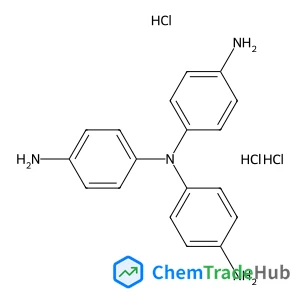
N1,N1-Bis(4-aminophenyl)benzene-1,4-diamine trihydrochloride
CAS Number:
114254-48-7
Molecular Formula:
C18H21Cl3N4
Recommended Suppliers



Disclaimer
This page provides academic journal information for reference and research purposes only. We are not affiliated with any journal publishers and do not handle publication submissions. For publication-related inquiries, please contact the respective journal publishers directly.
If you notice any inaccuracies in the information displayed, please contact us at support@chemtradehub.com. We will promptly review and address your concerns.