












Structure of host–guest complexes between dibenzo-18-crown-6 and water, ammonia, methanol, and acetylene: Evidence of molecular recognition on the complexation‡
Literature Information
Publication Date
2011-03-14
DOI
10.1039/C0CP02523B
Impact Factor
3.676
Authors
Ryoji Kusaka, Satoshi Kokubu, Yoshiya Inokuchi, Takeharu Haino, Takayuki Ebata
View Original
Abstract
Complexes of dibenzo-18-crown-6 (DB18C6, host) with water, ammonia, methanol, and acetylene (guest) in supersonic jets have been characterized by laser induced fluorescence (LIF), UV-UV hole-burning (UV-UV HB), and IR-UV double resonance (IR-UV DR) spectroscopy. Firstly, we reinvestigated the conformation of bare DB18C6 (species m1 and m2) and the structure of DB18C6–H2O (species a) [R. Kusaka, Y. Inokuchi, T. Ebata, Phys. Chem. Chem. Phys., 2008, 10, 6238] by measuring IR-UV DR spectra in the region of the methylene CH stretching vibrations. The IR spectral feature of the methylene CH stretch of DB18C6–H2O is clearly different from those of bare DB18C6 conformers, suggesting that DB18C6 changes its conformation when forming a complex with a water molecule. With the aid of Monte Carlo simulation for extensive conformational search and density functional calculations (M05-2X/6-31+G*), we reassigned species m1 and m2 to conformers having C1 and C2 symmetry, respectively. Also, we confirmed the DB18C6 part in species a of DB18C6–H2O to be “boat” conformation (C2v). Secondly, we identified nine, one, and two species for the DB18C6 complexes with ammonia, methanol, and acetylene, respectively, by the combination of LIF and UV-UV HB spectroscopy. From the IR spectroscopic measurement in the methylene CH stretching region, a similar conformational change was identified in the DB18C6–ammonia complexes, but not in the complexes with methanol or acetylene. The structures of all the complexes were determined by analyzing the electronic transition energies, exciton splitting, and IR spectra in the region of the OH, NH, and CH stretching vibrations. In DB18C6–ammonia complexes, an ammonia molecule is incorporated into the cavity of the boat conformation by forming “bifurcated” and “bidentate” hydrogen-bond (H-bond), similar to the case of the DB18C6–H2O complex. On the other hand, in the DB18C6–methanol and –acetylene complexes, methanol and acetylene molecules are simply attached to the C1 and C2 conformations, respectively. From the difference of the DB18C6 conformations depending on the type of the guest molecules, it is concluded that DB18C6 distinguishes water and ammonia from methanol and acetylene when it forms complexes, depending on whether guest molecules have an ability to form bidentate H-bonding.
Recommended Journals
Related Literature
S-doped Na2Ti6O13@TiO2 core–shell nanorods with enhanced visible light photocatalytic performance
Chao Liu, Ji-yuan Liang, Rui-rui Han, Yong-zheng Wang, Jin Zhao, Qian-jin Huang, Jing Chen, Wen-hua Hou
2015-05-13
Paper
DOI: 10.1039/C5CP01552A
Simulation of X-ray absorption spectra with orthogonality constrained density functional theory
Wallace D. Derricotte, Francesco A. Evangelista
2015-01-27
Paper
DOI: 10.1039/C4CP05509H
Strain induced crystallization and melting of natural rubber during dynamic cycles
Catherine Gauthier, Etienne Munch, Dominique Thiaudière
2015-05-08
Paper
DOI: 10.1039/C5CP00384A
Surface plasmon enhanced up-conversion from NaYF4:Yb/Er/Gd nano-rods
PengHui Wang, ZhiQiang Li, Walter J. Salcedo, Zhuo Sun, SuMei Huang, Alexandre G. Brolo
2015-05-27
Paper
DOI: 10.1039/C5CP02249E
Chemical modifications and stability of phosphorene with impurities: a first principles study
D. W. Boukhvalov, A. N. Rudenko, D. A. Prishchenko, V. G. Mazurenko
2015-05-06
Paper
DOI: 10.1039/C5CP01901J
Electric field control of proton-transfer molecular switching: molecular dynamics study on salicylidene aniline
Joanna Sadlej, Andrzej L. Sobolewski
2015-05-06
Communication
DOI: 10.1039/C5CP00686D
Structural differences between the active sites of the Ni-A and Ni-B states of the [NiFe] hydrogenase: an approach by quantum chemistry and single crystal ENDOR spectroscopy
Jessica L. Barilone, Hideaki Ogata, Wolfgang Lubitz, Maurice van Gastel
2015-05-27
Paper
DOI: 10.1039/C5CP01322D
You might also like
Compound Q&A
How should 2-Methylbenzene-1,4-diamine dihydrochloride (CAS: 615-45-2) be stored?
2-Methylbenzene-1,4-diamine dihydrochloride (CAS: 615-45-2) should be stored in ...
615-45-22-Methylbenzene-1,4-...
Compound Q&A
Is (1S,4S)-2,5-Diazabicyclo[2.2.1]heptane dihydrobromide (CAS: 132747-20-7) safe?
(1S,4S)-2,5-Diazabicyclo[2.2.1]heptane dihydrobromide is generally considered sa...
132747-20-7(1S,4S)-2,5-Diazabic...
Compound Q&A
What industries use (6-Chloropyridazin-3-YL)methanamine (CAS: 871826-15-2)?
(6-Chloropyridazin-3-YL)methanamine finds applications in the pharmaceutical ind...
871826-15-2(6-Chloropyridazin-3...
Compound Q&A
What are the main uses of 2-Fluoro-3-methylphenol (CAS: 77772-72-6)?
2-Fluoro-3-methylphenol is primarily used in the synthesis of pharmaceuticals, p...
77772-72-62-Fluoro-3-methylphe...
Compound Q&A
What precautions should be taken when handling 3-Methoxy-4-nitrobenzonitrile (CAS: 177476-75-4)?
When handling 3-Methoxy-4-nitrobenzonitrile, it is important to wear appropriate...
177476-75-43-Methoxy-4-nitroben...
Compound Q&A
What precautions should be taken when handling 1,3-Oxazolo[4,5-b]pyridine-2(3H)-thione (CAS: 211949-57-4)?
When handling 1,3-Oxazolo[4,5-b]pyridine-2(3H)-thione (CAS: 211949-57-4), it is ...
211949-57-4[1,3]Oxazolo[4,5-b]p...
Compound Q&A
What regulatory guidelines apply to 4-Ethynylbenzamide (CAS: 90347-86-7)?
4-Ethynylbenzamide (CAS: 90347-86-7) falls under various regulatory guidelines i...
90347-86-74-Ethynylbenzamide
Compound Q&A
What are the main uses of 3-(2-Ethylphenyl)-2-thioxo-4-imidazolidinone (CAS: 186822-57-1)?
3-(2-Ethylphenyl)-2-thioxo-4-imidazolidinone is primarily used as an intermediat...
186822-57-13-(2-Ethylphenyl)-2-...
Compound Q&A
What is (2-Fluoro-6-methoxyphenyl)acetic acid (CAS: 500912-19-6)?
(2-Fluoro-6-methoxyphenyl)acetic acid, also known as 4-fluoro-3-methoxybenzoic a...
500912-19-6(2-Fluoro-6-methoxyp...
Compound Q&A
What is the market or research trend for 2-[4-(Hydroxymethyl)phenoxy]ethanol (CAS: 102196-18-9)?
Market trends for 2-[4-(Hydroxymethyl)phenoxy]ethanol (CAS: 102196-18-9) indicat...
102196-18-92-[4-(Hydroxymethyl)...
Source Journal
Physical Chemistry Chemical Physics

CiteScore:
5.5
Self-citation Rate:
10.3%
Articles per Year:
3036
Physical Chemistry Chemical Physics (PCCP) is an international journal co-owned by 19 physical chemistry and physics societies from around the world. This journal publishes original, cutting-edge research in physical chemistry, chemical physics and biophysical chemistry. To be suitable for publication in PCCP, articles must include significant innovation and/or insight into physical chemistry; this is the most important criterion that reviewers and Editors will judge against when evaluating submissions. The journal has a broad scope and welcomes contributions spanning experiment, theory, computation and data science. Topical coverage includes spectroscopy, dynamics, kinetics, statistical mechanics, thermodynamics, electrochemistry, catalysis, surface science, quantum mechanics, quantum computing and machine learning. Interdisciplinary research areas such as polymers and soft matter, materials, nanoscience, energy, surfaces/interfaces, and biophysical chemistry are welcomed if they demonstrate significant innovation and/or insight into physical chemistry. Joined experimental/theoretical studies are particularly appreciated when complementary and based on up-to-date approaches.
Recommended Compounds
![1H-Imidazo[4,5-c]pyridine-7-carboxylic acid structure](https://static.chemtradehub.com/structs/123/1234616-39-7-1344.webp "1H-Imidazo[4,5-c]pyridine-7-carboxylic acid structure")
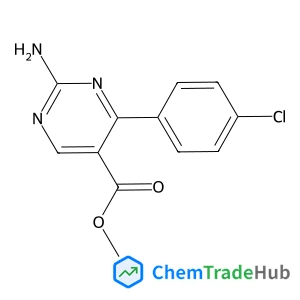
Methyl 2-amino-4-(4-chlorophenyl)-5-pyrimidinecarboxylate
CAS Number:
1133115-56-6
Molecular Formula:
C12H10ClN3O2
Recommended Suppliers






Disclaimer
This page provides academic journal information for reference and research purposes only. We are not affiliated with any journal publishers and do not handle publication submissions. For publication-related inquiries, please contact the respective journal publishers directly.
If you notice any inaccuracies in the information displayed, please contact us at support@chemtradehub.com. We will promptly review and address your concerns.