












Interaction of cephalosporins with outer membrane channels of Escherichia coli. Revealing binding by fluorescence quenching and ion conductance fluctuations
Literature Information
Publication Date
2010-12-10
DOI
10.1039/C0CP00969E
Impact Factor
3.676
Authors
Marcos Lovelle, Tivadar Mach, Kozhinjampara R. Mahendran, Helge Weingart, Mathias Winterhalter, Paula Gameiro
View Original
Abstract
Outer membrane channels in Gram-negative bacteria are implicated in the influx of the latest generation of cephalosporins. We have measured the interaction strengths of ceftriaxone, cefpirome and ceftazidime in the two most abundant outer membrane porins of Escherichia coli, OmpF and OmpC, by both ion current fluctuations through single protein channels and fluorescence quenching. Statistical analysis of individual antibiotic entry events in membrane-incorporated porins yielded the kinetic rates and the equilibrium binding constant of each antibiotic–porin pair. Affinity constants were independently obtained by measuring the static quenching of inherent tryptophan fluorescence in the porins in the presence of the antibiotics. Through an empirical inner filter effect correction we have succeeded in measuring the chemical interaction of these strongly absorbing antibiotics, and obtained a qualitative agreement with conductance measurements. The interaction of all three antibiotics is smaller for OmpC than OmpF, and in the case of each porin the interaction strength series ceftriaxone > cefpirome > ceftazidime is maintained.
Related Literature
The first hetero-bifunctionalization of the secondary face of β-cyclodextrin: selective and efficient conversion of the A-ring of a 2A,2B-disulfonate to 2A,3A-epoxymannoside
2005-05-18
Communication
DOI: 10.1039/B502573G
Mild methods to assemble and pattern organic monolayers on hydrogen-terminated Si(111)
Samer N. Arafat, Samrat Dutta, Mathew Perring, Michael Mitchell, Paul J. A. Kenis, Ned B. Bowden
2005-05-24
Communication
DOI: 10.1039/B503271G
Duplex strand formation using alternating copolymers
Hiroshi Nakade, M. Firat Ilker, Brian J. Jordan, Oktay Uzun, Nicholas L. LaPointe, E. Bryan Coughlin, Vincent M. Rotello
2005-05-27
Communication
DOI: 10.1039/B502929E
Well-defined imidotitanium alkyl cations: agostic interactions, migratory insertion vs.[2+2] cycloaddition, and the first structurally authenticated AlMe3 adduct of any transition metal alkyl cation
Paul D. Bolton, Eric Clot, Andrew R. Cowley, Philip Mountford
2005-06-01
Communication
DOI: 10.1039/B504567C
Unprecedented η3-M3 coordination mode in a terpyridineligand
Javier E. Aguado, M. Concepción Gimeno, Antonio Laguna
2005-05-24
Communication
DOI: 10.1039/B502515J
A high-voltage dye-sensitized photocapacitor of a three-electrode system
Takurou N. Murakami, Norimichi Kawashima, Tsutomu Miyasaka
2005-06-09
Communication
DOI: 10.1039/B503122B
A metal nanoparticle-based supramolecular approach for aqueous biphasic reactions
Shilpa C. Mhadgut, Kumaranand Palaniappan, Muralidhara Thimmaiah, Stephen A. Hackney, Béla Török, Jian Liu
2005-05-24
Communication
DOI: 10.1039/B502181B
Supramolecular electronics; nanowires from self-assembled π-conjugated systems
Albertus P. H. J. Schenning, E. W. Meijer
2005-04-13
Feature Article
DOI: 10.1039/B501804H
A single-site hydroxyapatite-bound zinc catalyst for highly efficient chemical fixation of carbon dioxide with epoxides
Kohsuke Mori, Yohei Mitani, Takayoshi Hara, Tomoo Mizugaki, Kohki Ebitani, Kiyotomi Kaneda
2005-05-27
Communication
DOI: 10.1039/B502636A
Unprecedented, fully recyclable, solid-supported reagent for the kinetic resolution of racemic amines through enantioselective N-acetylation
Stellios Arseniyadis, Pithani V. Subhash, Alain Valleix, Alain Wagner
2005-06-01
Communication
DOI: 10.1039/B504200C
You might also like
Compound Q&A
How should 2-Methylbenzene-1,4-diamine dihydrochloride (CAS: 615-45-2) be stored?
2-Methylbenzene-1,4-diamine dihydrochloride (CAS: 615-45-2) should be stored in ...
615-45-22-Methylbenzene-1,4-...
Compound Q&A
Is (1S,4S)-2,5-Diazabicyclo[2.2.1]heptane dihydrobromide (CAS: 132747-20-7) safe?
(1S,4S)-2,5-Diazabicyclo[2.2.1]heptane dihydrobromide is generally considered sa...
132747-20-7(1S,4S)-2,5-Diazabic...
Compound Q&A
What industries use (6-Chloropyridazin-3-YL)methanamine (CAS: 871826-15-2)?
(6-Chloropyridazin-3-YL)methanamine finds applications in the pharmaceutical ind...
871826-15-2(6-Chloropyridazin-3...
Compound Q&A
What are the main uses of 2-Fluoro-3-methylphenol (CAS: 77772-72-6)?
2-Fluoro-3-methylphenol is primarily used in the synthesis of pharmaceuticals, p...
77772-72-62-Fluoro-3-methylphe...
Compound Q&A
What precautions should be taken when handling 3-Methoxy-4-nitrobenzonitrile (CAS: 177476-75-4)?
When handling 3-Methoxy-4-nitrobenzonitrile, it is important to wear appropriate...
177476-75-43-Methoxy-4-nitroben...
Compound Q&A
What precautions should be taken when handling 1,3-Oxazolo[4,5-b]pyridine-2(3H)-thione (CAS: 211949-57-4)?
When handling 1,3-Oxazolo[4,5-b]pyridine-2(3H)-thione (CAS: 211949-57-4), it is ...
211949-57-4[1,3]Oxazolo[4,5-b]p...
Compound Q&A
What regulatory guidelines apply to 4-Ethynylbenzamide (CAS: 90347-86-7)?
4-Ethynylbenzamide (CAS: 90347-86-7) falls under various regulatory guidelines i...
90347-86-74-Ethynylbenzamide
Compound Q&A
What are the main uses of 3-(2-Ethylphenyl)-2-thioxo-4-imidazolidinone (CAS: 186822-57-1)?
3-(2-Ethylphenyl)-2-thioxo-4-imidazolidinone is primarily used as an intermediat...
186822-57-13-(2-Ethylphenyl)-2-...
Compound Q&A
What is (2-Fluoro-6-methoxyphenyl)acetic acid (CAS: 500912-19-6)?
(2-Fluoro-6-methoxyphenyl)acetic acid, also known as 4-fluoro-3-methoxybenzoic a...
500912-19-6(2-Fluoro-6-methoxyp...
Compound Q&A
What is the market or research trend for 2-[4-(Hydroxymethyl)phenoxy]ethanol (CAS: 102196-18-9)?
Market trends for 2-[4-(Hydroxymethyl)phenoxy]ethanol (CAS: 102196-18-9) indicat...
102196-18-92-[4-(Hydroxymethyl)...
Source Journal
Physical Chemistry Chemical Physics

CiteScore:
5.5
Self-citation Rate:
10.3%
Articles per Year:
3036
Physical Chemistry Chemical Physics (PCCP) is an international journal co-owned by 19 physical chemistry and physics societies from around the world. This journal publishes original, cutting-edge research in physical chemistry, chemical physics and biophysical chemistry. To be suitable for publication in PCCP, articles must include significant innovation and/or insight into physical chemistry; this is the most important criterion that reviewers and Editors will judge against when evaluating submissions. The journal has a broad scope and welcomes contributions spanning experiment, theory, computation and data science. Topical coverage includes spectroscopy, dynamics, kinetics, statistical mechanics, thermodynamics, electrochemistry, catalysis, surface science, quantum mechanics, quantum computing and machine learning. Interdisciplinary research areas such as polymers and soft matter, materials, nanoscience, energy, surfaces/interfaces, and biophysical chemistry are welcomed if they demonstrate significant innovation and/or insight into physical chemistry. Joined experimental/theoretical studies are particularly appreciated when complementary and based on up-to-date approaches.
Recommended Compounds
![Methyl 2-[5-(3-Phenoxyphenyl)-2H-tetrazol-2-yl]acetate structure](https://static.chemtradehub.com/structs/130/1305320-60-8-84b4.webp "Methyl 2-[5-(3-Phenoxyphenyl)-2H-tetrazol-2-yl]acetate structure")
Methyl 2-[5-(3-Phenoxyphenyl)-2H-tetrazol-2-yl]acetate
CAS Number:
1305320-60-8
Molecular Formula:
C16H14N4O3
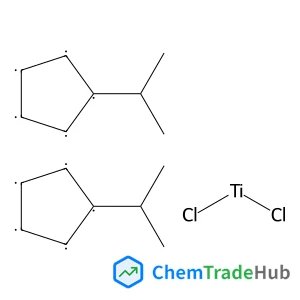
BIS(I-PROPYLCYCLOPENTADIENYL)TITANIUM DICHLORIDE
CAS Number:
12130-65-3
Molecular Formula:
C16H22Cl2Ti
Recommended Suppliers





Disclaimer
This page provides academic journal information for reference and research purposes only. We are not affiliated with any journal publishers and do not handle publication submissions. For publication-related inquiries, please contact the respective journal publishers directly.
If you notice any inaccuracies in the information displayed, please contact us at support@chemtradehub.com. We will promptly review and address your concerns.