












![2-(5-Bromo-1H-pyrrolo[2,3-B]pyridin-3-YL)acetic acid structure](https://static.chemtradehub.com/structs/106/1060795-03-0-0589.webp "2-(5-Bromo-1H-pyrrolo[2,3-B]pyridin-3-YL)acetic acid structure")
2-(5-Bromo-1H-pyrrolo[2,3-B]pyridin-3-YL)acetic acid
CAS Number:
1060795-03-0
Molecular Formula:
C9H7BrN2O2
Sara Piovesan, Paul A. Cox, James R. Smith, Dimitrios G. Fatouros, Marta Roldo
Molecular mechanics and molecular dynamics simulations have been employed to characterise the interactions between SWNTs and biocompatible amphililic derivatives of chitosan, namely N-butyl-O-sulfate chitosan (NBSC), N-octyl-O-sulfate chitosan (NOSC) and N-palmitoyl-O-sulfate chitosan (NPSC). The computational simulations have shown that the affinity of the polymer for the hydrophobic surface of the nanotubes depends on the length of the chitosan hydrophobic pendant chain. Longer chains have a higher flexibility and therefore a better ability to wrap around the nanotubes. To underpin the theoretical calculations, experimental studies revealed that NPSC exhibits highest affinity for SWNTs with up to 66.9 ± 19.7% SWNTs stably suspended in an aqueous environment; this affinity was confirmed by the calculated binding energy of five polymer chains with a SWNT that was found to be −300.93 kcal mol−1, the highest amongst the three polymers studied. Furthermore, the high value of cell viability after incubation with NPSC indicates that this is a good candidate for the preparation of biocompatible SWNTs dipersions that could be used in biomedical and pharmaceutical applications.
Daisuke Sugioka, Tatsuya Kameyama, Susumu Kuwabata, Tsukasa Torimoto
DOI: 10.1039/C5CP01602A
José X. Lima Neto, Umberto L. Fulco, Eudenilson L. Albuquerque, Gilberto Corso, Eveline M. Bezerra, Ewerton W. S. Caetano, Roner F. da Costa, Valder N. Freire
DOI: 10.1039/C4CP05630B
Rui-Qin Zhang
DOI: 10.1039/C4CP05973E
Bradley J. Brennan, Alec C. Durrell, Matthieu Koepf, Robert H. Crabtree, Gary W. Brudvig
DOI: 10.1039/C5CP01683E
Florence Haudin, V. Brasiliense, Julyan H. E. Cartwright, Fabian Brau, A. De Wit
DOI: 10.1039/C5CP00068H
Xiaoliang Zhang, Jianhua Liu, Jindan Zhang, Erik M. J. Johansson
DOI: 10.1039/C4CP06068G
Toru Utsunomiya, Shoko Tatsumi, Yasuyuki Yokota, Ken-ichi Fukui
DOI: 10.1039/C5CP01156F
Qing-Yun Xiang, Yu Wang, Shi-Yu Li, Lan-Hua Wang, Li-Bin Mo, Wen-Qing Yao, Li Zhang
DOI: 10.1039/C5CP00878F
Francisco B. C. Machado
DOI: 10.1039/C4CP05751A
DOI: 10.1039/C5CP01490E
(5-Sulfamoyl-3-pyridinyl)boronic acid is primarily used in chemical synthesis, p...
Benzyl 2-methyl-2-(methylsulfonyl)-4-pentenoate is typically synthesized via est...
When handling 8-Fluoroquinolin-6-ol (CAS: 209353-22-0), it is important to use p...
1,3-Dibromo-5-(2-methyl-2-propanyl)benzene (CAS: 129316-09-2) is a crystalline c...
Ethyl 7-chloro-4-oxo-1-(1,3-thiazol-2-yl)-1,4-dihydro-1,8-naphthyridine-3-carbox...
When handling Delta-7-Avenasterol (CAS: 23290-26-8), it is important to wear app...
Proper handling involves the use of personal protective equipment such as gloves...
When handling 2-Methyl-2-proanyl 4-[(2-aminophenyl)amino]-1-piperidinecarboxylat...
N-Methyl-4-chlorobenzylamine hydrochloride (CAS: 65542-24-7) is a organic compou...
[2-(Dodecyloxy)ethoxy]acetic acid (CAS: 27306-90-7) is generally considered safe...

Physical Chemistry Chemical Physics (PCCP) is an international journal co-owned by 19 physical chemistry and physics societies from around the world. This journal publishes original, cutting-edge research in physical chemistry, chemical physics and biophysical chemistry. To be suitable for publication in PCCP, articles must include significant innovation and/or insight into physical chemistry; this is the most important criterion that reviewers and Editors will judge against when evaluating submissions. The journal has a broad scope and welcomes contributions spanning experiment, theory, computation and data science. Topical coverage includes spectroscopy, dynamics, kinetics, statistical mechanics, thermodynamics, electrochemistry, catalysis, surface science, quantum mechanics, quantum computing and machine learning. Interdisciplinary research areas such as polymers and soft matter, materials, nanoscience, energy, surfaces/interfaces, and biophysical chemistry are welcomed if they demonstrate significant innovation and/or insight into physical chemistry. Joined experimental/theoretical studies are particularly appreciated when complementary and based on up-to-date approaches.
![2-Methyl-2-propanyl 4-oxo-3,9-diazabicyclo[4.2.1]nonane-9-carboxylate structure](https://static.chemtradehub.com/structs/131/1312456-05-5-9a15.webp "2-Methyl-2-propanyl 4-oxo-3,9-diazabicyclo[4.2.1]nonane-9-carboxylate structure")
![N-[2,6-Di(9-anthryl)-4-oxido-8,9,10,11,12,13,14,15-octahydrodinaphtho[2,1-d:1',2'-f][1,3,2]dioxaphosphepin-4-yl]-1,1,1-trifluoromethanesulfonamide structure](https://static.chemtradehub.com/structs/122/1227374-64-2-cdb5.webp "N-[2,6-Di(9-anthryl)-4-oxido-8,9,10,11,12,13,14,15-octahydrodinaphtho[2,1-d:1',2'-f][1,3,2]dioxaphosphepin-4-yl]-1,1,1-trifluoromethanesulfonamide structure")
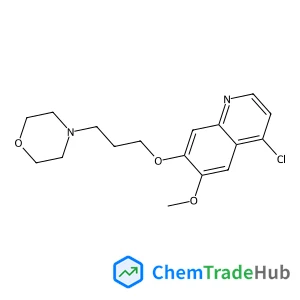
![4-Fluoro-2-(4-{[(3S,4R)-4-(2-hydroxy-2-propanyl)-3-pyrrolidinyl]amino}-6,7-dimethoxy-2-quinazolinyl)phenol hydrochloride (1:1) structure](https://static.chemtradehub.com/structs/143/1431697-96-9-619c.webp "4-Fluoro-2-(4-{[(3S,4R)-4-(2-hydroxy-2-propanyl)-3-pyrrolidinyl]amino}-6,7-dimethoxy-2-quinazolinyl)phenol hydrochloride (1:1) structure")




