












Complementary amphiphilic ribonucleotides confined into nanostructured environments
Literature Information
Publication Date
2010-06-01
DOI
10.1039/C001781G
Impact Factor
3.676
Authors
Ruggero Angelico, Luigi Ambrosone, Andrea Ceglie, Giovanna De Zio
View Original
Abstract
This article focuses on the physico-chemical investigation of the time evolution of self-assembled structures composed by oppositely charged surfactant monomers. The cationic components were represented by the well known cetyl-trimethyl-ammonium-bromide (CTAB) while the anionic monomers consisted of amphiphilic ribonucleotide derivatives, also called nucleo-lipids (NL). The latter were generated in situ by direct reaction between a hydrophobic precursor, dodecyl epoxide (DE), and a pair of complementary ribonucleotide mono-phosphates: adenosine mono-phosphate (AMP) and uridine mono-phosphate (UMP). Analysis of reaction mixtures by liquid chromatography-electrospray ionization-single, tandem and sequential mass spectrometry (LC-ESI-MS, MS/MS and MS3) confirmed that the generated NL corresponded to ribonucleotides linked to one, two and even three hydroxy-dodecyl tails on their molecular structures and whose amounts had peculiar time dependences. In the solutions incubated with an equimolar mixture of both types of ribonucleotides, a remarkable positive feedback effect on the reaction products was ascribed to the contemporary presence of AMP and UMP. The variation of aggregate sizes, due to the incorporation process of NL monomers into starting CTAB micelles, was monitored through time-resolved measurements of both dynamic light-scattering (DLS) and electrophoretic mobilities, together with calculated zeta-(ζ)-potential. Finally, a kinetic model based on auto-catalytic mechanisms was outlined to analyze the process of the catanionic vesicles growth observed during the whole reaction time-course. The model was also in good agreement with MS data. The proposed colloidal system may be considered a simplified model whereby to study the potential role of complementary nucleic bases in triggering primitive chemical selections.
Related Literature
Effects of nanoconfinement on the morphology and reactivity of organic materials
2005-07-19
Feature Article
DOI: 10.1039/B502849N
A high throughput screening method for the selection of zeolites for binding cations
Edel M. Minogue, Tammy P. Taylor, Anthony K. Burrell, George J. Havrilla, Benjamin P. Warner, Michael T. Janicke
2005-07-26
Communication
DOI: 10.1039/B506044C
Microporous organic crystals: an unusual case for l-leucyl–l-serine
Carl Henrik Görbitz, Mette Nilsen, Kai Szeto, Linda Wibecke Tangen
2005-07-28
Communication
DOI: 10.1039/B504976H
A new simple synthesis of poly(thiophene-methine)s
Md. Badruz Zaman, Dmitrii F. Perepichka
2005-07-20
Communication
DOI: 10.1039/B506138E
Photostability of a highly luminescent europium β-diketonate complex in imidazolium ionic liquids
Peter Nockemann, Eva Beurer, Kris Driesen, Rik Van Deun, Kristof Van Hecke, Luc Van Meervelt, Koen Binnemans
2005-08-03
Communication
DOI: 10.1039/B506915G
The first ternary tin(ii) nitride: NaSnN
Nicholas S. P. Watney, Zoltán A. Gál, Matthew D. S. Webster, Simon J. Clarke
2005-07-20
Communication
DOI: 10.1039/B505208D
Synthesis of 1,3-dioxo-hexahydropyrido[1,2-c][1,3]diazepine carboxylates, a new bicyclic skeleton formed by ring expansion–RCM methodology
Nicolai Dieltiens, Diederica D. Claeys, Bart Allaert, Francis Verpoort, Christian V. Stevens
2005-08-04
Communication
DOI: 10.1039/B508663A
Virus–glycopolymer conjugates by copper(i) catalysis of atom transfer radical polymerization and azide–alkyne cycloaddition
Sayam Sen Gupta, Krishnaswami S. Raja, Eiton Kaltgrad, Erica Strable, M. G. Finn
2005-07-19
Communication
DOI: 10.1039/B502444G
The synthesis of tris(perfluoroalkyl)phosphines
Makeba B. Murphy-Jolly, Lesley C. Lewis, Andrew J. M. Caffyn
2005-08-08
Communication
DOI: 10.1039/B507752D
You might also like
Compound Q&A
How should waste containing N-Methoxy-N-methyl-1,3-thiazole-5-carboxamide (CAS: 898825-89-3) be handled?
Waste containing N-Methoxy-N-methyl-1,3-thiazole-5-carboxamide (CAS: 898825-89-3...
898825-89-3N-Methoxy-N-methyl-1...
Compound Q&A
How should N-(4-Biphenylyl)dibenzo[b,d]furan-4-amine (CAS: 1318338-47-4) be stored?
N-(4-Biphenylyl)dibenzo[b,d]furan-4-amine should be stored in a tightly sealed c...
1318338-47-4N-(4-Biphenylyl)dibe...
Compound Q&A
What is the market or research trend for 3-Acetamido-5-amino-2,4,6-triiodobenzoic acid (CAS: 1713-07-1)?
The market for 3-Acetamido-5-amino-2,4,6-triiodobenzoic acid (CAS: 1713-07-1) is...
1713-07-13-Acetamido-5-amino-...
Compound Q&A
How should Benzyl 2-O-acetyl-3,4,6-tri-O-benzyl-beta-D-galactopyranoside (CAS: 61820-03-9) be stored?
Benzyl 2-O-acetyl-3,4,6-tri-O-benzyl-beta-D-galactopyranoside (CAS: 61820-03-9) ...
61820-03-9Benzyl 2-O-acetyl-3,...
Compound Q&A
What regulatory guidelines apply to 2-Ethylpiperazine dihydrochloride (CAS: 438050-52-3)?
2-Ethylpiperazine dihydrochloride (CAS: 438050-52-3) is regulated under the Glob...
438050-52-32-Ethylpiperazine di...
Compound Q&A
What regulatory guidelines apply to 1,1'-[1,3-Phenylenebis(methylene)]bis(3-methyl-1H-pyrrole-2,5-dione) (CAS: 119462-56-5)?
1,1'-[1,3-Phenylenebis(methylene)]bis(3-methyl-1H-pyrrole-2,5-dione) (CAS: 11946...
119462-56-51,1'-[1,3-Phenyleneb...
Compound Q&A
Are there alternatives to 5-Fluoro-2-(1-pyrrolidinyl)pyridine (CAS: 1287217-79-1) in synthesis?
Several alternatives can be used in the synthesis of 5-Fluoro-2-(1-pyrrolidinyl)...
1287217-79-15-Fluoro-2-(1-pyrrol...
Compound Q&A
What precautions should be taken when handling 1-((2R,3R,4R,5R)-5-((bis(4-methoxyphenyl)(phenyl)methoxy)methyl)-4-hydroxy-3-methoxytetrahydrofuran-2-yl)-5-methylpyrimidine-2,4(1H,3H)-dione (CAS: 153631-19-7)?
Proper personal protective equipment (PPE) must be worn when handling this compo...
153631-19-71-((2R,3R,4R,5R)-5-(...
Compound Q&A
What precautions should be taken when handling 6-Bromoimidazo[1,2-a]pyridin-8-amine (CAS: 676371-00-9)?
When handling 6-Bromoimidazo[1,2-a]pyridin-8-amine, it is important to wear appr...
676371-00-96-Bromoimidazo[1,2-a...
Compound Q&A
Are there alternatives to (2S,4R)-4-(4-Nitrobenzyl)pyrrolidine-2-carboxylic acid hydrochloride (CAS: 1049740-22-8) in synthesis?
Alternatives to (2S,4R)-4-(4-Nitrobenzyl)pyrrolidine-2-carboxylic acid hydrochlo...
1049740-22-8(2S,4R)-4-(4-Nitrobe...
Source Journal
Physical Chemistry Chemical Physics

CiteScore:
5.5
Self-citation Rate:
10.3%
Articles per Year:
3036
Physical Chemistry Chemical Physics (PCCP) is an international journal co-owned by 19 physical chemistry and physics societies from around the world. This journal publishes original, cutting-edge research in physical chemistry, chemical physics and biophysical chemistry. To be suitable for publication in PCCP, articles must include significant innovation and/or insight into physical chemistry; this is the most important criterion that reviewers and Editors will judge against when evaluating submissions. The journal has a broad scope and welcomes contributions spanning experiment, theory, computation and data science. Topical coverage includes spectroscopy, dynamics, kinetics, statistical mechanics, thermodynamics, electrochemistry, catalysis, surface science, quantum mechanics, quantum computing and machine learning. Interdisciplinary research areas such as polymers and soft matter, materials, nanoscience, energy, surfaces/interfaces, and biophysical chemistry are welcomed if they demonstrate significant innovation and/or insight into physical chemistry. Joined experimental/theoretical studies are particularly appreciated when complementary and based on up-to-date approaches.
Recommended Compounds

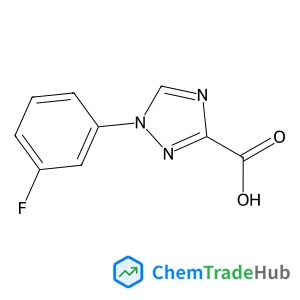
1-(3-Fluorophenyl)-1H-1,2,4-triazole-3-carboxylic acid
CAS Number:
1292369-51-7
Molecular Formula:
C9H6FN3O2
![4-[(2-{2-[2-(2-Aminoethoxy)ethoxy]ethoxy}ethyl)amino]-2-(2,6-dioxo-3-piperidinyl)-1H-isoindole-1,3(2H)-dione structure](https://static.chemtradehub.com/structs/209/2093416-31-8-3162.webp "4-[(2-{2-[2-(2-Aminoethoxy)ethoxy]ethoxy}ethyl)amino]-2-(2,6-dioxo-3-piperidinyl)-1H-isoindole-1,3(2H)-dione structure")
4-[(2-{2-[2-(2-Aminoethoxy)ethoxy]ethoxy}ethyl)amino]-2-(2,6-dioxo-3-piperidinyl)-1H-isoindole-1,3(2H)-dione
CAS Number:
2093416-31-8
Molecular Formula:
C21H28N4O7
![2-(7,7-Difluorobicyclo[4.1.0]hept-1-yl)ethanamine structure](https://static.chemtradehub.com/structs/209/2098065-08-6-ff24.webp "2-(7,7-Difluorobicyclo[4.1.0]hept-1-yl)ethanamine structure")
2-(7,7-Difluorobicyclo[4.1.0]hept-1-yl)ethanamine
CAS Number:
2098065-08-6
Molecular Formula:
C9H15F2N
Recommended Suppliers





Disclaimer
This page provides academic journal information for reference and research purposes only. We are not affiliated with any journal publishers and do not handle publication submissions. For publication-related inquiries, please contact the respective journal publishers directly.
If you notice any inaccuracies in the information displayed, please contact us at support@chemtradehub.com. We will promptly review and address your concerns.