












Nanoscale-faceting of metal surfaces induced by adsorbates
Literature Information
Publication Date
2010-06-15
DOI
10.1039/C000766H
Impact Factor
3.676
Authors
Payam Kaghazchi, Donato Fantauzzi, Josef Anton, Timo Jacob
View Original
Abstract
Using density functional theory and thermodynamic considerations, adsorbate-induced faceting of high-index metal surfaces such as Ir(210) and Re(111) has been studied. Focusing on these two systems we first discuss the adsorption behaviour of oxygen and nitrogen on the various surfaces relevant for the faceting, and afterwards use these energies to evaluate the stability of substrates and facets in the presence of oxygen and nitrogen. The faceting phase diagrams of Ir(210) and Re(111) show that both adsorbates enhance the anisotropy in surface free energy, finally causing nanofacets to become the thermodynamically favourable surface structure. We also generated analogous electrochemical phase diagrams for both surfaces in contact with an oxygen- or nitrogen-containing electrolyte and found that the same nanofacets should also become stable at positive electrode potentials. Thus, our calculations not only reproduce the experimentally observed surface faceting under UHV conditions, but also predict facet formation under electrochemical conditions.
Related Literature
Structures of FEC-containing electrolytes and the stabilization mechanism at high voltage and elevated temperature
Yamin Wang, Debing Li, Xiaoying Yu, Chao Shang, Yingchun Liu, Qi Wang
2018-07-09
Paper
DOI: 10.1039/C7CP08362A
Towards reliable references for electron paramagnetic resonance parameters based on quantum chemistry: the case of verdazyl radicals
Steffen Eusterwiemann, Armido Studer
2018-02-26
Paper
DOI: 10.1039/C7CP05657E
Dual-mode infrared laser-excited synergistic effect in NaGdF4:Er3+ nano-glass ceramics: a kinetic model
Yemin Wang, Jie Cheng
2018-08-01
Paper
DOI: 10.1039/C8CP02974A
Fluorescence quantum yields of dye aggregates: a showcase example based on self-assembled perylene bisimide dimers
Franziska Fennel, Jana Gershberg
2018-03-01
Paper
DOI: 10.1039/C7CP07778E
Chiral effects on the final step of an octahedron-shaped coordination capsule self-assembly
Y. Matsumura, S. Iuchi, S. Hiraoka
2018-01-25
Communication
DOI: 10.1039/C7CP08237A
Retracted Article: Comparing gas transport in three polymers via molecular dynamics simulation
Luke R. Anderson, Andrew M. Ediger
2018-08-13
Paper
DOI: 10.1039/C8CP02829J
Improving the activity of gold nanoparticles for the water-gas shift reaction using TiO2–Y2O3: an example of catalyst design
Jose J. Plata, Francisca Romero-Sarria, Javier Amaya Suárez, Antonio M. Márquez, Óscar H. Laguna, José A. Odriozola, Javier Fdez Sanz
2018-08-03
Paper
DOI: 10.1039/C8CP03706J
Probing the impact of magnetic interactions on the lattice dynamics of two-dimensional Ti2X (X = C, N) MXenes
Małgorzata Sternik, Urszula D. Wdowik
2018-02-14
Paper
DOI: 10.1039/C7CP08270C
You might also like
Compound Q&A
How should waste containing N-Methoxy-N-methyl-1,3-thiazole-5-carboxamide (CAS: 898825-89-3) be handled?
Waste containing N-Methoxy-N-methyl-1,3-thiazole-5-carboxamide (CAS: 898825-89-3...
898825-89-3N-Methoxy-N-methyl-1...
Compound Q&A
How should N-(4-Biphenylyl)dibenzo[b,d]furan-4-amine (CAS: 1318338-47-4) be stored?
N-(4-Biphenylyl)dibenzo[b,d]furan-4-amine should be stored in a tightly sealed c...
1318338-47-4N-(4-Biphenylyl)dibe...
Compound Q&A
What is the market or research trend for 3-Acetamido-5-amino-2,4,6-triiodobenzoic acid (CAS: 1713-07-1)?
The market for 3-Acetamido-5-amino-2,4,6-triiodobenzoic acid (CAS: 1713-07-1) is...
1713-07-13-Acetamido-5-amino-...
Compound Q&A
How should Benzyl 2-O-acetyl-3,4,6-tri-O-benzyl-beta-D-galactopyranoside (CAS: 61820-03-9) be stored?
Benzyl 2-O-acetyl-3,4,6-tri-O-benzyl-beta-D-galactopyranoside (CAS: 61820-03-9) ...
61820-03-9Benzyl 2-O-acetyl-3,...
Compound Q&A
What regulatory guidelines apply to 2-Ethylpiperazine dihydrochloride (CAS: 438050-52-3)?
2-Ethylpiperazine dihydrochloride (CAS: 438050-52-3) is regulated under the Glob...
438050-52-32-Ethylpiperazine di...
Compound Q&A
What regulatory guidelines apply to 1,1'-[1,3-Phenylenebis(methylene)]bis(3-methyl-1H-pyrrole-2,5-dione) (CAS: 119462-56-5)?
1,1'-[1,3-Phenylenebis(methylene)]bis(3-methyl-1H-pyrrole-2,5-dione) (CAS: 11946...
119462-56-51,1'-[1,3-Phenyleneb...
Compound Q&A
Are there alternatives to 5-Fluoro-2-(1-pyrrolidinyl)pyridine (CAS: 1287217-79-1) in synthesis?
Several alternatives can be used in the synthesis of 5-Fluoro-2-(1-pyrrolidinyl)...
1287217-79-15-Fluoro-2-(1-pyrrol...
Compound Q&A
What precautions should be taken when handling 1-((2R,3R,4R,5R)-5-((bis(4-methoxyphenyl)(phenyl)methoxy)methyl)-4-hydroxy-3-methoxytetrahydrofuran-2-yl)-5-methylpyrimidine-2,4(1H,3H)-dione (CAS: 153631-19-7)?
Proper personal protective equipment (PPE) must be worn when handling this compo...
153631-19-71-((2R,3R,4R,5R)-5-(...
Compound Q&A
What precautions should be taken when handling 6-Bromoimidazo[1,2-a]pyridin-8-amine (CAS: 676371-00-9)?
When handling 6-Bromoimidazo[1,2-a]pyridin-8-amine, it is important to wear appr...
676371-00-96-Bromoimidazo[1,2-a...
Compound Q&A
Are there alternatives to (2S,4R)-4-(4-Nitrobenzyl)pyrrolidine-2-carboxylic acid hydrochloride (CAS: 1049740-22-8) in synthesis?
Alternatives to (2S,4R)-4-(4-Nitrobenzyl)pyrrolidine-2-carboxylic acid hydrochlo...
1049740-22-8(2S,4R)-4-(4-Nitrobe...
Source Journal
Physical Chemistry Chemical Physics

CiteScore:
5.5
Self-citation Rate:
10.3%
Articles per Year:
3036
Physical Chemistry Chemical Physics (PCCP) is an international journal co-owned by 19 physical chemistry and physics societies from around the world. This journal publishes original, cutting-edge research in physical chemistry, chemical physics and biophysical chemistry. To be suitable for publication in PCCP, articles must include significant innovation and/or insight into physical chemistry; this is the most important criterion that reviewers and Editors will judge against when evaluating submissions. The journal has a broad scope and welcomes contributions spanning experiment, theory, computation and data science. Topical coverage includes spectroscopy, dynamics, kinetics, statistical mechanics, thermodynamics, electrochemistry, catalysis, surface science, quantum mechanics, quantum computing and machine learning. Interdisciplinary research areas such as polymers and soft matter, materials, nanoscience, energy, surfaces/interfaces, and biophysical chemistry are welcomed if they demonstrate significant innovation and/or insight into physical chemistry. Joined experimental/theoretical studies are particularly appreciated when complementary and based on up-to-date approaches.
Recommended Compounds

N-(4-Chlorobenzyl)-beta-alanine hydrochloride (1:1)
CAS Number:
1172479-10-5
Molecular Formula:
C10H13Cl2NO2
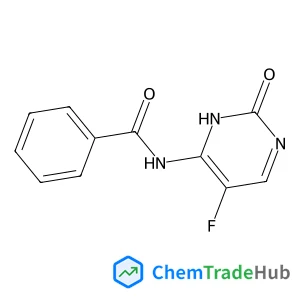
N-(5-Fluoro-2-oxo-2,3-dihydro-4-pyrimidinyl)benzamide
CAS Number:
10357-07-0
Molecular Formula:
C11H8FN3O2

Recommended Suppliers





Disclaimer
This page provides academic journal information for reference and research purposes only. We are not affiliated with any journal publishers and do not handle publication submissions. For publication-related inquiries, please contact the respective journal publishers directly.
If you notice any inaccuracies in the information displayed, please contact us at support@chemtradehub.com. We will promptly review and address your concerns.