













Effect of deprotonation on absorption and emission spectra of Ru(ii)-bpy complexes functionalized with carboxyl groups
Literature Information
Publication Date
2010-06-16
DOI
10.1039/B924910A
Impact Factor
3.676
Authors
Svetlana Kilina, Alexey Koposov, Milan Sykora, Sergei Tretiak
View Original
Abstract
Changes in the ground and excited state electronic structure of the [Ru(bpy)3]2+ (bpy = 2,2′-bipyridine) complex induced by functionalization of bpy ligands with carboxyl and methyl groups in their protonated and deprotonated forms are studied experimentally using absorption and emission spectroscopy and theoretically using density functional theory (DFT) and time dependent DFT (TDDFT). The introduction of the carboxyl groups shifts the metal-to-ligand-charge-transfer (MLCT) absorption and emission bands to lower energies in functionalized complexes. Our calculations show that this red-shift is due to the stabilization of the lowest unoccupied orbitals localized on the substituted ligands, while the energies of the highest occupied orbitals localized on the Ru-center are not significantly affected. Consistent with previously observed trends in optical spectra of related Ru(II) complexes, deprotonation of the carboxyl groups results in a blue shift in the absorption and phosphorescence spectra. The effect originates from interplay of positive and negative solvatochromism in the protonated and deprotonated complexes, respectively. This results in more delocalized character of the electron transition orbitals in the deprotonated species and a strong destabilization of the three lowest unoccupied orbitals localized on the substituted and unsubstituted ligands, all of which contribute to the lowest-energy optical transitions. We also found that owing to the complexity of the excited state potential energy surfaces, the calculated lowest triplet excited state can be either weakly optically allowed 3MLCT or optically forbidden Ru 3d–d transition depending on the initial wavefunction guess used in TDDFT calculations.
Related Literature
Assessing the predictability of anharmonic vibrational modes at the example of hydroxyl groups – ad hoc construction of localised modes and the influence of structural solute–solvent motifs
Manuel J. Schuler, Thomas S. Hofer, Christian W. Huck
2017-04-18
Paper
DOI: 10.1039/C7CP01662J
Towards improved magnetic fluid hyperthermia: major-loops to diminish variations in local heating
Cristina Munoz-Menendez, Juan M. Ruso, Daniel Baldomir
2017-05-11
Paper
DOI: 10.1039/C7CP01442B
Towards a formal definition of static and dynamic electronic correlations
Carlos L. Benavides-Riveros, Nektarios N. Lathiotakis, Miguel A. L. Marques
2017-05-05
Paper
DOI: 10.1039/C7CP01137G
Water-repellent hydrophilic nanogrooves
Yu-Hsuan Weng, I-Fan Hsieh, Yu-Jane Sheng
2017-04-27
Paper
DOI: 10.1039/C7CP01409K
A theoretical study of complexes formed between cations and curved aromatic systems: electrostatics does not always control cation–π interaction
Jorge A. Carrazana-García, Enrique M. Cabaleiro-Lago, Jesús Rodríguez-Otero
2017-03-24
Paper
DOI: 10.1039/C7CP01491K
An approximate full-dimensional quantum dynamics study of the mode specificity in the dissociative chemisorption of D2O on rigid Cu(111)
Tianhui Liu, Bina Fu, Dong H. Zhang
2017-04-11
Paper
DOI: 10.1039/C7CP01770G
Exploiting hydrogen bonding interactions to probe smaller linear and cyclic diamines binding to G-quadruplexes: a DFT and molecular dynamics study
Anik Sen
2017-04-07
Paper
DOI: 10.1039/C7CP00472A
Emission behaviours of novel V- and X-shaped fluorophores in response to pH and force stimuli
Hong-Yu Fu, Ning Xu, Yi-Min Pan, Xiao-Lin Lu, Min Xia
2017-04-06
Paper
DOI: 10.1039/C7CP01281K
You might also like
Compound Q&A
How should waste containing N-Methoxy-N-methyl-1,3-thiazole-5-carboxamide (CAS: 898825-89-3) be handled?
Waste containing N-Methoxy-N-methyl-1,3-thiazole-5-carboxamide (CAS: 898825-89-3...
898825-89-3N-Methoxy-N-methyl-1...
Compound Q&A
How should N-(4-Biphenylyl)dibenzo[b,d]furan-4-amine (CAS: 1318338-47-4) be stored?
N-(4-Biphenylyl)dibenzo[b,d]furan-4-amine should be stored in a tightly sealed c...
1318338-47-4N-(4-Biphenylyl)dibe...
Compound Q&A
What is the market or research trend for 3-Acetamido-5-amino-2,4,6-triiodobenzoic acid (CAS: 1713-07-1)?
The market for 3-Acetamido-5-amino-2,4,6-triiodobenzoic acid (CAS: 1713-07-1) is...
1713-07-13-Acetamido-5-amino-...
Compound Q&A
How should Benzyl 2-O-acetyl-3,4,6-tri-O-benzyl-beta-D-galactopyranoside (CAS: 61820-03-9) be stored?
Benzyl 2-O-acetyl-3,4,6-tri-O-benzyl-beta-D-galactopyranoside (CAS: 61820-03-9) ...
61820-03-9Benzyl 2-O-acetyl-3,...
Compound Q&A
What regulatory guidelines apply to 2-Ethylpiperazine dihydrochloride (CAS: 438050-52-3)?
2-Ethylpiperazine dihydrochloride (CAS: 438050-52-3) is regulated under the Glob...
438050-52-32-Ethylpiperazine di...
Compound Q&A
What regulatory guidelines apply to 1,1'-[1,3-Phenylenebis(methylene)]bis(3-methyl-1H-pyrrole-2,5-dione) (CAS: 119462-56-5)?
1,1'-[1,3-Phenylenebis(methylene)]bis(3-methyl-1H-pyrrole-2,5-dione) (CAS: 11946...
119462-56-51,1'-[1,3-Phenyleneb...
Compound Q&A
Are there alternatives to 5-Fluoro-2-(1-pyrrolidinyl)pyridine (CAS: 1287217-79-1) in synthesis?
Several alternatives can be used in the synthesis of 5-Fluoro-2-(1-pyrrolidinyl)...
1287217-79-15-Fluoro-2-(1-pyrrol...
Compound Q&A
What precautions should be taken when handling 1-((2R,3R,4R,5R)-5-((bis(4-methoxyphenyl)(phenyl)methoxy)methyl)-4-hydroxy-3-methoxytetrahydrofuran-2-yl)-5-methylpyrimidine-2,4(1H,3H)-dione (CAS: 153631-19-7)?
Proper personal protective equipment (PPE) must be worn when handling this compo...
153631-19-71-((2R,3R,4R,5R)-5-(...
Compound Q&A
What precautions should be taken when handling 6-Bromoimidazo[1,2-a]pyridin-8-amine (CAS: 676371-00-9)?
When handling 6-Bromoimidazo[1,2-a]pyridin-8-amine, it is important to wear appr...
676371-00-96-Bromoimidazo[1,2-a...
Compound Q&A
Are there alternatives to (2S,4R)-4-(4-Nitrobenzyl)pyrrolidine-2-carboxylic acid hydrochloride (CAS: 1049740-22-8) in synthesis?
Alternatives to (2S,4R)-4-(4-Nitrobenzyl)pyrrolidine-2-carboxylic acid hydrochlo...
1049740-22-8(2S,4R)-4-(4-Nitrobe...
Source Journal
Physical Chemistry Chemical Physics

CiteScore:
5.5
Self-citation Rate:
10.3%
Articles per Year:
3036
Physical Chemistry Chemical Physics (PCCP) is an international journal co-owned by 19 physical chemistry and physics societies from around the world. This journal publishes original, cutting-edge research in physical chemistry, chemical physics and biophysical chemistry. To be suitable for publication in PCCP, articles must include significant innovation and/or insight into physical chemistry; this is the most important criterion that reviewers and Editors will judge against when evaluating submissions. The journal has a broad scope and welcomes contributions spanning experiment, theory, computation and data science. Topical coverage includes spectroscopy, dynamics, kinetics, statistical mechanics, thermodynamics, electrochemistry, catalysis, surface science, quantum mechanics, quantum computing and machine learning. Interdisciplinary research areas such as polymers and soft matter, materials, nanoscience, energy, surfaces/interfaces, and biophysical chemistry are welcomed if they demonstrate significant innovation and/or insight into physical chemistry. Joined experimental/theoretical studies are particularly appreciated when complementary and based on up-to-date approaches.
Recommended Compounds
![[4-Amino-2-(methylsulfanyl)-5-pyrimidinyl]methanol structure](https://static.chemtradehub.com/structs/588/588-36-3-fc73.webp "[4-Amino-2-(methylsulfanyl)-5-pyrimidinyl]methanol structure")

(3beta,7beta,12beta)-3,7,12-Trihydroxy-11,15,23-trioxolanost-8-en-26-oic acid
CAS Number:
98665-22-6
Molecular Formula:
C30H44O8
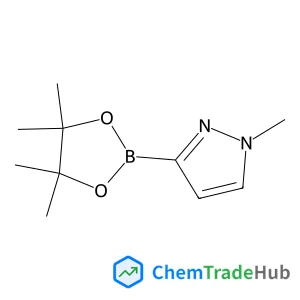
1-Methyl-3-(4,4,5,5-tetramethyl-1,3,2-dioxaborolan-2-yl)-1H-pyrazole
CAS Number:
1020174-04-2
Molecular Formula:
C10H17BN2O2

(1H-Benzotriazol-1-yloxy)(di-1-pyrrolidinyl)methylium hexafluorophosphate
CAS Number:
105379-24-6
Molecular Formula:
C15H21F6N5OP
Recommended Suppliers





Disclaimer
This page provides academic journal information for reference and research purposes only. We are not affiliated with any journal publishers and do not handle publication submissions. For publication-related inquiries, please contact the respective journal publishers directly.
If you notice any inaccuracies in the information displayed, please contact us at support@chemtradehub.com. We will promptly review and address your concerns.