


Temperature control of pattern formation in the Ru(bpy)32+-catalyzed BZ-AOT system
Literature Information
Publication Date
2009-01-19
DOI
10.1039/B814825B
Impact Factor
3.676
Authors
Rachel McIlwaine, Vladimir K. Vanag, Irving R. Epstein
View Original
Abstract
Using temperature as a control parameter, we observe a transition from stationary Turing patterns at T = 15–20 °C to traveling waves at T = 50 °C (and above) in the Ru(bpy)32+-catalyzed Belousov–Zhabotinsky (BZ) reaction incorporated into the water nanodroplets of a water-in-oil aerosol OT (AOT) microemulsion. At constant chemical composition, molar ratio and droplet fraction, the transition takes place via a series of stable patterns, including oscillatory Turing patterns (at 35–40 °C) and reversed oscillatory Turing patterns (at 50 °C). We attribute the pattern transitions to a temperature-induced percolation transition of the BZ-AOT microemulsion, implying a change from isolated water nanodroplets to a system-spanning network of water channels.
Recommended Journals

Russian Journal of General Chemistry

Current Opinion in Colloid & Interface Science

Russian Journal of Applied Chemistry

Nature Medicine

Journal of Natural Medicines

Russian Journal of Bioorganic Chemistry

Chemical Communications

Russian Journal of Coordination Chemistry

Chemistry Education Research and Practice

Acta Materialia
Related Literature
Surface plasmon resonance-based fiber optic hydrogen sulphide gas sensor utilizing Cu–ZnO thin films
Rana Tabassum, Satyendra K. Mishra, Banshi D. Gupta
2013-05-30
Paper
DOI: 10.1039/C3CP51525G
1-Propanol probing methodology: two-dimensional characterization of the effect of solute on H2O
2013-06-04
Perspective
DOI: 10.1039/C3CP51650D
Studies of bimolecular reaction dynamics using pulsed high-intensity vacuum-ultraviolet lasers for photoionization detection
Daniel R. Albert, H. Floyd Davis
2013-07-12
Perspective
DOI: 10.1039/C3CP51930A
The molecular clusters in a supercritical fluid–solid system should be considered as a phase—thermodynamic principle and evidence
Minqiang Hou, Jianling Zhang, Buxing Han, Qingqing Mei, Hui Ning, Dezhong Yang
2013-04-09
Paper
DOI: 10.1039/C3CP44670K
Methodological keys for accurate simulations
Ymène Houari, Adèle D. Laurent
2013-05-17
Paper
DOI: 10.1039/C3CP50791B
Time-resolved photoelectron spectroscopy of adenine and adenosine in aqueous solution
Franziska Buchner, Hans-Hermann Ritze, Jan Lahl, Andrea Lübcke
2013-05-07
Paper
DOI: 10.1039/C3CP51057C
Li diffusion through doped and defected graphene
Deya Das, Seungchul Kim, Kwang-Ryeol Lee, Abhishek K. Singh
2013-07-17
Paper
DOI: 10.1039/C3CP52891J
Impact of molecular solvophobicity vs. solvophilicity on device performances of dimeric perylene diimide based solution-processed non-fullerene organic solar cells
Zhenhuan Lu, Xin Zhang, Chuanlang Zhan, Bo Jiang, Xinliang Zhang, Lili Chen, Jiannian Yao
2013-06-06
Paper
DOI: 10.1039/C3CP51475G
Iron cation catalyzed reduction of N2O by CO: gas-phase temperature dependent kinetics
Joshua J. Melko, Shaun G. Ard, Joseph A. Fournier, Jun Li, Nicholas S. Shuman, Hua Guo, Albert A. Viggiano
2013-05-31
Paper
DOI: 10.1039/C3CP50335F
Assessment of femtosecond laser induced periodic surface structures on polymer films
Esther Rebollar, Javier R. Vázquez de Aldana, Ignacio Martín-Fabiani, Margarita Hernández, Daniel R. Rueda, Tiberio A. Ezquerra, Concepción Domingo, Pablo Moreno, Marta Castillejo
2013-05-13
Paper
DOI: 10.1039/C3CP51523K
You might also like
Compound Q&A
Are there alternatives to 1-(4-Chlorophenyl)-N-hydroxymethanimine (CAS: 3848-36-0) in synthesis?
When considering alternatives to 1-(4-Chlorophenyl)-N-hydroxymethanimine (CAS: 3...
3848-36-01-(4-Chlorophenyl)-N...
Compound Q&A
How should (1R,9S,10S,12S,14E,16S,19R,20R,21S,22R)-3,9,21-Trihydroxy-5,10,12,14,16,20,22-heptamethyl-23,24-dioxatetracyclo[17.3.1.1~6,9~.0~2,7~]tetracosa-2,5,7,14-tetraen-4-one (CAS: 183202-73-5) be stored?
This compound should be stored in a cool, dry place away from direct sunlight. I...
183202-73-5(1R,9S,10S,12S,14E,1...
Compound Q&A
How is 3-(4-Bromophenyl)-5-(2-fluorophenyl)-1,2,4-oxadiazole (CAS: 419553-16-5) typically synthesized?
3-(4-Bromophenyl)-5-(2-fluorophenyl)-1,2,4-oxadiazole is synthesized through a m...
419553-16-53-(4-Bromophenyl)-5-...
Compound Q&A
How is 5-Chloro-2-(4-chlorophenyl)-4-methyl-6-[3-(1-piperidinyl)propoxy]pyrimidine (CAS: 1639220-19-1) typically synthesized?
5-Chloro-2-(4-chlorophenyl)-4-methyl-6-[3-(1-piperidinyl)propoxy]pyrimidine (CAS...
1639220-19-15-Chloro-2-(4-chloro...
Compound Q&A
What industries use 2-Chloro-4-(difluoromethoxy)pyridine (CAS: 1206978-15-5)?
2-Chloro-4-(difluoromethoxy)pyridine is used in the pharmaceutical industry for ...
1206978-15-52-Chloro-4-(difluoro...
Compound Q&A
What regulatory guidelines apply to 3-Chloro-6-methylpyridazine (CAS: 1121-79-5)?
3-Chloro-6-methylpyridazine (CAS: 1121-79-5) is classified under the Globally Ha...
1121-79-53-Chloro-6-methylpyr...
Compound Q&A
Are there alternatives to Methyl 4,5-dimethyl-2-nitrobenzoate in synthesis?
Several alternatives can be used in the synthesis of Methyl 4,5-dimethyl-2-nitro...
90922-74-0Methyl 4,5-dimethyl-...
Compound Q&A
Are there alternatives to (2E,2'E)-3,3'-(1,4-Phenylene)bisacrylaldehyde in synthesis?
Alternatives to (2E,2'E)-3,3'-(1,4-Phenylene)bisacrylaldehyde include other acry...
63405-68-5(2E,2'E)-3,3'-(1,4-P...
Compound Q&A
What is 3-Amino-5-chloropyridin-2-ol hydrochloride (CAS: 1261906-29-9)?
3-Amino-5-chloropyridin-2-ol hydrochloride is an organic compound with the CAS n...
1261906-29-93-Amino-5-chloropyri...
Compound Q&A
What precautions should be taken when handling 6,7-Difluoro-2,3-dihydro-4H-chromen-4-one (CAS: 1092349-93-3)?
When handling 6,7-Difluoro-2,3-dihydro-4H-chromen-4-one, it is essential to wear...
1092349-93-36,7-Difluoro-2,3-dih...
Source Journal
Physical Chemistry Chemical Physics

CiteScore:
5.5
Self-citation Rate:
10.3%
Articles per Year:
3036
Physical Chemistry Chemical Physics (PCCP) is an international journal co-owned by 19 physical chemistry and physics societies from around the world. This journal publishes original, cutting-edge research in physical chemistry, chemical physics and biophysical chemistry. To be suitable for publication in PCCP, articles must include significant innovation and/or insight into physical chemistry; this is the most important criterion that reviewers and Editors will judge against when evaluating submissions. The journal has a broad scope and welcomes contributions spanning experiment, theory, computation and data science. Topical coverage includes spectroscopy, dynamics, kinetics, statistical mechanics, thermodynamics, electrochemistry, catalysis, surface science, quantum mechanics, quantum computing and machine learning. Interdisciplinary research areas such as polymers and soft matter, materials, nanoscience, energy, surfaces/interfaces, and biophysical chemistry are welcomed if they demonstrate significant innovation and/or insight into physical chemistry. Joined experimental/theoretical studies are particularly appreciated when complementary and based on up-to-date approaches.
Recommended Compounds
![[4-(Isobutyrylamino)phenyl]boronic acid structure](https://static.chemtradehub.com/structs/874/874219-50-8-6ab5.webp "[4-(Isobutyrylamino)phenyl]boronic acid structure")
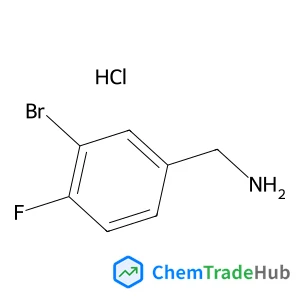
1-(3-Bromo-4-fluorophenyl)methanamine hydrochloride (1:1)
CAS Number:
202865-68-7
Molecular Formula:
C7H8BrClFN
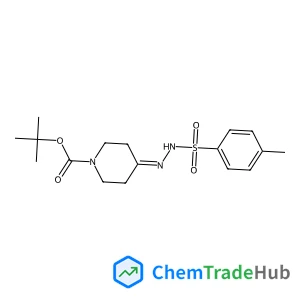
tert-Butyl 4-(2-(p-Tolylsulfonyl)hydrazono)piperidine-1-carboxylate
CAS Number:
1046478-89-0
Molecular Formula:
C17H25N3O4S
Recommended Suppliers





Disclaimer
This page provides academic journal information for reference and research purposes only. We are not affiliated with any journal publishers and do not handle publication submissions. For publication-related inquiries, please contact the respective journal publishers directly.
If you notice any inaccuracies in the information displayed, please contact us at support@chemtradehub.com. We will promptly review and address your concerns.