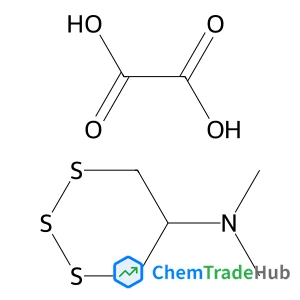
Oxalic acid compound with cyclohexylsulfamothioic O-acid (11)
CAS Number:
31895-22-4
Molecular Formula:
C7H13NO4S3
Guozhen Liu, Michael N. Paddon-Row, J. Justin Gooding
Herein we present a label-free immunobiosensor based on the modulation of amperometric signals of surface bound redox species when immersed in a protein environment which is applicable to either the detection of antibodies or the detection of small molecules such as drugs or pesticides.
Naixia Lv, Hongshun Ran, Jinrui Zhang, Jie Yin, Yuan Zhang, Hongping Li, Linhua Zhu
DOI: 10.1039/D3CP04963A
Safieh Nazari, Fatemeh Mohammad Dezashibi, Nadia Babaei Bidmeshki
DOI: 10.1039/D3CP04558G
Ekaterina A. Konopkina, Alexander V. Gopin, Anton S. Pozdeev, Maria G. Chernysheva, Paulina Kalle, Elizaveta A. Pavlova, Stepan N. Kalmykov, Vladimir G. Petrov, Nataliya E. Borisova, Alexander A. Guda, Petr I. Matveev
DOI: 10.1039/D3CP05081E
Yue Lou
DOI: 10.1039/D3CP04958B
Margarita Bužančić Milosavljević
DOI: 10.1039/D3CP05291E
Kang Zhao, Dao Wang, Sajjad Ur Rehman
DOI: 10.1039/D3CP04883G
Sergey Yu. Ketkov, Sheng-Yuan Tzeng, Elena A. Rychagova, Anton N. Lukoyanov, Wen-Bih Tzeng
DOI: 10.1039/D3CP05120J
Yi-Rong Liu, Yan Jiang
DOI: 10.1039/D3CP04702D
When considering alternatives to 1-(4-Chlorophenyl)-N-hydroxymethanimine (CAS: 3...
This compound should be stored in a cool, dry place away from direct sunlight. I...
3-(4-Bromophenyl)-5-(2-fluorophenyl)-1,2,4-oxadiazole is synthesized through a m...
5-Chloro-2-(4-chlorophenyl)-4-methyl-6-[3-(1-piperidinyl)propoxy]pyrimidine (CAS...
2-Chloro-4-(difluoromethoxy)pyridine is used in the pharmaceutical industry for ...
3-Chloro-6-methylpyridazine (CAS: 1121-79-5) is classified under the Globally Ha...
Several alternatives can be used in the synthesis of Methyl 4,5-dimethyl-2-nitro...
Alternatives to (2E,2'E)-3,3'-(1,4-Phenylene)bisacrylaldehyde include other acry...
3-Amino-5-chloropyridin-2-ol hydrochloride is an organic compound with the CAS n...
When handling 6,7-Difluoro-2,3-dihydro-4H-chromen-4-one, it is essential to wear...

ChemComm publishes urgent research which is of outstanding significance and interest to experts in the field, while also appealing to the journal’s broad chemistry readership. Our communication format is ideally suited to short, urgent studies that are of such importance that they require accelerated publication. Our scope covers all topics in chemistry, and research at the interface of chemistry and other disciplines (such as materials science, nanoscience, physics, engineering and biology) where there is a significant novelty in the chemistry aspects. Major topic areas covered include: Analytical Chemistry Catalysis Chemical Biology and medicinal chemistry Computational Chemistry and Machine Learning Energy and sustainable chemistry Environmental Chemistry Green Chemistry Inorganic Chemistry Materials Chemistry Nanoscience Organic Chemistry Physical Chemistry Polymer Chemistry Supramolecular Chemistry