












Preparation of cyclic alkenylmagnesium reagents via an iodine/magnesium exchange
Literature Information
Publication Date
2004-12-06
DOI
10.1039/B415588B
Impact Factor
6.222
Authors
Hongjun Ren, Arkady Krasovskiy, Paul Knochel
View Original
Abstract
The reaction of various cyclic alkenyl iodides with i-PrMgCl·LiCl produces the corresponding alkenylmagnesium reagents under mild conditions. After reaction with various electrophiles, like allylic halides, disulfides, aldehydes and acid chlorides, the expected products are obtained in 53–91% yield. Remarkably, the mild conditions of the I/Mg-exchange tolerate the presence of sensitive diene functionalities.
Related Literature
Electronic structure modifications induced by increased molecular complexity: from triphenylamine to m-MTDATA
C. Grazioli, A. Guarnaccio, F. O. L. Johansson, M. Coreno, M. de Simone, A. Santagata, B. Brena, C. Puglia
2019-07-26
Paper
DOI: 10.1039/C9CP02423A
3-D bond-paths of QTAIM and the stress tensor in neutral lithium clusters, Lim (m = 2–5), presented on the Ehrenfest force molecular graph
Alireza Azizi, Roya Momen, Steven R. Kirk, Samantha Jenkins
2019-12-10
Paper
DOI: 10.1039/C9CP05066C
Structural properties of the evolution of CTAB/NaSal micelles investigated by SANS and rheometry
Christopher N. Lam, Changwoo Do, Yangyang Wang, Guan-Rong Huang, Wei-Ren Chen
2019-08-07
Paper
DOI: 10.1039/C9CP02868D
The pH dependent mechanisms of non-enzymatic peptide bond cleavage reactions
2019-11-22
Paper
DOI: 10.1039/C9CP05240B
The shift in urea orientation at protein surfaces at low pH is compatible with a direct mechanism of protein denaturation
Leandro Martínez
2019-12-02
Paper
DOI: 10.1039/C9CP05196A
Effect of solvent environment on excited state intramolecular proton transfer in 2-(4-(dimethylamino)phenyl)-3-hydroxy-6,7-dimethoxy-4h-chromen-4-one
Yunfan Yang, Yu Zhao, Shixing Liu, Yongqing Li
2019-07-24
Paper
DOI: 10.1039/C9CP03752G
Defining aluminum-zoning during synthesis of ZSM-5 zeolites
Teng Li, Frank Krumeich, Ming Chen, Zhiqiang Ma
2019-12-02
Paper
DOI: 10.1039/C9CP05423E
You might also like
Compound Q&A
What precautions should be taken when handling 4-Methyl-6-(trifluoromethyl)quinoline (CAS: 40716-16-3)?
When handling 4-Methyl-6-(trifluoromethyl)quinoline (CAS: 40716-16-3), safety go...
40716-16-34-Methyl-6-(trifluor...
Compound Q&A
What is 4-(3,5-Difluorophenyl)aniline (CAS: 405058-00-6)?
4-(3,5-Difluorophenyl)aniline is an aromatic organic compound with the CAS numbe...
405058-00-64-(3,5-Difluoropheny...
Compound Q&A
How is 5-{[4-(Trifluoromethyl)phenyl]sulfanyl}-1,2,3-thiadiazole-4-carboxylic acid (CAS: 338982-07-3) typically synthesized?
5-{[4-(Trifluoromethyl)phenyl]sulfanyl}-1,2,3-thiadiazole-4-carboxylic acid can ...
338982-07-35-{[4-(Trifluorometh...
Compound Q&A
What is the market or research trend for 4-Benzylaniline hydrochloride (CAS: 6317-57-3)?
The market for 4-Benzylaniline hydrochloride (CAS: 6317-57-3) is steadily growin...
6317-57-34-Benzylaniline hydr...
Compound Q&A
Is [3-(Diethylsulfamoyl)phenyl]boronic acid (CAS: 871329-58-7) safe?
[3-(Diethylsulfamoyl)phenyl]boronic acid is generally considered safe when handl...
871329-58-7[3-(Diethylsulfamoyl...
Compound Q&A
What are the main uses of 3-Bromo-2,5-dimethoxyaniline (CAS: 115929-62-9)?
3-Bromo-2,5-dimethoxyaniline is mainly used in the pharmaceutical and chemical i...
115929-62-93-Bromo-2,5-dimethox...
Compound Q&A
What regulatory guidelines apply to N-Methyl-1-(5-methyl-1H-indol-3-yl)methanamine (CAS: 915922-67-7)?
N-Methyl-1-(5-methyl-1H-indol-3-yl)methanamine (CAS: 915922-67-7) is subject to ...
915922-67-7N-Methyl-1-(5-methyl...
Compound Q&A
What industries use Carbamic acid, N-[(5S)-5,6-diamino-6-oxohexyl]-, 1,1-dimethylethyl ester (CAS: 24828-96-4)?
This compound is primarily used in the pharmaceutical industry for the synthesis...
24828-96-4Carbamic acid, N-[(5...
Compound Q&A
How should 2-Methyl-2-propanyl [(1S,3R)-3-aminocyclohexyl]carbamate (CAS: 1298101-47-9) be stored?
2-Methyl-2-propanyl [(1S,3R)-3-aminocyclohexyl]carbamate (CAS: 1298101-47-9) sho...
1298101-47-92-Methyl-2-propanyl ...
Compound Q&A
What industries use Ethyl 2-bromo-4,4,4-trifluorobutanoate (CAS: 367-33-9)?
Ethyl 2-bromo-4,4,4-trifluorobutanoate (CAS: 367-33-9) is utilized in the pharma...
367-33-9Ethyl 2-bromo-4,4,4-...
Source Journal
Chemical Communications

CiteScore:
8.6
Self-citation Rate:
4.7%
Articles per Year:
2458
ChemComm publishes urgent research which is of outstanding significance and interest to experts in the field, while also appealing to the journal’s broad chemistry readership. Our communication format is ideally suited to short, urgent studies that are of such importance that they require accelerated publication. Our scope covers all topics in chemistry, and research at the interface of chemistry and other disciplines (such as materials science, nanoscience, physics, engineering and biology) where there is a significant novelty in the chemistry aspects. Major topic areas covered include: Analytical Chemistry Catalysis Chemical Biology and medicinal chemistry Computational Chemistry and Machine Learning Energy and sustainable chemistry Environmental Chemistry Green Chemistry Inorganic Chemistry Materials Chemistry Nanoscience Organic Chemistry Physical Chemistry Polymer Chemistry Supramolecular Chemistry
Recommended Compounds

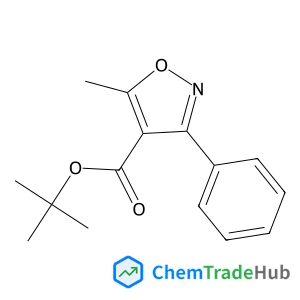
2-Methyl-2-propanyl 5-methyl-3-phenyl-1,2-oxazole-4-carboxylate
CAS Number:
211429-79-7
Molecular Formula:
C15H17NO3
![2-[(5Z,8Z,11Z,14Z)-5,8,11,14-Icosatetraen-1-yloxy]-1,3-propanediol structure](https://static.chemtradehub.com/structs/222/222723-55-9-0348.webp "2-[(5Z,8Z,11Z,14Z)-5,8,11,14-Icosatetraen-1-yloxy]-1,3-propanediol structure")
2-[(5Z,8Z,11Z,14Z)-5,8,11,14-Icosatetraen-1-yloxy]-1,3-propanediol
CAS Number:
222723-55-9
Molecular Formula:
C23H40O3
Recommended Suppliers




Disclaimer
This page provides academic journal information for reference and research purposes only. We are not affiliated with any journal publishers and do not handle publication submissions. For publication-related inquiries, please contact the respective journal publishers directly.
If you notice any inaccuracies in the information displayed, please contact us at support@chemtradehub.com. We will promptly review and address your concerns.