4-(Dimethylaminomethyl)phenylacetic acid hydrochloride
CAS Number:
99985-52-1
Molecular Formula:
C11H16ClNO2
Hideki Furutachi, Mizue Murayama, Amane Shiohara, Satoshi Yamazaki, Shuhei Fujinami, Akira Uehara, Masatatsu Suzuki, Seiji Ogo, Yoshihito Watanabe, Yonezo Maeda
Reaction of a diiron(III) complex having a xylta4− ligand (N,N,N′,N′-m-xylylenediamine tetraacetate) with H2O2 resulted in regioselective hydroxylation of the m-xylyl linker. The reaction mimics the self-hydroxylation of a phenylalanine side chain found for ribonucleotide reductase (R2-W48F/D84E).
Haihan Chen, Michael J. Ezell, Kristine D. Arquero, Mychel E. Varner, Matthew L. Dawson, R. Benny Gerber, Barbara J. Finlayson-Pitts
DOI: 10.1039/C7CP90021J
Sugata P. Tan, Mohammad Piri
DOI: 10.1039/C7CP02446K
R. Hu, Z. H. Zhang, Z. Q. Fan
DOI: 10.1039/C7CP02391J
DOI: 10.1039/C7CP03088F
DOI: 10.1039/C7CP02544K
Vladislav S. Pervov
DOI: 10.1039/C7CP00518K
Rajamani Krishna, Jasper M. van Baten
DOI: 10.1039/C7CP04101B
Fenghua Liu, Dongxu Dai, Wenrui Dong, Xueming Yang
DOI: 10.1039/C7CP04336H
Waste containing N-Methoxy-N-methyl-1,3-thiazole-5-carboxamide (CAS: 898825-89-3...
N-(4-Biphenylyl)dibenzo[b,d]furan-4-amine should be stored in a tightly sealed c...
The market for 3-Acetamido-5-amino-2,4,6-triiodobenzoic acid (CAS: 1713-07-1) is...
Benzyl 2-O-acetyl-3,4,6-tri-O-benzyl-beta-D-galactopyranoside (CAS: 61820-03-9) ...
2-Ethylpiperazine dihydrochloride (CAS: 438050-52-3) is regulated under the Glob...
1,1'-[1,3-Phenylenebis(methylene)]bis(3-methyl-1H-pyrrole-2,5-dione) (CAS: 11946...
Several alternatives can be used in the synthesis of 5-Fluoro-2-(1-pyrrolidinyl)...
Proper personal protective equipment (PPE) must be worn when handling this compo...
When handling 6-Bromoimidazo[1,2-a]pyridin-8-amine, it is important to wear appr...
Alternatives to (2S,4R)-4-(4-Nitrobenzyl)pyrrolidine-2-carboxylic acid hydrochlo...

ChemComm publishes urgent research which is of outstanding significance and interest to experts in the field, while also appealing to the journal’s broad chemistry readership. Our communication format is ideally suited to short, urgent studies that are of such importance that they require accelerated publication. Our scope covers all topics in chemistry, and research at the interface of chemistry and other disciplines (such as materials science, nanoscience, physics, engineering and biology) where there is a significant novelty in the chemistry aspects. Major topic areas covered include: Analytical Chemistry Catalysis Chemical Biology and medicinal chemistry Computational Chemistry and Machine Learning Energy and sustainable chemistry Environmental Chemistry Green Chemistry Inorganic Chemistry Materials Chemistry Nanoscience Organic Chemistry Physical Chemistry Polymer Chemistry Supramolecular Chemistry
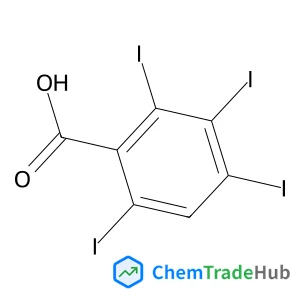
![[(5-Methyl-1,3,4-thiadiazol-2-yl)sulfanyl]acetic acid structure](https://static.chemtradehub.com/structs/509/50918-26-8-4ce8.webp "[(5-Methyl-1,3,4-thiadiazol-2-yl)sulfanyl]acetic acid structure")