












Proton exchange in solutions of water in nitromethane and dioxane
Literature Information
Publication Date
2002-05-29
DOI
10.1039/B109568B
Impact Factor
3.676
Authors
Nickolai M. Sergeyev, Natalia D. Sergeyeva
View Original
Abstract
The rates of proton exchange in the reaction H2O + D2O ⇄ 2HDO have been studied in the solvents nitromethane and dioxane. For the solution in nitromethane to the upper limit of solubility of water (about 7 mol%) and in dioxane to a concentration of about 60 mol% the exchange remains rather slow. At higher concentrations the rate of exchange in dioxane increases rapidly with water concentration, indicating the promotion of the exchange via large water clusters. The isotope shift Δδ = δHDO − δH2O appears to be dependent on the concentration of water in the solvent, and an equation describing this dependence is proposed.
Related Literature
A Prussian blue analog-based copper–aluminum layered double hydroxide for cesium removal from water: fabrication, density functional theory-based molecular modeling, and the adsorption mechanism
Meng Xia, Xinyao Liu, Zhaorong Shang, Fuqiang Fan
2023-12-15
Paper
DOI: 10.1039/D3CP03879C
Dense arrangement of crown ethers in graphene: novel graphitic carbon oxides with enhanced optoelectronic properties
Hongyan Li, Jiang Xiang, Jing Xu, Wei Liu
2023-12-12
Paper
DOI: 10.1039/D3CP03902A
Predicting the pair correlation functions of silicate and borosilicate glasses using machine learning
Kumar Ayush, Pooja Sahu, Sk. Musharaf Ali, Tarak K. Patra
2023-12-04
Paper
DOI: 10.1039/D3CP05136F
Peroxidase activity of a Cu–Fe bimetallic hydrogel and applications for colorimetric detection of ascorbic acid
Xiao-Juan Wang, Yan Long, Chuan-Wan Wei, Shu-Qin Gao
2023-12-05
Paper
DOI: 10.1039/D3CP05403A
Solvent effects on the intramolecular charge transfer excited state of 3CzClIPN: a broadband transient absorption study
Meixin Cheng
2023-12-04
Paper
DOI: 10.1039/D3CP04975B
Investigating theoretical and experimental cross sections for elastic electron scattering from isoflurane
Bratislav P. Marinković, Jaime Rosado, Francisco Blanco, Gustavo García, Jelena B. Maljković
2023-12-07
Paper
DOI: 10.1039/D3CP05052A
Designing idealised devices for bias-free solar water splitting
Jaemin Park, Dukjoon Kim, Jung Kyu Kim
2023-12-26
Perspective
DOI: 10.1039/D3SE01371E
Dendrite-free deposition and side-reaction suppression of zinc anodes achieved via constructing synergistic interface buffer layers
Ting Li, Zhongfu Yan, Mengjiao Liu, Xinyu Liu, Liang Liu, Jiahao Chen, Jianping Long
2023-12-09
Paper
DOI: 10.1039/D3SE01334K
Switchable asymmetric transmission with broadband polarization conversion in vanadium dioxide-assisted terahertz metamaterials
Zhichao Liu, Tianle Zhou, Gui Jin, Jiangbin Su, Bin Tang
2023-12-04
Paper
DOI: 10.1039/D3CP05095E
You might also like
Compound Q&A
How should waste containing N-Methoxy-N-methyl-1,3-thiazole-5-carboxamide (CAS: 898825-89-3) be handled?
Waste containing N-Methoxy-N-methyl-1,3-thiazole-5-carboxamide (CAS: 898825-89-3...
898825-89-3N-Methoxy-N-methyl-1...
Compound Q&A
How should N-(4-Biphenylyl)dibenzo[b,d]furan-4-amine (CAS: 1318338-47-4) be stored?
N-(4-Biphenylyl)dibenzo[b,d]furan-4-amine should be stored in a tightly sealed c...
1318338-47-4N-(4-Biphenylyl)dibe...
Compound Q&A
What is the market or research trend for 3-Acetamido-5-amino-2,4,6-triiodobenzoic acid (CAS: 1713-07-1)?
The market for 3-Acetamido-5-amino-2,4,6-triiodobenzoic acid (CAS: 1713-07-1) is...
1713-07-13-Acetamido-5-amino-...
Compound Q&A
How should Benzyl 2-O-acetyl-3,4,6-tri-O-benzyl-beta-D-galactopyranoside (CAS: 61820-03-9) be stored?
Benzyl 2-O-acetyl-3,4,6-tri-O-benzyl-beta-D-galactopyranoside (CAS: 61820-03-9) ...
61820-03-9Benzyl 2-O-acetyl-3,...
Compound Q&A
What regulatory guidelines apply to 2-Ethylpiperazine dihydrochloride (CAS: 438050-52-3)?
2-Ethylpiperazine dihydrochloride (CAS: 438050-52-3) is regulated under the Glob...
438050-52-32-Ethylpiperazine di...
Compound Q&A
What regulatory guidelines apply to 1,1'-[1,3-Phenylenebis(methylene)]bis(3-methyl-1H-pyrrole-2,5-dione) (CAS: 119462-56-5)?
1,1'-[1,3-Phenylenebis(methylene)]bis(3-methyl-1H-pyrrole-2,5-dione) (CAS: 11946...
119462-56-51,1'-[1,3-Phenyleneb...
Compound Q&A
Are there alternatives to 5-Fluoro-2-(1-pyrrolidinyl)pyridine (CAS: 1287217-79-1) in synthesis?
Several alternatives can be used in the synthesis of 5-Fluoro-2-(1-pyrrolidinyl)...
1287217-79-15-Fluoro-2-(1-pyrrol...
Compound Q&A
What precautions should be taken when handling 1-((2R,3R,4R,5R)-5-((bis(4-methoxyphenyl)(phenyl)methoxy)methyl)-4-hydroxy-3-methoxytetrahydrofuran-2-yl)-5-methylpyrimidine-2,4(1H,3H)-dione (CAS: 153631-19-7)?
Proper personal protective equipment (PPE) must be worn when handling this compo...
153631-19-71-((2R,3R,4R,5R)-5-(...
Compound Q&A
What precautions should be taken when handling 6-Bromoimidazo[1,2-a]pyridin-8-amine (CAS: 676371-00-9)?
When handling 6-Bromoimidazo[1,2-a]pyridin-8-amine, it is important to wear appr...
676371-00-96-Bromoimidazo[1,2-a...
Compound Q&A
Are there alternatives to (2S,4R)-4-(4-Nitrobenzyl)pyrrolidine-2-carboxylic acid hydrochloride (CAS: 1049740-22-8) in synthesis?
Alternatives to (2S,4R)-4-(4-Nitrobenzyl)pyrrolidine-2-carboxylic acid hydrochlo...
1049740-22-8(2S,4R)-4-(4-Nitrobe...
Source Journal
Physical Chemistry Chemical Physics

CiteScore:
5.5
Self-citation Rate:
10.3%
Articles per Year:
3036
Physical Chemistry Chemical Physics (PCCP) is an international journal co-owned by 19 physical chemistry and physics societies from around the world. This journal publishes original, cutting-edge research in physical chemistry, chemical physics and biophysical chemistry. To be suitable for publication in PCCP, articles must include significant innovation and/or insight into physical chemistry; this is the most important criterion that reviewers and Editors will judge against when evaluating submissions. The journal has a broad scope and welcomes contributions spanning experiment, theory, computation and data science. Topical coverage includes spectroscopy, dynamics, kinetics, statistical mechanics, thermodynamics, electrochemistry, catalysis, surface science, quantum mechanics, quantum computing and machine learning. Interdisciplinary research areas such as polymers and soft matter, materials, nanoscience, energy, surfaces/interfaces, and biophysical chemistry are welcomed if they demonstrate significant innovation and/or insight into physical chemistry. Joined experimental/theoretical studies are particularly appreciated when complementary and based on up-to-date approaches.
Recommended Compounds
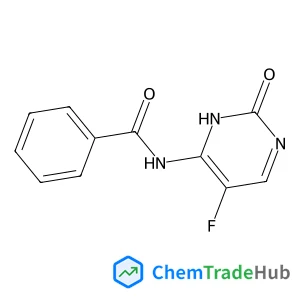
N-(5-Fluoro-2-oxo-2,3-dihydro-4-pyrimidinyl)benzamide
CAS Number:
10357-07-0
Molecular Formula:
C11H8FN3O2
Recommended Suppliers




Disclaimer
This page provides academic journal information for reference and research purposes only. We are not affiliated with any journal publishers and do not handle publication submissions. For publication-related inquiries, please contact the respective journal publishers directly.
If you notice any inaccuracies in the information displayed, please contact us at support@chemtradehub.com. We will promptly review and address your concerns.