












OH-initiated oxidation of benzene Part I. Phenol formation under atmospheric conditions
Literature Information
Publication Date
2002-03-21
DOI
10.1039/B108747A
Impact Factor
3.676
Authors
Ian Barnes, Takashi Imamura, Klaus Wirtz, Nobuaki Washida, Karl Heinz Becker, Ulrich Platt
View Original
Abstract
The phenol yield from the OH-radical initiated oxidation of benzene was studied in two simulation chambers: (1) the large-volume outdoor chamber EUPHORE at CEAM, Valencia, Spain and (2) an indoor chamber at NIES, Tsukuba, Japan. In the first study two spectroscopic techniques, i.e. differential optical absorption spectroscopy (DOAS) and Fourier transform infra-red spectroscopy (FTIR) were used to simultaneously measure phenol and benzene. The second study used only FTIR spectroscopy to monitor both compounds. Six different types of OH-radical sources were employed and initial concentrations for benzene and NOx were varied by about a factor of 400 and four orders of magnitude, respectively. The high sensitivity of DOAS towards phenol allowed experiments with initial benzene concentrations similar to those found in the polluted atmosphere. With respect to the NOx concentrations and light conditions employed, the experiments are representative of the atmospheric boundary layer. The phenol yield was determined to be Φphenol = (53.1 ± 6.6)%, which is about twice the value reported in the literature to date. The high phenol yield was found to remain essentially constant for NOx levels of up to several 10 ppb, which are rarely exceeded in the atmosphere. It was also found to be independent of the oxygen concentration under these conditions. With increasing concentrations of NOx (> 100 ppb) the phenol yield was found to decrease. The data could be adequately described if in addition to the kinetics of the aromatic-OH adduct reactions with O2 two reactions involving NOx (i.e. benzene–OH + NO2 and benzene–OH–O2 + NO) were considered. The temperature dependence of Φphenol was studied over a limited temperature range of ΔT = 20 K. The results indicate that the major part, if not all of the phenol is formed directly from the reaction of the benzene–OH adduct with oxygen. No evidence was found for phenol formation via the photolysis of benzene oxide/oxepin. The atmospheric relevance of the results is discussed.
Related Literature
Base initiated depolymerization of polycarbonates to epoxide and carbon dioxide co-monomers: a computational study
Donald J. Darensbourg, Andrew D. Yeung, Sheng-Hsuan Wei
2013-04-09
Paper
DOI: 10.1039/C3GC40475G
Reactions of hydrophobic organic nanoparticle mixtures in water: nanoparticle-on-nanoparticle oxidative dye bleaching
Marco Giardiello, Tom O. McDonald, Jet-Sing Lee, Aled D. Roberts, Andrew Owen, Steve P. Rannard
2013-04-12
Paper
DOI: 10.1039/C3GC40573G
Unusual reactions mediated by FMN-dependent ene- and nitro-reductases
Katharina Durchschein, Mélanie Hall, Kurt Faber
2013-04-24
Critical Review
DOI: 10.1039/C3GC40588E
Mesoporous molecular sieves K2O/Ba(Ca or Mg)-MCM-41 with base sites as heterogeneous catalysts for the production of liquid hydrocarbonfuel from catalytic cracking of rubber seed oil
Lu Li, Kejing Quan, Junming Xu, Fusheng Liu, Shiwei Liu, Shitao Yu, Congxia Xie, Baoquan Zhang, Xiaoping Ge
2013-07-12
Paper
DOI: 10.1039/C3GC40796A
Photoassisted synthesis of manganese oxide nanostructures using visible light at room temperature
Lavinia Balan, Loïc Vidal
2013-06-11
Paper
DOI: 10.1039/C3GC40487K
Synthesis of phenacyl bromides via K2S2O8-mediated tandem hydroxybromination and oxidation of styrenes in water
Qing Jiang, Cancheng Guo
2013-05-14
Paper
DOI: 10.1039/C3GC40515J
Efficient and recyclable rare earth-based catalysts for Friedel–Crafts acylations under microwave heating: dendrimers show the way
2013-05-20
Communication
DOI: 10.1039/C3GC40720A
Organocatalytic 1,3-dipolar cycloaddition reactions of ketones and azides with water as a solvent
Dwun Kit Jonathan Yeung, Tao Gao, Jiayao Huang, Shaofa Sun, Haibing Guo, Jian Wang
2013-07-22
Communication
DOI: 10.1039/C3GC41126E
You might also like
Compound Q&A
What precautions should be taken when handling 4-Methyl-6-(trifluoromethyl)quinoline (CAS: 40716-16-3)?
When handling 4-Methyl-6-(trifluoromethyl)quinoline (CAS: 40716-16-3), safety go...
40716-16-34-Methyl-6-(trifluor...
Compound Q&A
What is 4-(3,5-Difluorophenyl)aniline (CAS: 405058-00-6)?
4-(3,5-Difluorophenyl)aniline is an aromatic organic compound with the CAS numbe...
405058-00-64-(3,5-Difluoropheny...
Compound Q&A
How is 5-{[4-(Trifluoromethyl)phenyl]sulfanyl}-1,2,3-thiadiazole-4-carboxylic acid (CAS: 338982-07-3) typically synthesized?
5-{[4-(Trifluoromethyl)phenyl]sulfanyl}-1,2,3-thiadiazole-4-carboxylic acid can ...
338982-07-35-{[4-(Trifluorometh...
Compound Q&A
What is the market or research trend for 4-Benzylaniline hydrochloride (CAS: 6317-57-3)?
The market for 4-Benzylaniline hydrochloride (CAS: 6317-57-3) is steadily growin...
6317-57-34-Benzylaniline hydr...
Compound Q&A
Is [3-(Diethylsulfamoyl)phenyl]boronic acid (CAS: 871329-58-7) safe?
[3-(Diethylsulfamoyl)phenyl]boronic acid is generally considered safe when handl...
871329-58-7[3-(Diethylsulfamoyl...
Compound Q&A
What are the main uses of 3-Bromo-2,5-dimethoxyaniline (CAS: 115929-62-9)?
3-Bromo-2,5-dimethoxyaniline is mainly used in the pharmaceutical and chemical i...
115929-62-93-Bromo-2,5-dimethox...
Compound Q&A
What regulatory guidelines apply to N-Methyl-1-(5-methyl-1H-indol-3-yl)methanamine (CAS: 915922-67-7)?
N-Methyl-1-(5-methyl-1H-indol-3-yl)methanamine (CAS: 915922-67-7) is subject to ...
915922-67-7N-Methyl-1-(5-methyl...
Compound Q&A
What industries use Carbamic acid, N-[(5S)-5,6-diamino-6-oxohexyl]-, 1,1-dimethylethyl ester (CAS: 24828-96-4)?
This compound is primarily used in the pharmaceutical industry for the synthesis...
24828-96-4Carbamic acid, N-[(5...
Compound Q&A
How should 2-Methyl-2-propanyl [(1S,3R)-3-aminocyclohexyl]carbamate (CAS: 1298101-47-9) be stored?
2-Methyl-2-propanyl [(1S,3R)-3-aminocyclohexyl]carbamate (CAS: 1298101-47-9) sho...
1298101-47-92-Methyl-2-propanyl ...
Compound Q&A
What industries use Ethyl 2-bromo-4,4,4-trifluorobutanoate (CAS: 367-33-9)?
Ethyl 2-bromo-4,4,4-trifluorobutanoate (CAS: 367-33-9) is utilized in the pharma...
367-33-9Ethyl 2-bromo-4,4,4-...
Source Journal
Physical Chemistry Chemical Physics

CiteScore:
5.5
Self-citation Rate:
10.3%
Articles per Year:
3036
Physical Chemistry Chemical Physics (PCCP) is an international journal co-owned by 19 physical chemistry and physics societies from around the world. This journal publishes original, cutting-edge research in physical chemistry, chemical physics and biophysical chemistry. To be suitable for publication in PCCP, articles must include significant innovation and/or insight into physical chemistry; this is the most important criterion that reviewers and Editors will judge against when evaluating submissions. The journal has a broad scope and welcomes contributions spanning experiment, theory, computation and data science. Topical coverage includes spectroscopy, dynamics, kinetics, statistical mechanics, thermodynamics, electrochemistry, catalysis, surface science, quantum mechanics, quantum computing and machine learning. Interdisciplinary research areas such as polymers and soft matter, materials, nanoscience, energy, surfaces/interfaces, and biophysical chemistry are welcomed if they demonstrate significant innovation and/or insight into physical chemistry. Joined experimental/theoretical studies are particularly appreciated when complementary and based on up-to-date approaches.
Recommended Compounds
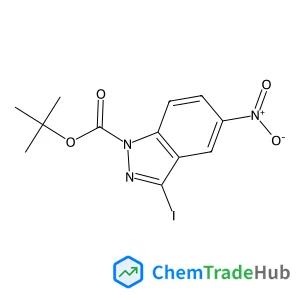
Tert-butyl 3-iodo-5-nitro-1H-indazole-1-carboxylate
CAS Number:
459133-69-8
Molecular Formula:
C12H12IN3O4
Recommended Suppliers





Disclaimer
This page provides academic journal information for reference and research purposes only. We are not affiliated with any journal publishers and do not handle publication submissions. For publication-related inquiries, please contact the respective journal publishers directly.
If you notice any inaccuracies in the information displayed, please contact us at support@chemtradehub.com. We will promptly review and address your concerns.