













The proton affinities of CO and CO2 and the first hydration energy of gaseous H3O+ from mass spectrometric investigations of ions in rich flames of C2H2
Literature Information
Publication Date
2001-09-13
DOI
10.1039/B102973H
Impact Factor
3.676
Authors
Allan N. Hayhurst, Stephen G. Taylor
View Original
Abstract
Fuel-rich oxy-acetylene flames, which are non-sooting and at 1 bar, have been sampled into a mass spectrometer. The flames used CO2 as the diluent. The major positive ions in these flames were found to be CHO+, CHO2+, C3H3+, H3O+ and H3O+·H2O. The ions CHO+ and CHO2+ participate in the equilibria: involving proton transfer between H2O, CO and CO2. Using CO2 as diluent enabled CHO+ and CHO2+ to be detected far downstream in the burnt gas. The use of triatomic CO2 with its relatively low ratio of principal specific heats interestingly reduced the cooling experienced by a gas sample during its supersonic expansion into the mass spectrometer; also a sample from a flame with CO2 as diluent spent less time in the supersonic expansion than a sample from a flame with Ar as diluent. In fact, flames with CO2 as diluent were found to be unaffected by this usual sampling perturbation, whereby rapid equilibria adjust to the rapidly falling temperatures when a sample is expanded supersonically into a vacuum chamber. However, a sample from a flame is perturbed by being cooled somewhat by the cooler metal around the inlet orifice, through which the flame gas enters the mass spectrometer. After allowing for the effects of such cooling, the enthalpy change of reaction (8) was determined from measurements of [CHO+]/[H3O+] to be − 120 ± 18 kJ mol−1 at 0 K, corresponding to a proton affinity for CO of 576 ± 18 kJ mol−1 at 298 K. Similarly the proton affinity of CO2 was found to be 551 ± 20 kJ mol−1 at 298 K. A study of [H3O+ ·H2O]/[H3O+] along different flames enabled the enthalpy of mono-hydration of the ion H3O+ to be measured as − 133 ± 30 kJ mol−1 at 0 K; the rate constant for H3O+ + H2O + M → H3O+ ·H2O + M is ∽1 × 10⁻³⁰ molecule−2 cm6 s−1 at 2000 K.
Related Literature
Theoretical study of the source-drain current and gate leakage current to understand the graphene field-effect transistors
Cui Yu, Hongmei Liu, Wenbin Ni, Nengyue Gao, Jianwei Zhao, Haoli Zhang
2011-01-14
Paper
DOI: 10.1039/C0CP01026J
Geometric and electronic effects on hydrogenation of cinnamaldehyde over unsupported Pt-based nanocrystals
William O. Oduro, Nick Cailuo, Kai Man K. Yu, Hongwei Yang, Shik Chi Tsang
2011-01-07
Paper
DOI: 10.1039/C0CP01832E
In situFTIR spectroelectrochemical study on the mechanism of ethylene glycol electrocatalytic oxidation at a Pd electrode
Lianqin Wang, Hui Meng, Pei Kang Shen, Claudio Bianchini, Francesco Vizza, Zidong Wei
2010-12-08
Paper
DOI: 10.1039/C0CP01913E
Temperature dependence of the surfactant film bending elasticity in a bicontinuous sugar surfactant based microemulsion: a quasielastic scattering study
Stefan Wellert, Matthias Karg, Olaf Holderer, André Richardt, Thomas Hellweg
2010-12-10
Paper
DOI: 10.1039/C0CP02044C
Conversion of methanol over 10-ring zeolites with differing volumes at channel intersections: comparison of TNU-9, IM-5, ZSM-11 and ZSM-5
Francesca Bleken, Wegard Skistad, Katia Barbera, Marina Kustova, Silvia Bordiga, Pablo Beato, Karl Petter Lillerud, Stian Svelle, Unni Olsbye
2010-12-10
Paper
DOI: 10.1039/C0CP01982H
Design of optimally switchable molecules by genetic algorithms
Niss Ole Carstensen, Johannes M. Dieterich, Bernd Hartke
2010-12-15
Paper
DOI: 10.1039/C0CP01065K
Elastic deformations in hexagonal phases studied by small-angle X-ray diffraction and simulations
Šárka Perutková, Matej Daniel, Michael Rappolt, Georg Pabst, Gregor Dolinar, Veronika Kralj-Iglič, Aleš Iglič
2010-11-09
Paper
DOI: 10.1039/C0CP01187H
Mechanistic differences between methanol and dimethyl ethercarbonylation in side pockets and large channels of mordenite
Mercedes Boronat, Cristina Martínez, Avelino Corma
2011-01-19
Paper
DOI: 10.1039/C0CP01996H
You might also like
Compound Q&A
What are the main uses of 1H-Indazole-6-carbonitrile (CAS: 141290-59-7)?
1H-Indazole-6-carbonitrile finds applications in pharmaceuticals, where it serve...
141290-59-71H-Indazole-6-carbon...
Compound Q&A
How should waste containing Dioctyl (2E)-2-butenedioate (CAS: 2997-85-5) be handled?
Waste containing Dioctyl (2E)-2-butenedioate (CAS: 2997-85-5) should be collecte...
2997-85-5Dioctyl (2E)-2-buten...
Compound Q&A
What industries use Sodium [(1,2-benzoxazol-3-ylmethyl)sulfonyl]azanide (CAS: 68291-98-5)?
Sodium [(1,2-benzoxazol-3-ylmethyl)sulfonyl]azanide is primarily used in pharmac...
68291-98-5Sodium [(1,2-benzoxa...
Compound Q&A
Are there alternatives to Dimethyl 4-(4,4,5,5-tetramethyl-1,3,2-dioxaborolan-2-yl)-2,6-pyridinedicarboxylate (CAS: 741709-66-0) in synthesis?
Dimethyl 4-(4,4,5,5-tetramethyl-1,3,2-dioxaborolan-2-yl)-2,6-pyridinedicarboxyla...
741709-66-0Dimethyl 4-(4,4,5,5-...
Compound Q&A
How should waste containing 2-Fluoro-6-hydrazinopyridine (CAS: 80714-39-2) be handled?
Waste containing 2-Fluoro-6-hydrazinopyridine (CAS: 80714-39-2) should be manage...
80714-39-22-Fluoro-6-hydrazino...
Compound Q&A
What is 6-Formyl-2-pyridinecarboxylic acid (CAS: 499214-11-8)?
6-Formyl-2-pyridinecarboxylic acid is an organic compound with the molecular for...
499214-11-86-Formyl-2-pyridinec...
Compound Q&A
What is the market or research trend for 3-(3,4-dimethoxyphenyl)-2,5-dimethyl-N-(2-morpholin-4-ylethyl)pyrazolo[1,5-a]pyrimidin-7-amine (CAS: 900874-91-1)?
Research trends for this compound indicate a focus on its potential applications...
900874-91-13-(3,4-dimethoxyphen...
Compound Q&A
How is 9H-Tribenzo[b,d,f]azepine (CAS: 29875-73-8) typically synthesized?
9H-Tribenzo[b,d,f]azepine is typically synthesized via a multi-step process invo...
29875-73-89H-Tribenzo[b,d,f]az...
Compound Q&A
How is 1-Cyclopropyl-7-ethoxy-6-fluoro-8-methoxy-4-oxo-1,4-dihydro-3-quinolinecarboxylic acid (CAS: 1797982-51-4) typically synthesized?
1-Cyclopropyl-7-ethoxy-6-fluoro-8-methoxy-4-oxo-1,4-dihydro-3-quinolinecarboxyli...
1797982-51-41-Cyclopropyl-7-etho...
Compound Q&A
How should waste containing Methyl 3-oxo-1,2,3,4-tetrahydro-6-quinoxalinecarboxylate (CAS: 671820-52-3) be handled?
Waste containing Methyl 3-oxo-1,2,3,4-tetrahydro-6-quinoxalinecarboxylate (CAS: ...
671820-52-3Methyl 3-oxo-1,2,3,4...
Source Journal
Physical Chemistry Chemical Physics

CiteScore:
5.5
Self-citation Rate:
10.3%
Articles per Year:
3036
Physical Chemistry Chemical Physics (PCCP) is an international journal co-owned by 19 physical chemistry and physics societies from around the world. This journal publishes original, cutting-edge research in physical chemistry, chemical physics and biophysical chemistry. To be suitable for publication in PCCP, articles must include significant innovation and/or insight into physical chemistry; this is the most important criterion that reviewers and Editors will judge against when evaluating submissions. The journal has a broad scope and welcomes contributions spanning experiment, theory, computation and data science. Topical coverage includes spectroscopy, dynamics, kinetics, statistical mechanics, thermodynamics, electrochemistry, catalysis, surface science, quantum mechanics, quantum computing and machine learning. Interdisciplinary research areas such as polymers and soft matter, materials, nanoscience, energy, surfaces/interfaces, and biophysical chemistry are welcomed if they demonstrate significant innovation and/or insight into physical chemistry. Joined experimental/theoretical studies are particularly appreciated when complementary and based on up-to-date approaches.
Recommended Compounds
![(1S)-1,5-Anhydro-1-[3-(1-benzothiophen-2-ylmethyl)-4-fluorophenyl]-D-glucitol structure](https://static.chemtradehub.com/structs/761/761423-87-4-dbeb.webp "(1S)-1,5-Anhydro-1-[3-(1-benzothiophen-2-ylmethyl)-4-fluorophenyl]-D-glucitol structure")
(1S)-1,5-Anhydro-1-[3-(1-benzothiophen-2-ylmethyl)-4-fluorophenyl]-D-glucitol
CAS Number:
761423-87-4
Molecular Formula:
C21H21FO5S
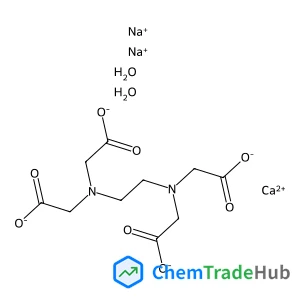
EthylenediaminetetraaceticacidcalciumDisodiumsalthydrate
CAS Number:
23411-34-9
Molecular Formula:
C10H16CaN2Na2O10
Recommended Suppliers






Disclaimer
This page provides academic journal information for reference and research purposes only. We are not affiliated with any journal publishers and do not handle publication submissions. For publication-related inquiries, please contact the respective journal publishers directly.
If you notice any inaccuracies in the information displayed, please contact us at support@chemtradehub.com. We will promptly review and address your concerns.