












Front cover
Literature Information
Publication Date
2024-01-30
DOI
10.1039/D4BM90008A
Impact Factor
6.843
Authors
View Original
Abstract
A graphical abstract is available for this content
Related Literature
DNA-binding mechanism of spiropyran photoswitches: the role of electrostatics
Davide Avagliano, Pedro A. Sánchez-Murcia, Leticia González
2019-02-15
Communication
DOI: 10.1039/C8CP07508E
Interband transitions in closed-shell vacancy containing graphene quantum dots complexed with heavy metals
Rositsa Yakimova
2018-08-01
Paper
DOI: 10.1039/C8CP03306D
How does the electric current propagate through fully-hydrogenated borophene?
Jutao Jiao, Yusheng Hou, Hui Wang, Dapeng Wu, Tianxing Wang, Zhaoming Fu, Guoliang Xu, Ruqian Wu
2018-07-30
Paper
DOI: 10.1039/C8CP04272A
Atomistic modelling of entropy driven phase transitions between different crystal modifications in polymers: the case of poly(3-alkylthiophenes)
Mosè Casalegno, Tommaso Nicolini, Antonino Famulari, Guido Raos, Riccardo Po, Stefano V. Meille
2018-11-20
Communication
DOI: 10.1039/C8CP05820B
The metal–ionic liquid interface as characterized by impedance spectroscopy and in situ scanning tunneling microscopy
Claus Müller
2018-08-06
Perspective
DOI: 10.1039/C8CP02074D
Why does 4-biphenyl carbonyl azide have ultra-short lived excited states? An ultrafast UV-vis spectroscopic and computational study
2018-11-06
Paper
DOI: 10.1039/C8CP05963B
Spin–orbit coupling as a probe to decipher halogen bonding
Jérôme Graton, Seyfeddine Rahali, Jean-Yves Le Questel, Gilles Montavon, Julien Pilmé, Nicolas Galland
2018-10-08
Paper
DOI: 10.1039/C8CP05690K
Deformation behavior of an amorphous zeolitic imidazolate framework – from a supersoft material to a complex organometallic alloy
Puja Adhikari, Neng Li, Paul Rulis, Wai-Yim Ching
2018-10-11
Paper
DOI: 10.1039/C8CP05610B
Absolute upconversion quantum yields of blue-emitting LiYF4:Yb3+,Tm3+ upconverting nanoparticles
Michael S. Meijer, Paola A. Rojas-Gutierrez, Dmitry Busko, Florian Frenzel, Christian Würth, Ute Resch-Genger, Andrey Turshatov, John A. Capobianco, Sylvestre Bonnet
2018-08-17
Paper
DOI: 10.1039/C8CP03935F
Nonadiabatic fragmentation of H2O+ and isotopomers. Wave packet propagation using ab initio wavefunctions
Jaime Suárez, L. Méndez, I. Rabadán
2018-11-12
Paper
DOI: 10.1039/C8CP03725F
You might also like
Compound Q&A
What are the main uses of 4-Nitrophenyl phosphate disodium salt hexahydrate (CAS: 333338-18-4)?
4-Nitrophenyl phosphate disodium salt hexahydrate is primarily used as a substra...
333338-18-44-Nitrophenyl phosph...
Compound Q&A
What are the main uses of 2-(Trifluoromethyl)-1,3-oxazole-4-carboxylic Acid (CAS: 1060816-01-4)?
2-(Trifluoromethyl)-1,3-oxazole-4-carboxylic Acid (CAS: 1060816-01-4) is widely ...
1060816-01-42-(Trifluoromethyl)-...
Compound Q&A
How should 2-Fluoro-4-biphenylcarboxylic acid (CAS: 137045-30-8) be stored?
2-Fluoro-4-biphenylcarboxylic acid should be stored in a cool, dry place at room...
137045-30-82-Fluoro-4-biphenylc...
Compound Q&A
What industries use Prednisolone-21-Carboxylic Acid (CAS: 61549-70-0)?
Prednisolone-21-Carboxylic Acid is primarily used in the pharmaceutical industry...
61549-70-0Prednisolone-21-Carb...
Compound Q&A
How should 4-(Hydrazinomethyl)-1,2,3-benzenetriol (CAS: 3614-72-0) be stored?
4-(Hydrazinomethyl)-1,2,3-benzenetriol (CAS: 3614-72-0) should be stored in a co...
3614-72-04-(Hydrazinomethyl)-...
Compound Q&A
What industries use 4-Amino-1-methyl-1H-pyrazole-5-carboxylic acid hydrochloride (CAS: 92534-70-8)?
4-Amino-1-methyl-1H-pyrazole-5-carboxylic acid hydrochloride (CAS: 92534-70-8) i...
92534-70-84-Amino-1-methyl-1H-...
Compound Q&A
What regulatory guidelines apply to dehydropachymic acid (CAS: 77012-31-8)?
Dehydropachymic acid (CAS: 77012-31-8) is regulated by various agencies. It fall...
77012-31-8Dehydropachymic acid
Compound Q&A
What is the market or research trend for 6-[(2,2-Dimethylpropanoyl)amino]nicotinic acid (CAS: 898561-66-5)?
The market and research trends for 6-[(2,2-Dimethylpropanoyl)amino]nicotinic aci...
898561-66-56-[(2,2-Dimethylprop...
Compound Q&A
How should 1,10-Phenanthroline-2,9-dicarbaldehyde (CAS: 57709-62-3) be stored?
1,10-Phenanthroline-2,9-dicarbaldehyde should be stored in a cool, dry place awa...
57709-62-31,10-Phenanthroline-...
Compound Q&A
How is 5-Carbamoyl-11-oxo-10,11-dihydro-5H-dibenzo[b,f]azepin-10-yl acetate (CAS: 113952-21-9) typically synthesized?
5-Carbamoyl-11-oxo-10,11-dihydro-5H-dibenzo[b,f]azepin-10-yl acetate can be synt...
113952-21-95-Carbamoyl-11-oxo-1...
Source Journal
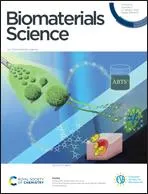
Biomaterials Science
CiteScore:
11.5
Self-citation Rate:
3.4%
Articles per Year:
492
Biomaterials Science is an international high impact journal exploring the science of biomaterials and their translation towards clinical use. Its scope encompasses new concepts in biomaterials design, studies into the interaction of biomaterials with the body, and the use of materials to answer fundamental biological questions. Papers do not necessarily need to report a new biomaterial but should provide novel insight into the biological applications of the biomaterial. Articles that primarily focus on demonstrating novel materials chemistry and bring a molecular picture to bear on a given material’s suitability as a biomaterial are more suited to our companion journal, Journal of Materials Chemistry B. Biomaterials Science publishes primary research and review-type articles in the following areas: molecular design of biomaterials, including translation of emerging chemistries to biomaterials science of cells and materials at the nanoscale and microscale materials as model systems for stem cell and human biology materials for tissue engineering and regenerative medicine (Nano)materials and (nano)systems for therapeutic delivery interactions at the biointerface biologically inspired and biomimetic materials, including bio-inspired self-assembly systems and cell-inspired synthetic tools next-generation biomaterials tools and methods
Recommended Compounds

Recommended Suppliers







Disclaimer
This page provides academic journal information for reference and research purposes only. We are not affiliated with any journal publishers and do not handle publication submissions. For publication-related inquiries, please contact the respective journal publishers directly.
If you notice any inaccuracies in the information displayed, please contact us at support@chemtradehub.com. We will promptly review and address your concerns.