













6-CHLORO-2,3-DIOXO-1,2,3,4-TETRAHYDROQUINOXALINE, 97
CAS Number:
169-14-2
Molecular Formula:
C8H5ClN2O2
The first page of this article is displayed as the abstract.
Puja Adhikari, Neng Li, Paul Rulis, Wai-Yim Ching
DOI: 10.1039/C8CP05610B
Xiaobo Sun, Trevor A. Hamlin
DOI: 10.1039/C8CP07671E
Lorenz Kranabetter, Paul Martini, Norbert Gitzl, Martin Kuhn, Fatima Saleem, Bilal Rasul, Masoomeh Mahmoodi Darian, Elias Jabbour Al Maalouf, Ivan Sukuba, Alexander Kaiser, Marcelo Goulart, Diethard K. Böhme, Paul Scheier
DOI: 10.1039/C8CP02207K
Miquel Blancafort-Jorquera, Arnau Vilà, Miguel González
DOI: 10.1039/C8CP05140B
Alonso Gamero-Quijano, Andrés F. Molina-Osorio, Pekka Peljo
DOI: 10.1039/C9CP00774A
DOI: 10.1039/C8CP04145H
Hyun Goo Ji, Mina Maruyama, Adha Sukma Aji, Susumu Okada, Kazunari Matsuda
DOI: 10.1039/C8CP04418J
Saurabh Mishra, Jer-Lai Kuo, G. Naresh Patwari
DOI: 10.1039/C8CP02448K
Rositsa Yakimova
DOI: 10.1039/C8CP03306D
DOI: 10.1039/C8CP04028A
4-Nitrophenyl phosphate disodium salt hexahydrate is primarily used as a substra...
2-(Trifluoromethyl)-1,3-oxazole-4-carboxylic Acid (CAS: 1060816-01-4) is widely ...
2-Fluoro-4-biphenylcarboxylic acid should be stored in a cool, dry place at room...
Prednisolone-21-Carboxylic Acid is primarily used in the pharmaceutical industry...
4-(Hydrazinomethyl)-1,2,3-benzenetriol (CAS: 3614-72-0) should be stored in a co...
4-Amino-1-methyl-1H-pyrazole-5-carboxylic acid hydrochloride (CAS: 92534-70-8) i...
Dehydropachymic acid (CAS: 77012-31-8) is regulated by various agencies. It fall...
The market and research trends for 6-[(2,2-Dimethylpropanoyl)amino]nicotinic aci...
1,10-Phenanthroline-2,9-dicarbaldehyde should be stored in a cool, dry place awa...
5-Carbamoyl-11-oxo-10,11-dihydro-5H-dibenzo[b,f]azepin-10-yl acetate can be synt...
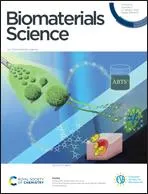
Biomaterials Science is an international high impact journal exploring the science of biomaterials and their translation towards clinical use. Its scope encompasses new concepts in biomaterials design, studies into the interaction of biomaterials with the body, and the use of materials to answer fundamental biological questions. Papers do not necessarily need to report a new biomaterial but should provide novel insight into the biological applications of the biomaterial. Articles that primarily focus on demonstrating novel materials chemistry and bring a molecular picture to bear on a given material’s suitability as a biomaterial are more suited to our companion journal, Journal of Materials Chemistry B. Biomaterials Science publishes primary research and review-type articles in the following areas: molecular design of biomaterials, including translation of emerging chemistries to biomaterials science of cells and materials at the nanoscale and microscale materials as model systems for stem cell and human biology materials for tissue engineering and regenerative medicine (Nano)materials and (nano)systems for therapeutic delivery interactions at the biointerface biologically inspired and biomimetic materials, including bio-inspired self-assembly systems and cell-inspired synthetic tools next-generation biomaterials tools and methods


![(3R,5R)-1-[(Benzyloxy)carbonyl]-5-methyl-3-piperidinecarboxylic acid structure](https://static.chemtradehub.com/structs/126/1269757-29-0-c552.webp "(3R,5R)-1-[(Benzyloxy)carbonyl]-5-methyl-3-piperidinecarboxylic acid structure")
phosphoryl}methyl 4-methylbenzenesulfonate structure](https://static.chemtradehub.com/structs/864/864068-45-1-ba7c.webp "{[3-(Hexadecyloxy)propoxy](hydroxy)phosphoryl}methyl 4-methylbenzenesulfonate structure")




