












![[(1S,2S,3R,4S,7R,9S,10S,12R,15S)-4,12-Diacetyloxy-15-[(2R,3S)-3-benzamido-3-phenyl-2-(2,2,2-trichloroethoxycarbonyloxy)propanoyl]oxy-1,9-dihydroxy-10,14,17,17-tetramethyl-11-oxo-6-oxatetracyclo[11.3.1.03,10.04,7]heptadec-13-en-2-yl] benzoate structure](https://static.chemtradehub.com/structs/100/100431-55-8-7104.webp "[(1S,2S,3R,4S,7R,9S,10S,12R,15S)-4,12-Diacetyloxy-15-[(2R,3S)-3-benzamido-3-phenyl-2-(2,2,2-trichloroethoxycarbonyloxy)propanoyl]oxy-1,9-dihydroxy-10,14,17,17-tetramethyl-11-oxo-6-oxatetracyclo[11.3.1.03,10.04,7]heptadec-13-en-2-yl] benzoate structure")
A rotatable cathode with tunable steric hindrance for high-performance aluminum organic batteries
Literature Information
Publication Date
2023-05-16
DOI
10.1039/D3TA00343D
Impact Factor
12.732
Authors
Mingshan Han, Qinqin Zhou, Meng Zhang, Jinshu Wang, Fangyan Cui, Yunfei Yang, Jingwen Su, Weiwei Huang, Yuxiang Hu
View Original
Abstract
Rechargeable aluminum batteries (RABs) with uniquely high energy-to-price ratios are promising energy storage systems. However, owing to the large-size active ions (e.g. AlCl4− and [AlCl2(urea)2]+) in state-of-the-art ionic-liquid RABs, the discharge–charge process usually encounters severe steric hindrance on electrodes, resulting in insufficient active-site utilization with limited practical capacity, and sluggish ion-diffusion kinetics with inferior rate-performance. Herein, to overcome these intrinsic confinements from the large-size active ions, we proposed, for the first time, a structure-rotatable cathode (quinone-based calix[4]quinone (C4Q)) for RABs with highly reduced steric hindrance, which is further verified via density functional theory (DFT) simulations. The newly applied C4Q cathode achieves one of the highest energy densities (480 W h kg−1 at 0.1 A g−1), enhanced rate capacity (81 mA h g−1 at 1.0 A g−1), and long-term stability (102 mA h g−1 at 0.2 A g−1 after 500 cycles) in RABs. Furthermore, the reaction mechanism of this rotatable cathode is revealed in detail via a series of characterization studies and corresponding DFT simulations. Overall, this new family of rotational organic materials will provide a new direction for promising high-performance RABs.
Related Literature
Facile synthesis of a multifunctional copolymer via a concurrent RAFT-enzymatic system for theranostic applications
Changkui Fu, Andre Bongers, Ke Wang, Bin Yang, Yuan Zhao, Yen Wei, Hien T. T. Duong, Zhiming Wang, Lei Tao
2015-11-11
Paper
DOI: 10.1039/C5PY01652E
Synthesis of fluorinated gradient copolymers via in situ transesterification with fluoroalcohols in tandem living radical polymerization
Yusuke Ogura, Takaya Terashima, Mitsuo Sawamoto
2017-02-09
Paper
DOI: 10.1039/C7PY00073A
Chalcogenodiazolo[3,4-c]pyridine based donor–acceptor–donor polymers for green and near-infrared electrochromics
Shouli Ming, Shijie Zhen, Ximei Liu, Kaiwen Lin, Hongtao Liu, Yao Zhao, Baoyang Lu, Jingkun Xu
2015-09-15
Paper
DOI: 10.1039/C5PY01321F
UV-Vis/FT-NIR in situ monitoring of visible-light induced polymerization of PEGDA hydrogels initiated by eosin/triethanolamine/O2
Kaja Kaastrup, Chen Wang, Christopher N. Bowman
2015-11-13
Paper
DOI: 10.1039/C5PY01528F
Turning into poly(ionic liquid)s as a tool for polyimide modification: synthesis, characterization and CO2 separation properties
Alexander S. Shaplov, Sofia M. Morozova, Elena I. Lozinskaya, Petr S. Vlasov, Andreia S. L. Gouveia, Liliana C. Tomé, Isabel M. Marrucho, Yakov S. Vygodskii
2015-11-09
Paper
DOI: 10.1039/C5PY01553G
Post-polymerization modification of poly(vinyl ether)s: a Ru-catalyzed oxidative synthesis of poly(vinyl ester)s and poly(propenyl ester)s
Di Liu
2015-10-20
Paper
DOI: 10.1039/C5PY01409C
Rheological behavior and molecular relaxation of polycations with macrocounterions in aqueous solutions
Shangguan Yonggang, Qiang Zheng
2015-10-12
Paper
DOI: 10.1039/C5PY01022E
Reductant-triggered rapid self-gelation and biological functionalization of hydrogels
Dawei Chen, Dongxia Wu, Guochen Cheng, Hanying Zhao
2015-10-05
Paper
DOI: 10.1039/C5PY01299F
You might also like
Compound Q&A
What are the main uses of 4-Nitrophenyl phosphate disodium salt hexahydrate (CAS: 333338-18-4)?
4-Nitrophenyl phosphate disodium salt hexahydrate is primarily used as a substra...
333338-18-44-Nitrophenyl phosph...
Compound Q&A
What are the main uses of 2-(Trifluoromethyl)-1,3-oxazole-4-carboxylic Acid (CAS: 1060816-01-4)?
2-(Trifluoromethyl)-1,3-oxazole-4-carboxylic Acid (CAS: 1060816-01-4) is widely ...
1060816-01-42-(Trifluoromethyl)-...
Compound Q&A
How should 2-Fluoro-4-biphenylcarboxylic acid (CAS: 137045-30-8) be stored?
2-Fluoro-4-biphenylcarboxylic acid should be stored in a cool, dry place at room...
137045-30-82-Fluoro-4-biphenylc...
Compound Q&A
What industries use Prednisolone-21-Carboxylic Acid (CAS: 61549-70-0)?
Prednisolone-21-Carboxylic Acid is primarily used in the pharmaceutical industry...
61549-70-0Prednisolone-21-Carb...
Compound Q&A
How should 4-(Hydrazinomethyl)-1,2,3-benzenetriol (CAS: 3614-72-0) be stored?
4-(Hydrazinomethyl)-1,2,3-benzenetriol (CAS: 3614-72-0) should be stored in a co...
3614-72-04-(Hydrazinomethyl)-...
Compound Q&A
What industries use 4-Amino-1-methyl-1H-pyrazole-5-carboxylic acid hydrochloride (CAS: 92534-70-8)?
4-Amino-1-methyl-1H-pyrazole-5-carboxylic acid hydrochloride (CAS: 92534-70-8) i...
92534-70-84-Amino-1-methyl-1H-...
Compound Q&A
What regulatory guidelines apply to dehydropachymic acid (CAS: 77012-31-8)?
Dehydropachymic acid (CAS: 77012-31-8) is regulated by various agencies. It fall...
77012-31-8Dehydropachymic acid
Compound Q&A
What is the market or research trend for 6-[(2,2-Dimethylpropanoyl)amino]nicotinic acid (CAS: 898561-66-5)?
The market and research trends for 6-[(2,2-Dimethylpropanoyl)amino]nicotinic aci...
898561-66-56-[(2,2-Dimethylprop...
Compound Q&A
How should 1,10-Phenanthroline-2,9-dicarbaldehyde (CAS: 57709-62-3) be stored?
1,10-Phenanthroline-2,9-dicarbaldehyde should be stored in a cool, dry place awa...
57709-62-31,10-Phenanthroline-...
Compound Q&A
How is 5-Carbamoyl-11-oxo-10,11-dihydro-5H-dibenzo[b,f]azepin-10-yl acetate (CAS: 113952-21-9) typically synthesized?
5-Carbamoyl-11-oxo-10,11-dihydro-5H-dibenzo[b,f]azepin-10-yl acetate can be synt...
113952-21-95-Carbamoyl-11-oxo-1...
Source Journal
Journal of Materials Chemistry A

CiteScore:
19.5
Self-citation Rate:
4.7%
Articles per Year:
2211
Journal of Materials Chemistry A, B & C cover high quality studies across all fields of materials chemistry. The journals focus on those theoretical or experimental studies that report new understanding, applications, properties and synthesis of materials. The journals have a strong history of publishing quality reports of interest to interdisciplinary communities and providing an efficient and rigorous service through peer review and publication. The journals are led by an international team of Editors-in-Chief and Associate Editors who are all active researchers in their fields. Journal of Materials Chemistry A, B & C are separated by the intended application of the material studied. Broadly, applications in energy and sustainability are of interest to Journal of Materials Chemistry A, applications in biology and medicine are of interest to Journal of Materials Chemistry B, and applications in optical, magnetic and electronic devices are of interest to Journal of Materials Chemistry C. More than one Journal of Materials Chemistry journal may be suitable for certain fields and researchers are encouraged to submit their paper to the journal that they feel best fits for their particular article. Example topic areas within the scope of Journal of Materials Chemistry A are listed below. This list is neither exhaustive nor exclusive. Artificial photosynthesis Batteries Carbon dioxide conversion Catalysis Fuel cells Gas capture/separation/storage Green/sustainable materials Hydrogen generation Hydrogen storage Photocatalysis Photovoltaics Self-cleaning materials Self-healing materials Sensors Supercapacitors Thermoelectrics Water splitting Water treatment
Recommended Compounds
![(2E)-3-(3-Chlorophenyl)-N-{2-[4-(methylsulfonyl)-1-piperazinyl]-2-oxoethyl}acrylamide structure](https://static.chemtradehub.com/structs/250/2505001-54-5-c1e9.webp "(2E)-3-(3-Chlorophenyl)-N-{2-[4-(methylsulfonyl)-1-piperazinyl]-2-oxoethyl}acrylamide structure")
(2E)-3-(3-Chlorophenyl)-N-{2-[4-(methylsulfonyl)-1-piperazinyl]-2-oxoethyl}acrylamide
CAS Number:
2505001-54-5
Molecular Formula:
C16H20ClN3O4S
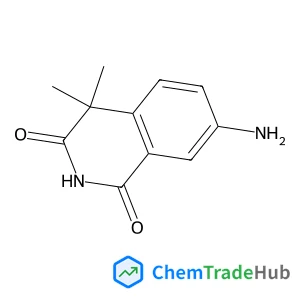
1,3(2H,4H)-Isoquinolinedione, 7-amino-4,4-dimethyl-
CAS Number:
14576-22-8
Molecular Formula:
C11H12N2O2
Recommended Suppliers





Disclaimer
This page provides academic journal information for reference and research purposes only. We are not affiliated with any journal publishers and do not handle publication submissions. For publication-related inquiries, please contact the respective journal publishers directly.
If you notice any inaccuracies in the information displayed, please contact us at support@chemtradehub.com. We will promptly review and address your concerns.