












Solvent-dependent self-assembly of N-annulated perylene diimides. From dimers to supramolecular polymers
Literature Information
Publication Date
2023-08-29
DOI
10.1039/D3SC03372D
Impact Factor
9.825
Authors
Cristina Naranjo, Azahara Doncel-Giménez, Rafael Gómez, Juan Aragó, Enrique Ortí, Luis Sánchez
View Original
Abstract
The synthesis and self-assembling features of the N-annulated perylene diimide (NPBI) 1 in different solvents are reported. Compound 1 possesses two chiral linkers, derived from (S)-(+)-alaninol, that connect the central aromatic NPBI segment and the peripheral trialkoxybenzamide units. The Ala-based linker has been demonstrated to strongly favor the formation of intramolecularly H-bonded seven-membered pseudocycles. NPBI 1 shows a strong tendency to self-assemble even in a good solvent like CHCl3 and the formation of chiral dimers is detected in this good solvent. Both experimental techniques and theoretical calculations reveal that the intramolecular H-bonded pseudocycles are very robust and the formation of chiral dimers is driven by the π-stacking of two units of the NPBI core. Unexpectedly, an efficient transfer of the asymmetry of the point chirality at the linker to the aromatic moiety is observed in the molecularly dissolved state. Changing the solvent to more apolar methylcyclohexane modifies the self-assembly process and the formation of chiral supramolecular polymers is detected. The supramolecular polymerization of 1 is demonstrated to follow an isodesmic mechanism unlike previous referable systems. In the formation of the supramolecular polymers of 1, the combination of experimental and computational data indicates that the H-bonded pseudocycles are also present in the aggregated state and the rope-like, columnar aggregates formed by the self-assembly of 1 rely on the π-stacking of the NPBI backbones.
Related Literature
Ultraductile, notch and stab resistant supramolecular hydrogels via host–guest interactions
Mei Tan, Yulin Cui, Aidi Zhu, Han Han, Mingyu Guo, Ming Jiang
2015-09-03
Paper
DOI: 10.1039/C5PY01073J
Benzo[5]helicene-based conjugated polymers: synthesis, photophysical properties, and application for the detection of nitroaromatic explosives
Li-Li Zhou, Meng Li, Hai-Yan Lu, Chuan-Feng Chen
2015-11-24
Paper
DOI: 10.1039/C5PY01794G
A reduction-responsive polypeptide nanogel encapsulating NIR photosensitizer for imaging guided photodynamic therapy
Titao Jing, Liyi Fu, Le Liu, Lifeng Yan
2015-11-25
Paper
DOI: 10.1039/C5PY01629K
Triazine-mediated controlled radical polymerization: new unimolecular initiators
J. Areephong, J. W. Kramer, H. A. Sprafke
2015-11-03
Paper
DOI: 10.1039/C5PY01563D
Tunable doubly responsive UCST-type phosphonium poly(ionic liquid): a thermosensitive dispersant for carbon nanotubes
Yajnaseni Biswas, Tanmoy Maji, Madhab Dule, Tarun K. Mandal
2015-11-30
Paper
DOI: 10.1039/C5PY01574J
Random terpolymer with a cost-effective monomer and comparable efficiency to PTB7-Th for bulk-heterojunction polymer solar cells
Tao Jiang, Youtian Tao, Cong Fan, Lingwei Xue, Zhiguo Zhang, Hai Li, Yongfang Li
2015-12-02
Paper
DOI: 10.1039/C5PY01771H
Study of thiol–ene chemistry on polymer brushes and application to surface patterning and protein adsorption
Khooi Y. Tan, Madeleine Ramstedt, Wilhelm T. S. Huck
2015-12-16
Paper
DOI: 10.1039/C5PY01687H
You might also like
Compound Q&A
What are the main uses of 4-Nitrophenyl phosphate disodium salt hexahydrate (CAS: 333338-18-4)?
4-Nitrophenyl phosphate disodium salt hexahydrate is primarily used as a substra...
333338-18-44-Nitrophenyl phosph...
Compound Q&A
What are the main uses of 2-(Trifluoromethyl)-1,3-oxazole-4-carboxylic Acid (CAS: 1060816-01-4)?
2-(Trifluoromethyl)-1,3-oxazole-4-carboxylic Acid (CAS: 1060816-01-4) is widely ...
1060816-01-42-(Trifluoromethyl)-...
Compound Q&A
How should 2-Fluoro-4-biphenylcarboxylic acid (CAS: 137045-30-8) be stored?
2-Fluoro-4-biphenylcarboxylic acid should be stored in a cool, dry place at room...
137045-30-82-Fluoro-4-biphenylc...
Compound Q&A
What industries use Prednisolone-21-Carboxylic Acid (CAS: 61549-70-0)?
Prednisolone-21-Carboxylic Acid is primarily used in the pharmaceutical industry...
61549-70-0Prednisolone-21-Carb...
Compound Q&A
How should 4-(Hydrazinomethyl)-1,2,3-benzenetriol (CAS: 3614-72-0) be stored?
4-(Hydrazinomethyl)-1,2,3-benzenetriol (CAS: 3614-72-0) should be stored in a co...
3614-72-04-(Hydrazinomethyl)-...
Compound Q&A
What industries use 4-Amino-1-methyl-1H-pyrazole-5-carboxylic acid hydrochloride (CAS: 92534-70-8)?
4-Amino-1-methyl-1H-pyrazole-5-carboxylic acid hydrochloride (CAS: 92534-70-8) i...
92534-70-84-Amino-1-methyl-1H-...
Compound Q&A
What regulatory guidelines apply to dehydropachymic acid (CAS: 77012-31-8)?
Dehydropachymic acid (CAS: 77012-31-8) is regulated by various agencies. It fall...
77012-31-8Dehydropachymic acid
Compound Q&A
What is the market or research trend for 6-[(2,2-Dimethylpropanoyl)amino]nicotinic acid (CAS: 898561-66-5)?
The market and research trends for 6-[(2,2-Dimethylpropanoyl)amino]nicotinic aci...
898561-66-56-[(2,2-Dimethylprop...
Compound Q&A
How should 1,10-Phenanthroline-2,9-dicarbaldehyde (CAS: 57709-62-3) be stored?
1,10-Phenanthroline-2,9-dicarbaldehyde should be stored in a cool, dry place awa...
57709-62-31,10-Phenanthroline-...
Compound Q&A
How is 5-Carbamoyl-11-oxo-10,11-dihydro-5H-dibenzo[b,f]azepin-10-yl acetate (CAS: 113952-21-9) typically synthesized?
5-Carbamoyl-11-oxo-10,11-dihydro-5H-dibenzo[b,f]azepin-10-yl acetate can be synt...
113952-21-95-Carbamoyl-11-oxo-1...
Source Journal
Chemical Science
CiteScore:
14.4
Self-citation Rate:
3.9%
Articles per Year:
1413
Our journal has a wide-ranging scope which covers the full breadth of the chemical sciences. The research we publish contains the sorts of novel ideas, challenging questions and progressive thinking that bring undiscovered breakthroughs within reach. Your paper could focus on a single area, or cross many. It could be beyond the accepted bounds of the chemical sciences. It might address an immediate challenge, contribute to a future breakthrough or be wholly conceptual. We’re a team from every field of the chemical sciences, and know from experience that breakthroughs that drive the solutions to global challenges can come from anywhere, at any time. You could even start an entirely new area of research. Too bold? Too progressive? No such thing
Recommended Compounds
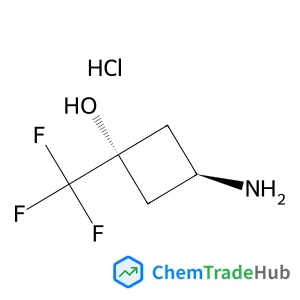
cis-3-Amino-1-(trifluoromethyl)cyclobutanol hydrochloride (1:1)
CAS Number:
1408075-16-0
Molecular Formula:
C5H9ClF3NO
![(2E)-3-(3-Chlorophenyl)-N-{2-[4-(methylsulfonyl)-1-piperazinyl]-2-oxoethyl}acrylamide structure](https://static.chemtradehub.com/structs/250/2505001-54-5-c1e9.webp "(2E)-3-(3-Chlorophenyl)-N-{2-[4-(methylsulfonyl)-1-piperazinyl]-2-oxoethyl}acrylamide structure")
(2E)-3-(3-Chlorophenyl)-N-{2-[4-(methylsulfonyl)-1-piperazinyl]-2-oxoethyl}acrylamide
CAS Number:
2505001-54-5
Molecular Formula:
C16H20ClN3O4S
Recommended Suppliers




Disclaimer
This page provides academic journal information for reference and research purposes only. We are not affiliated with any journal publishers and do not handle publication submissions. For publication-related inquiries, please contact the respective journal publishers directly.
If you notice any inaccuracies in the information displayed, please contact us at support@chemtradehub.com. We will promptly review and address your concerns.