












Variation from closed-shell to open shell electronic structures in oligothiophene bis(dioxolene) complexes
Literature Information
Publication Date
2023-10-09
DOI
10.1039/D3SC02341A
Impact Factor
9.825
Authors
Paul D. Miller, David A. Shultz, Joshua Mengell, Lukasz Wojtas
View Original
Abstract
A series of oligothiophene bis(dioxolene) complexes, SQ–Thn–SQ (SQ = S = ½TpCum,MeZnII(3-tert-butyl-orthosemiquinonate); TpCum,Me = tris(5-cumenyl-3-methylpyrazolyl)borate anion) have been synthesized, structurally characterized, and studied as a function of the number of thiophene bridging units, n (n = 0–3) using a combination of variable–temperature (VT) electronic absorption and EPR spectroscopies, and VT magnetic susceptibility measurements. The thiophene bridge bond lengths determined by X-ray crystallography display dramatic differences across the SQ–Thn–SQ series. Bridge bond deviation values (Σ|Δi|) display a progressive change in the nature of the bridge fragment bonding as the number of thiophene groups increases, with quinoidal bridge character for n = 1 (SQ–Th–SQ) and biradical character with “aromatic” bridge bond lengths for n = 3 (SQ–Th3–SQ). Remarkably, for n = 2 (SQ–Th2–SQ) the nature of the bridge fragment is intermediate between quinoid and biradical aromatic, which we describe as having open-shell character as opposed to biradicaloid since the open-shell biradical configuration does not have the correct symmetry to mix with the quinoidal ground-state configuration. This bridge bonding character is reflected in the energies of the lowest lying open-shell states for these three molecules. The SQ–Th–SQ molecule is diamagnetic at all temperatures studied, and we provide evidence for SQ–SQ antiferromagnetic exchange coupling and population of triplet states in SQ–Th2–SQ and SQ–Th3–SQ, with JSQ–SQ(ave) = −279 cm−1 (VT EPR/electronic absorption/magnetic susceptibility) and JSQ–SQ = −117 cm−1 (VT EPR/electronic absorption/magnetic susceptibility), respectively. The results have been interpreted in the context of state configurational mixing within a simplified 4-electron, 3-orbital model that explicitly contains contributions of a bridge fragment. Variable–temperature spectroscopic- and magnetic susceptibility data are consistent with two low-lying open-shell states for SQ–Th3–SQ, but three low-lying states (one closed-shell and two open-shell) for SQ–Th2–SQ. This model provides a simple symmetry-based framework to understand the continuum of electronic and geometric structures of this class of molecules as a function of the number of thiophene units in the bridge.
Related Literature
Development of a donor polymer using a B ← N unit for suitable LUMO/HOMO energy levels and improved photovoltaic performance
Zicheng Ding, Chuandong Dou, Jun Liu, Lixiang Wang
2015-09-29
Paper
DOI: 10.1039/C5PY01389E
Synthesis of catechol and zwitterion-bifunctionalized poly(ethylene glycol) for the construction of antifouling surfaces
Li Qun Xu, Dicky Pranantyo, Koon-Gee Neoh, En-Tang Kang, Serena Lay-Ming Teo, Guo Dong Fu
2015-11-11
Paper
DOI: 10.1039/C5PY01234A
Dibenzoyldiethylgermane as a visible light photo-reducing agent for CuAAC click reactions
Mustafa Arslan, Gorkem Yilmaz, Yusuf Yagci
2015-10-05
Paper
DOI: 10.1039/C5PY01465D
Synthesis of thermally cleavable multisegmented polystyrene by an atom transfer nitroxide radical polymerization (ATNRP) mechanism
Wenguang Song, Jian Huang, Cheng Hang, Chenyan Liu, Xuepu Wang, Guowei Wang
2015-09-28
Paper
DOI: 10.1039/C5PY01493J
Influence of the secondary structure on the AIE-related emission behavior of an amphiphilic polypeptide containing a hydrophobic fluorescent terminal and hydrophilic pendant groups
Li-Yang Lin, Po-Chiao Huang, Deng-Jie Yang, Jhen-Yan Gao, Jin-Long Hong
2015-10-12
Paper
DOI: 10.1039/C5PY01485A
Interactions of a zwitterionic thiophene-based conjugated polymer with surfactants
Telma Costa, Diego de Azevedo, Beverly Stewart, Matti Knaapila, Artur J. M. Valente, Mario Kraft, Ullrich Scherf, Hugh D. Burrows
2015-09-25
Paper
DOI: 10.1039/C5PY01210D
Triglycerol-based hyperbranched polyesters with an amphiphilic branched shell as novel biodegradable drug delivery systems
Stefano Stefani, Indah N. Kurniasih, Sunil K. Sharma, Christoph Böttcher, Paul Servin, Rainer Haag
2015-12-02
Paper
DOI: 10.1039/C5PY01314C
Robust carboxylated polymer pores from a cyclic peptide template
Mahesh Potnuru, Nandita Madhavan
2015-10-21
Communication
DOI: 10.1039/C5PY01313E
The Ugi reaction in polymer chemistry: syntheses, applications and perspectives
Bin Yang, Yuan Zhao, Yen Wei, Changkui Fu, Lei Tao
2015-09-28
Minireview
DOI: 10.1039/C5PY01398D
You might also like
Compound Q&A
What are the main uses of 4-Nitrophenyl phosphate disodium salt hexahydrate (CAS: 333338-18-4)?
4-Nitrophenyl phosphate disodium salt hexahydrate is primarily used as a substra...
333338-18-44-Nitrophenyl phosph...
Compound Q&A
What are the main uses of 2-(Trifluoromethyl)-1,3-oxazole-4-carboxylic Acid (CAS: 1060816-01-4)?
2-(Trifluoromethyl)-1,3-oxazole-4-carboxylic Acid (CAS: 1060816-01-4) is widely ...
1060816-01-42-(Trifluoromethyl)-...
Compound Q&A
How should 2-Fluoro-4-biphenylcarboxylic acid (CAS: 137045-30-8) be stored?
2-Fluoro-4-biphenylcarboxylic acid should be stored in a cool, dry place at room...
137045-30-82-Fluoro-4-biphenylc...
Compound Q&A
What industries use Prednisolone-21-Carboxylic Acid (CAS: 61549-70-0)?
Prednisolone-21-Carboxylic Acid is primarily used in the pharmaceutical industry...
61549-70-0Prednisolone-21-Carb...
Compound Q&A
How should 4-(Hydrazinomethyl)-1,2,3-benzenetriol (CAS: 3614-72-0) be stored?
4-(Hydrazinomethyl)-1,2,3-benzenetriol (CAS: 3614-72-0) should be stored in a co...
3614-72-04-(Hydrazinomethyl)-...
Compound Q&A
What industries use 4-Amino-1-methyl-1H-pyrazole-5-carboxylic acid hydrochloride (CAS: 92534-70-8)?
4-Amino-1-methyl-1H-pyrazole-5-carboxylic acid hydrochloride (CAS: 92534-70-8) i...
92534-70-84-Amino-1-methyl-1H-...
Compound Q&A
What regulatory guidelines apply to dehydropachymic acid (CAS: 77012-31-8)?
Dehydropachymic acid (CAS: 77012-31-8) is regulated by various agencies. It fall...
77012-31-8Dehydropachymic acid
Compound Q&A
What is the market or research trend for 6-[(2,2-Dimethylpropanoyl)amino]nicotinic acid (CAS: 898561-66-5)?
The market and research trends for 6-[(2,2-Dimethylpropanoyl)amino]nicotinic aci...
898561-66-56-[(2,2-Dimethylprop...
Compound Q&A
How should 1,10-Phenanthroline-2,9-dicarbaldehyde (CAS: 57709-62-3) be stored?
1,10-Phenanthroline-2,9-dicarbaldehyde should be stored in a cool, dry place awa...
57709-62-31,10-Phenanthroline-...
Compound Q&A
How is 5-Carbamoyl-11-oxo-10,11-dihydro-5H-dibenzo[b,f]azepin-10-yl acetate (CAS: 113952-21-9) typically synthesized?
5-Carbamoyl-11-oxo-10,11-dihydro-5H-dibenzo[b,f]azepin-10-yl acetate can be synt...
113952-21-95-Carbamoyl-11-oxo-1...
Source Journal
Chemical Science

CiteScore:
14.4
Self-citation Rate:
3.9%
Articles per Year:
1413
Our journal has a wide-ranging scope which covers the full breadth of the chemical sciences. The research we publish contains the sorts of novel ideas, challenging questions and progressive thinking that bring undiscovered breakthroughs within reach. Your paper could focus on a single area, or cross many. It could be beyond the accepted bounds of the chemical sciences. It might address an immediate challenge, contribute to a future breakthrough or be wholly conceptual. We’re a team from every field of the chemical sciences, and know from experience that breakthroughs that drive the solutions to global challenges can come from anywhere, at any time. You could even start an entirely new area of research. Too bold? Too progressive? No such thing
Recommended Compounds
![(2E)-3-(3-Chlorophenyl)-N-{2-[4-(methylsulfonyl)-1-piperazinyl]-2-oxoethyl}acrylamide structure](https://static.chemtradehub.com/structs/250/2505001-54-5-c1e9.webp "(2E)-3-(3-Chlorophenyl)-N-{2-[4-(methylsulfonyl)-1-piperazinyl]-2-oxoethyl}acrylamide structure")
(2E)-3-(3-Chlorophenyl)-N-{2-[4-(methylsulfonyl)-1-piperazinyl]-2-oxoethyl}acrylamide
CAS Number:
2505001-54-5
Molecular Formula:
C16H20ClN3O4S
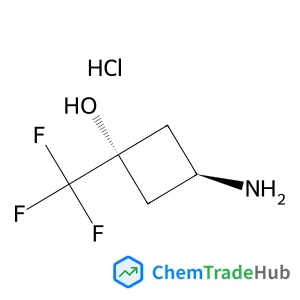
cis-3-Amino-1-(trifluoromethyl)cyclobutanol hydrochloride (1:1)
CAS Number:
1408075-16-0
Molecular Formula:
C5H9ClF3NO
Recommended Suppliers






Disclaimer
This page provides academic journal information for reference and research purposes only. We are not affiliated with any journal publishers and do not handle publication submissions. For publication-related inquiries, please contact the respective journal publishers directly.
If you notice any inaccuracies in the information displayed, please contact us at support@chemtradehub.com. We will promptly review and address your concerns.