



Ab initio rate coefficients for the reaction of OH and H2O2 under upper troposphere and lower stratosphere conditions
Literature Information
Publication Date
2023-10-25
DOI
10.1039/D3EA00143A
Impact Factor
0
Authors
Thanh Lam Nguyen, John F. Stanton
View Original
Abstract
The reaction between hydrogen peroxide (H2O2) and hydroxyl radical (OH) plays an important role in the upper troposphere and lower stratosphere (UTLS). However, direct experimental studies are lacking for this UTLS regime for a temperature range of 190–250 K. In this work, mechanism and kinetics for the title reaction were studied using high-level theoretical methods to provide highly accurate rate coefficients for the UTLS regime. The reaction was found to proceed via a van der Waals (vdW) complex at low temperatures, but to undergo a direct H-abstraction via a well-skipping mechanism at higher temperature to yield products HO2 + H2O. The ab initio rate coefficients are pressure-independent under terrestrial atmospheric conditions (T = 180–350 K and P ≤ 1 atm) and agree well to within 20% with most experimental data available for T = 165–500 K.
Recommended Journals

Current Opinion in Colloid & Interface Science

Russian Journal of Coordination Chemistry

Journal of Natural Medicines

Journal of Saudi Chemical Society

Acta Materialia

Current Opinion in Solid State & Materials Science

Russian Journal of Applied Chemistry

Nature Medicine

Saudi Pharmaceutical Journal

Russian Journal of General Chemistry
Related Literature
Polyacetylenes containing BODIPY pendants with different connectivities: synthesis, characterization and opto-electronic properties
Bin Liu, Lingfeng Li, Cuiling Lin, Jingdan Zhou, Zhexin Zhu, Hongyao Xu, Huayu Qiu, Shouchun Yin
2013-09-11
Paper
DOI: 10.1039/C3PY01021J
Synthesis of water-soluble polyisocyanates with the oligo(ethylene glycol) side-chain as new thermoresponsive polymers
Naoya Sakai, Mingoo Jin, Shin-ichiro Sato, Toshifumi Satoh, Toyoji Kakuchi
2013-10-02
Paper
DOI: 10.1039/C3PY00972F
Versatile injectable supramolecular hydrogels containing drug loaded micelles for delivery of various drugs
Zhijia Liu, Ping Yao
2013-10-14
Paper
DOI: 10.1039/C3PY01083J
Biohybrid structures consisting of biotinylated glycodendrimers and proteins: influence of the biotin ligand's number and chemical nature on the biotin–avidin conjugation
Susanne Boye, Mihaela Cernescu, Hartmut Komber, Bernhard Brutschy, Dietmar Appelhans
2013-10-17
Paper
DOI: 10.1039/C3PY01152F
Introduction of self-healing properties into covalent polymer networks via the photodissociation of alkoxyamine junctions
Siham Telitel, Yoshifumi Amamoto, Julien Poly, Fabrice Morlet-Savary, Olivier Soppera, Jacques Lalevée, Krzysztof Matyjaszewski
2013-09-26
Paper
DOI: 10.1039/C3PY01162C
Click chemistry as a powerful and chemoselective tool for the attachment of targeting ligands to polymer drug carriers
Robert Pola, Alena Braunová, Richard Laga, Michal Pechar, Karel Ulbrich
2013-10-29
Paper
DOI: 10.1039/C3PY01376F
An injectable hyaluronic acid/PEG hydrogel for cartilage tissue engineering formed by integrating enzymatic crosslinking and Diels–Alder “click chemistry”
2013-08-09
Paper
DOI: 10.1039/C3PY00869J
Sunlight induced atom transfer radical polymerization by using dimanganese decacarbonyl
Mustafa Ciftci
2013-08-30
Paper
DOI: 10.1039/C3PY01009K
Polyoxalates from biorenewable diols via Oxalate Metathesis Polymerization
John J. Garcia, Stephen A. Miller
2013-10-10
Paper
DOI: 10.1039/C3PY01185B
You might also like
Compound Q&A
What are the main uses of 4-Nitrophenyl phosphate disodium salt hexahydrate (CAS: 333338-18-4)?
4-Nitrophenyl phosphate disodium salt hexahydrate is primarily used as a substra...
333338-18-44-Nitrophenyl phosph...
Compound Q&A
What are the main uses of 2-(Trifluoromethyl)-1,3-oxazole-4-carboxylic Acid (CAS: 1060816-01-4)?
2-(Trifluoromethyl)-1,3-oxazole-4-carboxylic Acid (CAS: 1060816-01-4) is widely ...
1060816-01-42-(Trifluoromethyl)-...
Compound Q&A
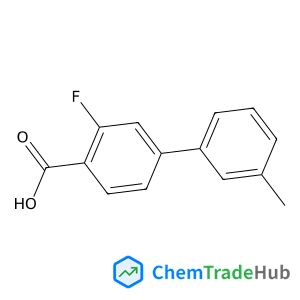
How should 2-Fluoro-4-biphenylcarboxylic acid (CAS: 137045-30-8) be stored?
2-Fluoro-4-biphenylcarboxylic acid should be stored in a cool, dry place at room...
137045-30-82-Fluoro-4-biphenylc...
Compound Q&A
What industries use Prednisolone-21-Carboxylic Acid (CAS: 61549-70-0)?
Prednisolone-21-Carboxylic Acid is primarily used in the pharmaceutical industry...
61549-70-0Prednisolone-21-Carb...
Compound Q&A
How should 4-(Hydrazinomethyl)-1,2,3-benzenetriol (CAS: 3614-72-0) be stored?
4-(Hydrazinomethyl)-1,2,3-benzenetriol (CAS: 3614-72-0) should be stored in a co...
3614-72-04-(Hydrazinomethyl)-...
Compound Q&A
What industries use 4-Amino-1-methyl-1H-pyrazole-5-carboxylic acid hydrochloride (CAS: 92534-70-8)?
4-Amino-1-methyl-1H-pyrazole-5-carboxylic acid hydrochloride (CAS: 92534-70-8) i...
92534-70-84-Amino-1-methyl-1H-...
Compound Q&A
What regulatory guidelines apply to dehydropachymic acid (CAS: 77012-31-8)?
Dehydropachymic acid (CAS: 77012-31-8) is regulated by various agencies. It fall...
77012-31-8Dehydropachymic acid
Compound Q&A
What is the market or research trend for 6-[(2,2-Dimethylpropanoyl)amino]nicotinic acid (CAS: 898561-66-5)?
The market and research trends for 6-[(2,2-Dimethylpropanoyl)amino]nicotinic aci...
898561-66-56-[(2,2-Dimethylprop...
Compound Q&A
How should 1,10-Phenanthroline-2,9-dicarbaldehyde (CAS: 57709-62-3) be stored?
1,10-Phenanthroline-2,9-dicarbaldehyde should be stored in a cool, dry place awa...
57709-62-31,10-Phenanthroline-...
Compound Q&A
How is 5-Carbamoyl-11-oxo-10,11-dihydro-5H-dibenzo[b,f]azepin-10-yl acetate (CAS: 113952-21-9) typically synthesized?
5-Carbamoyl-11-oxo-10,11-dihydro-5H-dibenzo[b,f]azepin-10-yl acetate can be synt...
113952-21-95-Carbamoyl-11-oxo-1...
Source Journal
Recommended Compounds

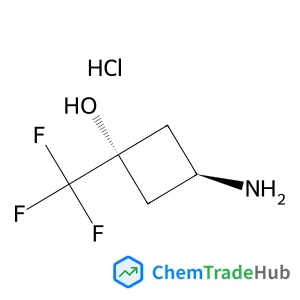
cis-3-Amino-1-(trifluoromethyl)cyclobutanol hydrochloride (1:1)
CAS Number:
1408075-16-0
Molecular Formula:
C5H9ClF3NO
Recommended Suppliers







Disclaimer
This page provides academic journal information for reference and research purposes only. We are not affiliated with any journal publishers and do not handle publication submissions. For publication-related inquiries, please contact the respective journal publishers directly.
If you notice any inaccuracies in the information displayed, please contact us at support@chemtradehub.com. We will promptly review and address your concerns.