












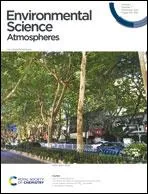
Observed in-plume gaseous elemental mercury depletion suggests significant mercury scavenging by volcanic aerosols
Literature Information
Publication Date
2023-08-07
DOI
10.1039/D3EA00063J
Impact Factor
0
Authors
Clemence Rose, Yuzo Miyazaki, Aurelie Colomb, Jerome Brioude, Brock A. Edwards, Karine Sellegri, Santiago Arellano, Alessandro Aiuppa, Jeroen E. Sonke
View Original
Abstract
Terrestrial volcanism is known to emit mercury (Hg) into the atmosphere. However, despite many years of investigation, its net impact on the atmospheric Hg budget remains insufficiently constrained, in part because the transformations of Hg in volcanic plumes as they age and mix with background air are poorly understood. Here we report the observation of complete gaseous elemental mercury (GEM) depletion events in dilute and moderately aged (∼3–7 hours) volcanic plumes from Piton de la Fournaise on Réunion Island. While it has been suggested that co-emitted bromine could, once photochemically activated, deplete GEM in a volcanic plume, we measured low bromine concentrations in both the gas- and particle-phase and observed complete GEM depletion even before sunrise, ruling out a leading role of bromine chemistry here. Instead, we hypothesize that the GEM depletions were mainly caused by gas–particle interactions with sulfate-rich volcanic particles (mostly of submicron size), abundantly present in the dilute plume. We consider heterogeneous GEM oxidation and GEM uptake by particles as plausible manifestations of such a process and derive empirical rate constants. By extrapolation, we estimate that volcanic aerosols may scavenge 210 Mg y−1 (67–480 Mg y−1) of Hg from the atmosphere globally, acting effectively as atmospheric mercury sink. While this estimate is subject to large uncertainties, it highlights that Hg transformations in aging volcanic plumes must be better understood to determine the net impact of volcanism on the atmospheric Hg budget and Hg deposition pathways.
Recommended Journals
Related Literature
A versatile Fe3O4 based platform via iron-catalyzed AGET ATRP: towards various multifunctional nanomaterials
Weiwei He, Liang Cheng, Lifen Zhang, Zhuang Liu, Zhenping Cheng, Xiulin Zhu
2013-09-27
Paper
DOI: 10.1039/C3PY00920C
Soluble and stable alternating main-chain merocyanine copolymers through quantitative spiropyran–merocyanine conversion
Hartmut Komber, Stefan Müllers, Alexander Held, Michael Walter
2013-08-22
Paper
DOI: 10.1039/C3PY00853C
An injectable hyaluronic acid/PEG hydrogel for cartilage tissue engineering formed by integrating enzymatic crosslinking and Diels–Alder “click chemistry”
2013-08-09
Paper
DOI: 10.1039/C3PY00869J
Growing polymers from peptides and proteins: a biomedical perspective
Yizhi Qi
2013-10-11
Review Article
DOI: 10.1039/C3PY01089A
Superheated high-temperature size-exclusion chromatography with chloroform as the mobile phase for π-conjugated polymers
Xianwen Lou, Joost L. J. van Dongen, Yasmine Braeken, Jeroen Brebels, Gijs W. P. van Pruissen, Weiwei Li, Martijn M. Wienk, René A. J. Janssen
2013-08-30
Paper
DOI: 10.1039/C3PY00933E
Acetyl protected thiol methacrylic polymers as effective ligands to keep quantum dots in luminescent standby mode
Marta Liras, Isabel Quijada-Garrido, Marta Palacios-Cuesta, Sonia Muñoz-Durieux, Olga García
2013-08-30
Paper
DOI: 10.1039/C3PY00987D
Chalcone derivatives as highly versatile photoinitiators for radical, cationic, thiol–ene and IPN polymerization reactions upon exposure to visible light
Mohamad-Ali Tehfe, Frédéric Dumur, Pu Xiao, Marie Delgove, Bernadette Graff, Jean-Pierre Fouassier, Didier Gigmes, Jacques Lalevée
2013-08-20
Paper
DOI: 10.1039/C3PY00922J
On the effect of using RAFT and FRP for the bulk synthesis of acrylic and methacrylic molecularly imprinted polymers
Carlo Gonzato, Pamela Pasetto, Fahmi Bedoui, Pierre-Emmanuel Mazeran, Karsten Haupt
2013-10-24
Paper
DOI: 10.1039/C3PY01246H
pH-sensitive pullulan-based nanoparticles for intracellular drug delivery
Yinsong Wang, Yang Liu, Yuanyuan Liu, Yan Wang, Jing Wu, Rongshan Li, Jinrong Yang
2013-08-29
Paper
DOI: 10.1039/C3PY00817G
You might also like
Compound Q&A
What are the main uses of 4-Nitrophenyl phosphate disodium salt hexahydrate (CAS: 333338-18-4)?
4-Nitrophenyl phosphate disodium salt hexahydrate is primarily used as a substra...
333338-18-44-Nitrophenyl phosph...
Compound Q&A
What are the main uses of 2-(Trifluoromethyl)-1,3-oxazole-4-carboxylic Acid (CAS: 1060816-01-4)?
2-(Trifluoromethyl)-1,3-oxazole-4-carboxylic Acid (CAS: 1060816-01-4) is widely ...
1060816-01-42-(Trifluoromethyl)-...
Compound Q&A
How should 2-Fluoro-4-biphenylcarboxylic acid (CAS: 137045-30-8) be stored?
2-Fluoro-4-biphenylcarboxylic acid should be stored in a cool, dry place at room...
137045-30-82-Fluoro-4-biphenylc...
Compound Q&A
What industries use Prednisolone-21-Carboxylic Acid (CAS: 61549-70-0)?
Prednisolone-21-Carboxylic Acid is primarily used in the pharmaceutical industry...
61549-70-0Prednisolone-21-Carb...
Compound Q&A
How should 4-(Hydrazinomethyl)-1,2,3-benzenetriol (CAS: 3614-72-0) be stored?
4-(Hydrazinomethyl)-1,2,3-benzenetriol (CAS: 3614-72-0) should be stored in a co...
3614-72-04-(Hydrazinomethyl)-...
Compound Q&A
What industries use 4-Amino-1-methyl-1H-pyrazole-5-carboxylic acid hydrochloride (CAS: 92534-70-8)?
4-Amino-1-methyl-1H-pyrazole-5-carboxylic acid hydrochloride (CAS: 92534-70-8) i...
92534-70-84-Amino-1-methyl-1H-...
Compound Q&A
What regulatory guidelines apply to dehydropachymic acid (CAS: 77012-31-8)?
Dehydropachymic acid (CAS: 77012-31-8) is regulated by various agencies. It fall...
77012-31-8Dehydropachymic acid
Compound Q&A
What is the market or research trend for 6-[(2,2-Dimethylpropanoyl)amino]nicotinic acid (CAS: 898561-66-5)?
The market and research trends for 6-[(2,2-Dimethylpropanoyl)amino]nicotinic aci...
898561-66-56-[(2,2-Dimethylprop...
Compound Q&A
How should 1,10-Phenanthroline-2,9-dicarbaldehyde (CAS: 57709-62-3) be stored?
1,10-Phenanthroline-2,9-dicarbaldehyde should be stored in a cool, dry place awa...
57709-62-31,10-Phenanthroline-...
Compound Q&A
How is 5-Carbamoyl-11-oxo-10,11-dihydro-5H-dibenzo[b,f]azepin-10-yl acetate (CAS: 113952-21-9) typically synthesized?
5-Carbamoyl-11-oxo-10,11-dihydro-5H-dibenzo[b,f]azepin-10-yl acetate can be synt...
113952-21-95-Carbamoyl-11-oxo-1...
Source Journal
Recommended Compounds
![(2E)-3-(3-Chlorophenyl)-N-{2-[4-(methylsulfonyl)-1-piperazinyl]-2-oxoethyl}acrylamide structure](https://static.chemtradehub.com/structs/250/2505001-54-5-c1e9.webp "(2E)-3-(3-Chlorophenyl)-N-{2-[4-(methylsulfonyl)-1-piperazinyl]-2-oxoethyl}acrylamide structure")
(2E)-3-(3-Chlorophenyl)-N-{2-[4-(methylsulfonyl)-1-piperazinyl]-2-oxoethyl}acrylamide
CAS Number:
2505001-54-5
Molecular Formula:
C16H20ClN3O4S

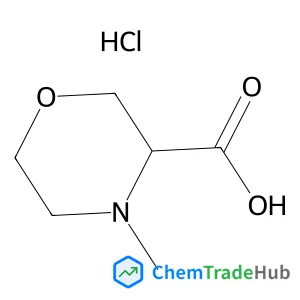
4-Methyl-3-morpholinecarboxylic acid hydrochloride (1:1)
CAS Number:
1240518-90-4
Molecular Formula:
C6H12ClNO3
Recommended Suppliers




Disclaimer
This page provides academic journal information for reference and research purposes only. We are not affiliated with any journal publishers and do not handle publication submissions. For publication-related inquiries, please contact the respective journal publishers directly.
If you notice any inaccuracies in the information displayed, please contact us at support@chemtradehub.com. We will promptly review and address your concerns.