













Biosynthesized tumor acidity and MMP dual-responsive plant toxin gelonin for robust cancer therapy
Literature Information
Publication Date
2023-12-05
DOI
10.1039/D3BM01779F
Impact Factor
6.843
Authors
Huiyan Cao, Chenchen Zhu, Fangyuan Chen, Jiaqi Ye, Bin-Chun Li, Peng Yang, Mingqiang Qiao, Zhuoyu Li
View Original
Abstract
Among all kinds of anticancer agents, small molecule drugs produce an unsatisfactory therapeutic effect due to the lack of selectivity, notorious drug resistance and side effects. Therefore, researchers have begun to pay extensive attention to macromolecular drugs with high efficacy and specificity. As a plant toxin, gelonin exerts potent antitumor activity via inhibiting intracellular protein synthesis. However, gelonin lacks a translocation domain, and thus its poor cellular uptake leads to low outcomes of antitumor response. Here, tumor acidity and matrix metalloproteinase (MMP) dual-responsive functional gelonin (Trx-PVGLIG-pHLIP-gelonin, TPpG), composed of a thioredoxin (Trx) tag, a pH low insertion peptide (pHLIP), an MMP-responsive motif PVGLIG hexapeptide and gelonin, was innovatively proposed and biologically synthesized by a gene recombination technique. TPpG exhibited good thermal and serum stability, showed MMP responsiveness and could enter tumor cells under weakly acidic conditions, especially for MMP2-overexpressing HT1080 cells. Compared to low MMP2-expressing MCF-7 cells, TPpG displayed enhanced in vitro antitumor efficacy to HT1080 cells at pH 6.5 as determined by different methods. Likewise, TPpG was much more effective in triggering cell apoptosis and inhibiting protein synthesis in HT1080 cells than in MCF-7 cells. Intriguingly, with enhanced stability and pH/MMP dual responsiveness, TPpG notably inhibited subcutaneous HT1080 xenograft growth in mice and no noticeable off-target side effect was observed. This ingeniously designed strategy aims at providing new perspectives for the development of a smart platform that can intelligently respond to a tumor microenvironment for efficient protein delivery.
Recommended Journals
Related Literature
Elucidating the morphological aspects and proton dynamics in a hybrid perfluorosulfonic acid membrane for medium-temperature fuel cell applications
Saeed Akbari, Mohammad Taghi Hamed Mosavian, Fatemeh Moosavi, Ali Ahmadpour
2018-11-05
Paper
DOI: 10.1039/C8CP05377D
Reply to the ‘Comment on “Negative effective Li transference numbers in Li salt/ionic liquid mixtures: does Li drift in the “Wrong” direction?”’ by K. R. Harris, Phys. Chem. Chem. Phys., 2018, 20, DOI: 10.1039/C8CP02595A
Monika Schönhoff, Cornelia Cramer, Florian Schmidt
2018-11-21
Comment
DOI: 10.1039/C8CP06075D
Effects of double-atom vacancies on the electronic properties of graphyne: a DFT investigation
Si Wu, Yuan Yuan, Hongqi Ai, Baotao Kang
2018-08-10
Paper
DOI: 10.1039/C8CP03359E
The metal–ionic liquid interface as characterized by impedance spectroscopy and in situ scanning tunneling microscopy
Claus Müller
2018-08-06
Perspective
DOI: 10.1039/C8CP02074D
Role of the carbon source in the transformation of amorphous carbon to graphene during rapid thermal processing
Yong Zhou, Xiaowei Xu, Aiying Wang, Kwang-Ryeol Lee
2019-04-08
Paper
DOI: 10.1039/C9CP01305A
Understanding the influence of disorder on the exciton dynamics and energy transfer in Zn-phthalocyanine H-aggregates
Nicolò Azzaroli, Justin R. Caram, Timothy S. Sinclair, Lorenzo Cupellini, Sandro Jurinovich, Benedetta Mennucci, Gloria Zanotti, Anna Maria Paoletti, Giovanna Pennesi
2018-08-03
Paper
DOI: 10.1039/C8CP02172D
Counteraction of denaturant-induced protein unfolding is a general property of stabilizing agents
Serena Cozzolino, Rosario Oliva, Giuseppe Graziano, Pompea Del Vecchio
2018-11-07
Paper
DOI: 10.1039/C8CP04421J
You might also like
Compound Q&A
What are the main uses of 4-Nitrophenyl phosphate disodium salt hexahydrate (CAS: 333338-18-4)?
4-Nitrophenyl phosphate disodium salt hexahydrate is primarily used as a substra...
333338-18-44-Nitrophenyl phosph...
Compound Q&A
What are the main uses of 2-(Trifluoromethyl)-1,3-oxazole-4-carboxylic Acid (CAS: 1060816-01-4)?
2-(Trifluoromethyl)-1,3-oxazole-4-carboxylic Acid (CAS: 1060816-01-4) is widely ...
1060816-01-42-(Trifluoromethyl)-...
Compound Q&A
How should 2-Fluoro-4-biphenylcarboxylic acid (CAS: 137045-30-8) be stored?
2-Fluoro-4-biphenylcarboxylic acid should be stored in a cool, dry place at room...
137045-30-82-Fluoro-4-biphenylc...
Compound Q&A
What industries use Prednisolone-21-Carboxylic Acid (CAS: 61549-70-0)?
Prednisolone-21-Carboxylic Acid is primarily used in the pharmaceutical industry...
61549-70-0Prednisolone-21-Carb...
Compound Q&A
How should 4-(Hydrazinomethyl)-1,2,3-benzenetriol (CAS: 3614-72-0) be stored?
4-(Hydrazinomethyl)-1,2,3-benzenetriol (CAS: 3614-72-0) should be stored in a co...
3614-72-04-(Hydrazinomethyl)-...
Compound Q&A
What industries use 4-Amino-1-methyl-1H-pyrazole-5-carboxylic acid hydrochloride (CAS: 92534-70-8)?
4-Amino-1-methyl-1H-pyrazole-5-carboxylic acid hydrochloride (CAS: 92534-70-8) i...
92534-70-84-Amino-1-methyl-1H-...
Compound Q&A
What regulatory guidelines apply to dehydropachymic acid (CAS: 77012-31-8)?
Dehydropachymic acid (CAS: 77012-31-8) is regulated by various agencies. It fall...
77012-31-8Dehydropachymic acid
Compound Q&A
What is the market or research trend for 6-[(2,2-Dimethylpropanoyl)amino]nicotinic acid (CAS: 898561-66-5)?
The market and research trends for 6-[(2,2-Dimethylpropanoyl)amino]nicotinic aci...
898561-66-56-[(2,2-Dimethylprop...
Compound Q&A
How should 1,10-Phenanthroline-2,9-dicarbaldehyde (CAS: 57709-62-3) be stored?
1,10-Phenanthroline-2,9-dicarbaldehyde should be stored in a cool, dry place awa...
57709-62-31,10-Phenanthroline-...
Compound Q&A
How is 5-Carbamoyl-11-oxo-10,11-dihydro-5H-dibenzo[b,f]azepin-10-yl acetate (CAS: 113952-21-9) typically synthesized?
5-Carbamoyl-11-oxo-10,11-dihydro-5H-dibenzo[b,f]azepin-10-yl acetate can be synt...
113952-21-95-Carbamoyl-11-oxo-1...
Source Journal
Biomaterials Science

CiteScore:
11.5
Self-citation Rate:
3.4%
Articles per Year:
492
Biomaterials Science is an international high impact journal exploring the science of biomaterials and their translation towards clinical use. Its scope encompasses new concepts in biomaterials design, studies into the interaction of biomaterials with the body, and the use of materials to answer fundamental biological questions. Papers do not necessarily need to report a new biomaterial but should provide novel insight into the biological applications of the biomaterial. Articles that primarily focus on demonstrating novel materials chemistry and bring a molecular picture to bear on a given material’s suitability as a biomaterial are more suited to our companion journal, Journal of Materials Chemistry B. Biomaterials Science publishes primary research and review-type articles in the following areas: molecular design of biomaterials, including translation of emerging chemistries to biomaterials science of cells and materials at the nanoscale and microscale materials as model systems for stem cell and human biology materials for tissue engineering and regenerative medicine (Nano)materials and (nano)systems for therapeutic delivery interactions at the biointerface biologically inspired and biomimetic materials, including bio-inspired self-assembly systems and cell-inspired synthetic tools next-generation biomaterials tools and methods
Recommended Compounds

![(2E)-3-(3-Chlorophenyl)-N-{2-[4-(methylsulfonyl)-1-piperazinyl]-2-oxoethyl}acrylamide structure](https://static.chemtradehub.com/structs/250/2505001-54-5-c1e9.webp "(2E)-3-(3-Chlorophenyl)-N-{2-[4-(methylsulfonyl)-1-piperazinyl]-2-oxoethyl}acrylamide structure")
(2E)-3-(3-Chlorophenyl)-N-{2-[4-(methylsulfonyl)-1-piperazinyl]-2-oxoethyl}acrylamide
CAS Number:
2505001-54-5
Molecular Formula:
C16H20ClN3O4S

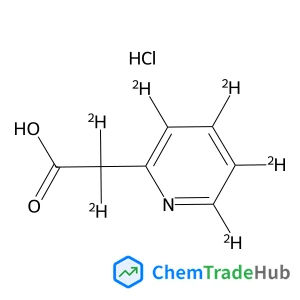
2,2-dideuterio-2-(3,4,5,6-tetradeuterio-2-pyridyl)acetic acid;hydrochloride
CAS Number:
1329799-67-8
Molecular Formula:
C7H2ClD6NO2
Recommended Suppliers



Disclaimer
This page provides academic journal information for reference and research purposes only. We are not affiliated with any journal publishers and do not handle publication submissions. For publication-related inquiries, please contact the respective journal publishers directly.
If you notice any inaccuracies in the information displayed, please contact us at support@chemtradehub.com. We will promptly review and address your concerns.