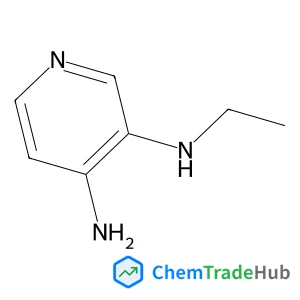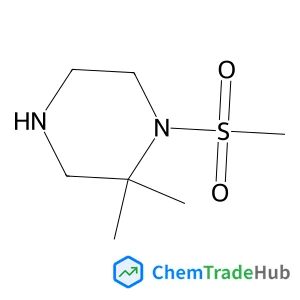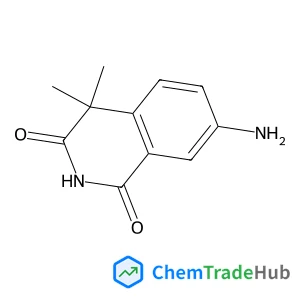
1,3(2H,4H)-Isoquinolinedione, 7-amino-4,4-dimethyl-
CAS Number:
14576-22-8
Molecular Formula:
C11H12N2O2
Bo Yu, Qiao Jin, Jian Ji
Acute kidney injury (AKI) is a global health threat due to its high morbidity and mortality. There is still a lack of effective therapeutic methods to deal with AKI clinically. Natural products with outstanding accessibility and bioactivity are potential candidates for AKI treatment. Natural product-based prodrugs or nano-structures with improved properties are frequently fabricated for maximizing bioavailability and decreasing side effects, in which natural polymers are selected as carriers, or natural drugs are loaded as cargos on designed polymers. In this review, the etiologies of AKI are briefly presented, and emerging natural products delivered rationally for AKI therapy, as either carriers or cargos, are both introduced. Moreover, the challenges of the future development of nature-based nanodrugs or prodrugs for AKI have also been discussed.
Caterina Cocchi, Tobias Breuer, Gregor Witte, Claudia Draxl
DOI: 10.1039/C8CP06384B
A. A. Makarova
DOI: 10.1039/C8CP01510D
Lorenz Kranabetter, Paul Martini, Norbert Gitzl, Martin Kuhn, Fatima Saleem, Bilal Rasul, Masoomeh Mahmoodi Darian, Elias Jabbour Al Maalouf, Ivan Sukuba, Alexander Kaiser, Marcelo Goulart, Diethard K. Böhme, Paul Scheier
DOI: 10.1039/C8CP02207K
Joanna E. Rode, Marcin Górecki, Stanisław Witkowski, Jadwiga Frelek
DOI: 10.1039/C8CP02491J
Rositsa Yakimova
DOI: 10.1039/C8CP03306D
DOI: 10.1039/C8CP04145H
Wook Lee, Inkoo Kim, Young Min Rhee
DOI: 10.1039/C8CP02939C
Piero Ferrari, Peter Lievens, Ewald Janssens
DOI: 10.1039/C8CP06092D
4-Nitrophenyl phosphate disodium salt hexahydrate is primarily used as a substra...
2-(Trifluoromethyl)-1,3-oxazole-4-carboxylic Acid (CAS: 1060816-01-4) is widely ...
2-Fluoro-4-biphenylcarboxylic acid should be stored in a cool, dry place at room...
Prednisolone-21-Carboxylic Acid is primarily used in the pharmaceutical industry...
4-(Hydrazinomethyl)-1,2,3-benzenetriol (CAS: 3614-72-0) should be stored in a co...
4-Amino-1-methyl-1H-pyrazole-5-carboxylic acid hydrochloride (CAS: 92534-70-8) i...
Dehydropachymic acid (CAS: 77012-31-8) is regulated by various agencies. It fall...
The market and research trends for 6-[(2,2-Dimethylpropanoyl)amino]nicotinic aci...
1,10-Phenanthroline-2,9-dicarbaldehyde should be stored in a cool, dry place awa...
5-Carbamoyl-11-oxo-10,11-dihydro-5H-dibenzo[b,f]azepin-10-yl acetate can be synt...
Biomaterials Science is an international high impact journal exploring the science of biomaterials and their translation towards clinical use. Its scope encompasses new concepts in biomaterials design, studies into the interaction of biomaterials with the body, and the use of materials to answer fundamental biological questions. Papers do not necessarily need to report a new biomaterial but should provide novel insight into the biological applications of the biomaterial. Articles that primarily focus on demonstrating novel materials chemistry and bring a molecular picture to bear on a given material’s suitability as a biomaterial are more suited to our companion journal, Journal of Materials Chemistry B. Biomaterials Science publishes primary research and review-type articles in the following areas: molecular design of biomaterials, including translation of emerging chemistries to biomaterials science of cells and materials at the nanoscale and microscale materials as model systems for stem cell and human biology materials for tissue engineering and regenerative medicine (Nano)materials and (nano)systems for therapeutic delivery interactions at the biointerface biologically inspired and biomimetic materials, including bio-inspired self-assembly systems and cell-inspired synthetic tools next-generation biomaterials tools and methods