













An active transport dual adaptive nanocarrier designed to overcome the corneal microenvironment for neovascularization therapy
Literature Information
Publication Date
2023-11-10
DOI
10.1039/D3BM01349A
Impact Factor
6.843
Authors
Yingying Li, Shan Gao, Yu Zhang, Zhijing He, Jianbo Ji, Xiaoye Yang, Lei Ye, Lixia Zhao
View Original
Abstract
The eyes have a complicated microenvironment with many clearance mechanisms, making it challenging for effective drug delivery to the targeted areas of the eyes. Substrate transport mediated by active transporters is an important way to change drug metabolism in the ocular microenvironment. We designed multifunctional, dual-adaptive nanomicelles (GSCQ@NTB) which could overcome multiple physiological barriers by acting on both the efflux transporter and influx transporter to achieve deep delivery of the P-gp substrate in the cornea. Specifically, an effective “triple” antiangiogenic agent, nintedanib (NTB), was loaded into the biocompatible micelles. The expression of the efflux transporter was reversed by grafting quercetin. The peptide (glycylsarcosine, GS) was modified to target the influx transporter “Peptide Transporter-1” (PepT-1). Quercetin (QRT) and nintedanib (NTB) were transported to the cornea cooperatively, achieving long retention on the ocular surface and high compatibility. In a New Zealand rabbit model, within 8 hours after local administration, GSCQ@NTB was enriched in corneal stromal neovascularization and effectively inhibited the progress of neovascularization. Its effectiveness is slightly better than that in the first-line clinical application of steroids. In this study, we introduce the preparation of a dual adaptive nano-micelle system, which may provide an effective non-invasive treatment for corneal neovascularization.
Related Literature
Closed bipolar electrochemistry in a four-electrode configuration
Alonso Gamero-Quijano, Andrés F. Molina-Osorio, Pekka Peljo
2019-05-03
Perspective
DOI: 10.1039/C9CP00774A
Why does 4-biphenyl carbonyl azide have ultra-short lived excited states? An ultrafast UV-vis spectroscopic and computational study
2018-11-06
Paper
DOI: 10.1039/C8CP05963B
Factors governing when a metal-bound water is deprotonated in proteins
Cédric Grauffel
2018-11-05
Paper
DOI: 10.1039/C8CP04776F
Spin–orbit coupling as a probe to decipher halogen bonding
Jérôme Graton, Seyfeddine Rahali, Jean-Yves Le Questel, Gilles Montavon, Julien Pilmé, Nicolas Galland
2018-10-08
Paper
DOI: 10.1039/C8CP05690K
A molecular dynamics model for glycosylphosphatidyl-inositol anchors: “flop down” or “lollipop”?
Pallavi Banerjee, Marko Wehle, Reinhard Lipowsky, Mark Santer
2018-11-09
Paper
DOI: 10.1039/C8CP04059A
Operando investigations of lithiation and delithiation processes in a BiVO4 anode material
Amund Ruud, Jonas Sottmann, Ponniah Vajeeston, Helmer Fjellvåg
2018-11-09
Paper
DOI: 10.1039/C8CP05330H
The evolution in graphitic surface wettability with first-principles quantum simulations: the counterintuitive role of water
Jin-You Lu, Chia-Yun Lai, Ibraheem Almansoori
2018-08-08
Paper
DOI: 10.1039/C8CP03633K
Extreme electron transport suppression in siloxane ring-based molecular devices
Jie Li, Yunrui Duan, Tao Li, Hui Li
2018-08-21
Paper
DOI: 10.1039/C8CP03616K
Effects of hydrogen bonding on the gas-phase reactivity of didehydroisoquinolinium cation isomers
Nelson R. Vinueza, Bartłomiej J. Jankiewicz, Vanessa A. Gallardo, John J. Nash, Hilkka I. Kenttämaa
2018-08-02
Paper
DOI: 10.1039/C8CP03350A
You might also like
Compound Q&A
What are the main uses of 4-Nitrophenyl phosphate disodium salt hexahydrate (CAS: 333338-18-4)?
4-Nitrophenyl phosphate disodium salt hexahydrate is primarily used as a substra...
333338-18-44-Nitrophenyl phosph...
Compound Q&A
What are the main uses of 2-(Trifluoromethyl)-1,3-oxazole-4-carboxylic Acid (CAS: 1060816-01-4)?
2-(Trifluoromethyl)-1,3-oxazole-4-carboxylic Acid (CAS: 1060816-01-4) is widely ...
1060816-01-42-(Trifluoromethyl)-...
Compound Q&A
How should 2-Fluoro-4-biphenylcarboxylic acid (CAS: 137045-30-8) be stored?
2-Fluoro-4-biphenylcarboxylic acid should be stored in a cool, dry place at room...
137045-30-82-Fluoro-4-biphenylc...
Compound Q&A
What industries use Prednisolone-21-Carboxylic Acid (CAS: 61549-70-0)?
Prednisolone-21-Carboxylic Acid is primarily used in the pharmaceutical industry...
61549-70-0Prednisolone-21-Carb...
Compound Q&A
How should 4-(Hydrazinomethyl)-1,2,3-benzenetriol (CAS: 3614-72-0) be stored?
4-(Hydrazinomethyl)-1,2,3-benzenetriol (CAS: 3614-72-0) should be stored in a co...
3614-72-04-(Hydrazinomethyl)-...
Compound Q&A
What industries use 4-Amino-1-methyl-1H-pyrazole-5-carboxylic acid hydrochloride (CAS: 92534-70-8)?
4-Amino-1-methyl-1H-pyrazole-5-carboxylic acid hydrochloride (CAS: 92534-70-8) i...
92534-70-84-Amino-1-methyl-1H-...
Compound Q&A
What regulatory guidelines apply to dehydropachymic acid (CAS: 77012-31-8)?
Dehydropachymic acid (CAS: 77012-31-8) is regulated by various agencies. It fall...
77012-31-8Dehydropachymic acid
Compound Q&A
What is the market or research trend for 6-[(2,2-Dimethylpropanoyl)amino]nicotinic acid (CAS: 898561-66-5)?
The market and research trends for 6-[(2,2-Dimethylpropanoyl)amino]nicotinic aci...
898561-66-56-[(2,2-Dimethylprop...
Compound Q&A
How should 1,10-Phenanthroline-2,9-dicarbaldehyde (CAS: 57709-62-3) be stored?
1,10-Phenanthroline-2,9-dicarbaldehyde should be stored in a cool, dry place awa...
57709-62-31,10-Phenanthroline-...
Compound Q&A
How is 5-Carbamoyl-11-oxo-10,11-dihydro-5H-dibenzo[b,f]azepin-10-yl acetate (CAS: 113952-21-9) typically synthesized?
5-Carbamoyl-11-oxo-10,11-dihydro-5H-dibenzo[b,f]azepin-10-yl acetate can be synt...
113952-21-95-Carbamoyl-11-oxo-1...
Source Journal
Biomaterials Science
CiteScore:
11.5
Self-citation Rate:
3.4%
Articles per Year:
492
Biomaterials Science is an international high impact journal exploring the science of biomaterials and their translation towards clinical use. Its scope encompasses new concepts in biomaterials design, studies into the interaction of biomaterials with the body, and the use of materials to answer fundamental biological questions. Papers do not necessarily need to report a new biomaterial but should provide novel insight into the biological applications of the biomaterial. Articles that primarily focus on demonstrating novel materials chemistry and bring a molecular picture to bear on a given material’s suitability as a biomaterial are more suited to our companion journal, Journal of Materials Chemistry B. Biomaterials Science publishes primary research and review-type articles in the following areas: molecular design of biomaterials, including translation of emerging chemistries to biomaterials science of cells and materials at the nanoscale and microscale materials as model systems for stem cell and human biology materials for tissue engineering and regenerative medicine (Nano)materials and (nano)systems for therapeutic delivery interactions at the biointerface biologically inspired and biomimetic materials, including bio-inspired self-assembly systems and cell-inspired synthetic tools next-generation biomaterials tools and methods
Recommended Compounds
![N-[2-(4-Hydroxyphenoxy)-4-nitrophenyl]methanesulfonamide structure](https://static.chemtradehub.com/structs/109/109032-22-6-7c88.webp "N-[2-(4-Hydroxyphenoxy)-4-nitrophenyl]methanesulfonamide structure")
N-[2-(4-Hydroxyphenoxy)-4-nitrophenyl]methanesulfonamide
CAS Number:
109032-22-6
Molecular Formula:
C13H12N2O6S
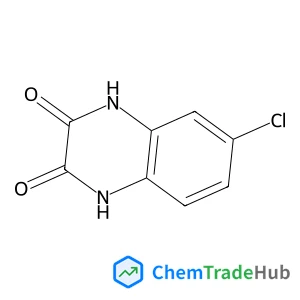
6-CHLORO-2,3-DIOXO-1,2,3,4-TETRAHYDROQUINOXALINE, 97
CAS Number:
169-14-2
Molecular Formula:
C8H5ClN2O2
Recommended Suppliers





Disclaimer
This page provides academic journal information for reference and research purposes only. We are not affiliated with any journal publishers and do not handle publication submissions. For publication-related inquiries, please contact the respective journal publishers directly.
If you notice any inaccuracies in the information displayed, please contact us at support@chemtradehub.com. We will promptly review and address your concerns.