












Genetically engineered probiotics for an optical imaging-guided tumor photothermal therapy/immunotherapy
Literature Information
Publication Date
2023-11-15
DOI
10.1039/D3BM01227A
Impact Factor
6.843
Authors
Xue Chen, Puze Li, Shiqiang Xie
View Original
Abstract
Bacteria-based cancer therapy (BCT) has been extensively investigated because of the tumor targeting and antitumor immunity activating abilities of bacteria over traditional nanodrugs, but their potential systemic toxicity poses a challenge. Therefore, it is important to visualize the precise localization and real-time distribution of bacteria in vivo to guide the treatment. Herein, biogenetically engineered Escherichia coli Nissle 1917 (EcN) were constructed to highly express tyrosinase to intracellularly generate cyanine 5-labeled melanin-like polymers (Cy5-Mel), thus endowing them with a bright fluorescence and an excellent photothermal performance upon NIR laser irradiation, thereby inducing the intense immunogenic death of tumor cells and release of tumor-associated antigens. Acting as adjuvants, bacteria can greatly stimulate the maturation of dendritic (DC) cells. The in vivo behaviors of these bacteria was monitored via noninvasive optical imaging when they were intravenously administrated to tumor-bearing mice. From this, NIR exposure on tumor sites was carried out at an appropriate time point to induce the damage to tumor cells and for the modulation of tumor immune microenvironments. Thus, via a simple bioengineering strategy, a promising bacteria-based theranostic platform was constructed for tumor treatment.
Related Literature
Reactive convective-dissolution in a porous medium: stability and nonlinear dynamics
Silvana S. S. Cardoso
2018-07-26
Paper
DOI: 10.1039/C8CP03064B
Closed bipolar electrochemistry in a four-electrode configuration
Alonso Gamero-Quijano, Andrés F. Molina-Osorio, Pekka Peljo
2019-05-03
Perspective
DOI: 10.1039/C9CP00774A
Solvation of 2-(hydroxymethyl)-2,5,7,8-tetramethyl-chroman-6-ol revealed by circular dichroism: a case of chromane helicity rule breaking
Joanna E. Rode, Marcin Górecki, Stanisław Witkowski, Jadwiga Frelek
2018-08-15
Paper
DOI: 10.1039/C8CP02491J
Excited state dynamics study of the self-trapped exciton formation in silicon nanosheets
Naeem Ullah, Shunwei Chen
2018-10-29
Paper
DOI: 10.1039/C8CP04806A
Vibrationally induced metallisation of the energetic azide α-NaN3
Svemir Rudić, Carole A. Morrison
2018-11-05
Paper
DOI: 10.1039/C8CP06161K
Effect of density on the thermal decomposition mechanism of ε-CL-20: a ReaxFF reactive molecular dynamics simulation study
Fuping Wang, Lang Chen, Deshen Geng, Jianying Lu, Junying Wu
2018-08-08
Paper
DOI: 10.1039/C8CP03010C
Elucidating the morphological aspects and proton dynamics in a hybrid perfluorosulfonic acid membrane for medium-temperature fuel cell applications
Saeed Akbari, Mohammad Taghi Hamed Mosavian, Fatemeh Moosavi, Ali Ahmadpour
2018-11-05
Paper
DOI: 10.1039/C8CP05377D
Electrochemical tuning of capacitive response of graphene oxide
Sanjin J. Gutić, Dževad K. Kozlica, Fehim Korać, Danica Bajuk-Bogdanović, Miodrag Mitrić, Vladimir M. Mirsky, Igor A. Pašti
2018-08-07
Paper
DOI: 10.1039/C8CP03631D
You might also like
Compound Q&A
What are the main uses of 4-Nitrophenyl phosphate disodium salt hexahydrate (CAS: 333338-18-4)?
4-Nitrophenyl phosphate disodium salt hexahydrate is primarily used as a substra...
333338-18-44-Nitrophenyl phosph...
Compound Q&A
What are the main uses of 2-(Trifluoromethyl)-1,3-oxazole-4-carboxylic Acid (CAS: 1060816-01-4)?
2-(Trifluoromethyl)-1,3-oxazole-4-carboxylic Acid (CAS: 1060816-01-4) is widely ...
1060816-01-42-(Trifluoromethyl)-...
Compound Q&A
How should 2-Fluoro-4-biphenylcarboxylic acid (CAS: 137045-30-8) be stored?
2-Fluoro-4-biphenylcarboxylic acid should be stored in a cool, dry place at room...
137045-30-82-Fluoro-4-biphenylc...
Compound Q&A
What industries use Prednisolone-21-Carboxylic Acid (CAS: 61549-70-0)?
Prednisolone-21-Carboxylic Acid is primarily used in the pharmaceutical industry...
61549-70-0Prednisolone-21-Carb...
Compound Q&A
How should 4-(Hydrazinomethyl)-1,2,3-benzenetriol (CAS: 3614-72-0) be stored?
4-(Hydrazinomethyl)-1,2,3-benzenetriol (CAS: 3614-72-0) should be stored in a co...
3614-72-04-(Hydrazinomethyl)-...
Compound Q&A
What industries use 4-Amino-1-methyl-1H-pyrazole-5-carboxylic acid hydrochloride (CAS: 92534-70-8)?
4-Amino-1-methyl-1H-pyrazole-5-carboxylic acid hydrochloride (CAS: 92534-70-8) i...
92534-70-84-Amino-1-methyl-1H-...
Compound Q&A
What regulatory guidelines apply to dehydropachymic acid (CAS: 77012-31-8)?
Dehydropachymic acid (CAS: 77012-31-8) is regulated by various agencies. It fall...
77012-31-8Dehydropachymic acid
Compound Q&A
What is the market or research trend for 6-[(2,2-Dimethylpropanoyl)amino]nicotinic acid (CAS: 898561-66-5)?
The market and research trends for 6-[(2,2-Dimethylpropanoyl)amino]nicotinic aci...
898561-66-56-[(2,2-Dimethylprop...
Compound Q&A
How should 1,10-Phenanthroline-2,9-dicarbaldehyde (CAS: 57709-62-3) be stored?
1,10-Phenanthroline-2,9-dicarbaldehyde should be stored in a cool, dry place awa...
57709-62-31,10-Phenanthroline-...
Compound Q&A
How is 5-Carbamoyl-11-oxo-10,11-dihydro-5H-dibenzo[b,f]azepin-10-yl acetate (CAS: 113952-21-9) typically synthesized?
5-Carbamoyl-11-oxo-10,11-dihydro-5H-dibenzo[b,f]azepin-10-yl acetate can be synt...
113952-21-95-Carbamoyl-11-oxo-1...
Source Journal
Biomaterials Science
CiteScore:
11.5
Self-citation Rate:
3.4%
Articles per Year:
492
Biomaterials Science is an international high impact journal exploring the science of biomaterials and their translation towards clinical use. Its scope encompasses new concepts in biomaterials design, studies into the interaction of biomaterials with the body, and the use of materials to answer fundamental biological questions. Papers do not necessarily need to report a new biomaterial but should provide novel insight into the biological applications of the biomaterial. Articles that primarily focus on demonstrating novel materials chemistry and bring a molecular picture to bear on a given material’s suitability as a biomaterial are more suited to our companion journal, Journal of Materials Chemistry B. Biomaterials Science publishes primary research and review-type articles in the following areas: molecular design of biomaterials, including translation of emerging chemistries to biomaterials science of cells and materials at the nanoscale and microscale materials as model systems for stem cell and human biology materials for tissue engineering and regenerative medicine (Nano)materials and (nano)systems for therapeutic delivery interactions at the biointerface biologically inspired and biomimetic materials, including bio-inspired self-assembly systems and cell-inspired synthetic tools next-generation biomaterials tools and methods
Recommended Compounds
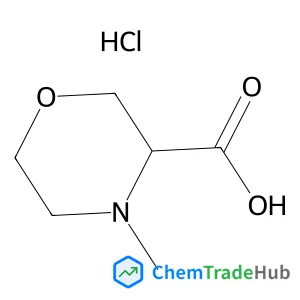
4-Methyl-3-morpholinecarboxylic acid hydrochloride (1:1)
CAS Number:
1240518-90-4
Molecular Formula:
C6H12ClNO3

![1-[(4-Methylphenyl)sulfonyl]-3-(4,4,5,5-tetramethyl-1,3,2-dioxaborolan-2-yl)-1H-pyrrolo[2,3-b]pyridine-5-carbonitrile structure](https://static.chemtradehub.com/structs/143/1434747-57-5-fc0d.webp "1-[(4-Methylphenyl)sulfonyl]-3-(4,4,5,5-tetramethyl-1,3,2-dioxaborolan-2-yl)-1H-pyrrolo[2,3-b]pyridine-5-carbonitrile structure")
1-[(4-Methylphenyl)sulfonyl]-3-(4,4,5,5-tetramethyl-1,3,2-dioxaborolan-2-yl)-1H-pyrrolo[2,3-b]pyridine-5-carbonitrile
CAS Number:
1434747-57-5
Molecular Formula:
C21H22BN3O4S
Recommended Suppliers







Disclaimer
This page provides academic journal information for reference and research purposes only. We are not affiliated with any journal publishers and do not handle publication submissions. For publication-related inquiries, please contact the respective journal publishers directly.
If you notice any inaccuracies in the information displayed, please contact us at support@chemtradehub.com. We will promptly review and address your concerns.