![(3R,5R)-1-[(Benzyloxy)carbonyl]-5-methyl-3-piperidinecarboxylic acid structure](https://static.chemtradehub.com/structs/126/1269757-29-0-c552.webp "(3R,5R)-1-[(Benzyloxy)carbonyl]-5-methyl-3-piperidinecarboxylic acid structure")
(3R,5R)-1-[(Benzyloxy)carbonyl]-5-methyl-3-piperidinecarboxylic acid
CAS Number:
1269757-29-0
Molecular Formula:
C15H19NO4
Mengwei Li, Banglian Hu, Zhaojie Wu, Ziwei Wang, Jian Weng, Honghua Zheng, Liping Sun
Immune cells are the housekeepers of the human body. They protect the body from pathogens, cellular damage, and foreign matter. Proper activation of immune cells is of great significance to diseases such as infection, inflammation, and neurodegeneration. However, excessive activation of cells can be detrimental. An ideal biomaterial could enhance the cellular immune function without proinflammation. In this work, we used sporopollenin exine capsules (SEC) from pollen to promote functions of primary microglia, a typical resident immune cell of the brain. We found that microglia aggregated around SEC and did not undergo any proinflammation. SEC improved the viability, migration, phagocytosis, and anti-inflammatory ability of microglia. By exploring the underlying mechanism of microglial activation without the production of cytotoxic pro-inflammatory cytokines, we found that SEC protects microglia against inflammation induced by lipopolysaccharide (LPS), an immunostimulatory factor, through the toll-like receptor 4 (TLR4) signaling pathway in a myeloid differentiation factor 88-dependent manner. These findings might shed light on the potential application of SEC in microglia transplantation for treatment of microglia-associated degenerative central nervous system diseases.
Puja Adhikari, Neng Li, Paul Rulis, Wai-Yim Ching
DOI: 10.1039/C8CP05610B
Nelson R. Vinueza, Bartłomiej J. Jankiewicz, Vanessa A. Gallardo, John J. Nash, Hilkka I. Kenttämaa
DOI: 10.1039/C8CP03350A
Joanna E. Rode, Marcin Górecki, Stanisław Witkowski, Jadwiga Frelek
DOI: 10.1039/C8CP02491J
A. I. Lozano, J. C. Oller, D. B. Jones, M. T. do N. Varella, M. H. F. Bettega, F. Ferreira da Silva, P. Limão-Vieira, M. A. P. Lima, R. D. White, M. J. Brunger, F. Blanco, A. Muñoz, G. García
DOI: 10.1039/C8CP03297A
Piero Ferrari, Peter Lievens, Ewald Janssens
DOI: 10.1039/C8CP06092D
Carolina Olea Ulloa, Miguel Ponce-Vargas, Alvaro Muñoz-Castro
DOI: 10.1039/C8CP04936J
Thomas J. Wood, Ronald I. Smith, Claire A. Murray
DOI: 10.1039/C8CP02824A
Pallavi Banerjee, Marko Wehle, Reinhard Lipowsky, Mark Santer
DOI: 10.1039/C8CP04059A
Nam Kim, Emily Sahadeo, Chanyuan Liu, Olivia Rose
DOI: 10.1039/C8CP04706E
4-Nitrophenyl phosphate disodium salt hexahydrate is primarily used as a substra...
2-(Trifluoromethyl)-1,3-oxazole-4-carboxylic Acid (CAS: 1060816-01-4) is widely ...
2-Fluoro-4-biphenylcarboxylic acid should be stored in a cool, dry place at room...
Prednisolone-21-Carboxylic Acid is primarily used in the pharmaceutical industry...
4-(Hydrazinomethyl)-1,2,3-benzenetriol (CAS: 3614-72-0) should be stored in a co...
4-Amino-1-methyl-1H-pyrazole-5-carboxylic acid hydrochloride (CAS: 92534-70-8) i...
Dehydropachymic acid (CAS: 77012-31-8) is regulated by various agencies. It fall...
The market and research trends for 6-[(2,2-Dimethylpropanoyl)amino]nicotinic aci...
1,10-Phenanthroline-2,9-dicarbaldehyde should be stored in a cool, dry place awa...
5-Carbamoyl-11-oxo-10,11-dihydro-5H-dibenzo[b,f]azepin-10-yl acetate can be synt...
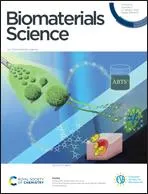
Biomaterials Science is an international high impact journal exploring the science of biomaterials and their translation towards clinical use. Its scope encompasses new concepts in biomaterials design, studies into the interaction of biomaterials with the body, and the use of materials to answer fundamental biological questions. Papers do not necessarily need to report a new biomaterial but should provide novel insight into the biological applications of the biomaterial. Articles that primarily focus on demonstrating novel materials chemistry and bring a molecular picture to bear on a given material’s suitability as a biomaterial are more suited to our companion journal, Journal of Materials Chemistry B. Biomaterials Science publishes primary research and review-type articles in the following areas: molecular design of biomaterials, including translation of emerging chemistries to biomaterials science of cells and materials at the nanoscale and microscale materials as model systems for stem cell and human biology materials for tissue engineering and regenerative medicine (Nano)materials and (nano)systems for therapeutic delivery interactions at the biointerface biologically inspired and biomimetic materials, including bio-inspired self-assembly systems and cell-inspired synthetic tools next-generation biomaterials tools and methods