












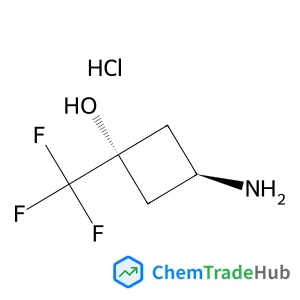
cis-3-Amino-1-(trifluoromethyl)cyclobutanol hydrochloride (1:1)
CAS Number:
1408075-16-0
Molecular Formula:
C5H9ClF3NO
H. H. Bai, X. F. Wang, B. Y. Zhang, W. Liu
Proteomic analysis of exosomes from human plasma faces a tremendous challenge mainly due to the low abundance of the exosome itself and the complexity of the plasma matrix. Therefore, enrichment of exosomes from human plasma is an essential and indispensable step for large scale and in depth proteomic analysis. Size exclusion chromatography (SEC) is one of the most extensively used methods for exosome isolation from human plasma and many SEC-based tandem methods were established in order to increase the purity of the enriched exosomes and thus the accuracy of the proteomic analysis. To compare the advantages and disadvantages of the different isolation methods and subsequently to promote the establishment of a standardized method for plasma proteomic research, the capacities of the direct SEC method, the combination of SEC with ultracentrifugation (SEC-UC), ultrafiltration (SEC-UF), and titanium dioxide microspheres (SEC-TiO2) were systematically evaluated for exosome isolation from human plasma and thus proteomic analysis. The results demonstrated that the SEC-based tandem methods were superior to the direct SEC method in the purity of exosomes isolated from human plasma. Additionally, the SEC-UC method possessed the highest number of the total identified proteins and the overlapped proteins with the top 100 exosome markers in comparison with the other methods. The SEC-TiO2 method displayed the biggest capacity for plasma protein deleting. We expect that the research will have more beneficial values in the field of exosome research.
F. Crasto de Lima, Gerson J. Ferreira, R. H. Miwa
DOI: 10.1039/C8CP03792B
Si Wu, Yuan Yuan, Hongqi Ai, Baotao Kang
DOI: 10.1039/C8CP03359E
Hyun Goo Ji, Mina Maruyama, Adha Sukma Aji, Susumu Okada, Kazunari Matsuda
DOI: 10.1039/C8CP04418J
Kota Ando, Masashi Arakawa, Akira Terasaki
DOI: 10.1039/C8CP05955A
Tomofumi Nakayama
DOI: 10.1039/C7CP08280K
Hikaru Sotome, Daichi Kitagawa, Tatsumoto Nakahama, Syoji Ito, Seiya Kobatake, Masahiro Irie, Hiroshi Miyasaka
DOI: 10.1039/C8CP07393G
B. Moses Abraham, Vikas D. Ghule
DOI: 10.1039/C8CP06635C
Svemir Rudić, Carole A. Morrison
DOI: 10.1039/C8CP06161K
DOI: 10.1039/C8CP06231E
Michael S. Meijer, Paola A. Rojas-Gutierrez, Dmitry Busko, Florian Frenzel, Christian Würth, Ute Resch-Genger, Andrey Turshatov, John A. Capobianco, Sylvestre Bonnet
DOI: 10.1039/C8CP03935F
4-Nitrophenyl phosphate disodium salt hexahydrate is primarily used as a substra...
2-(Trifluoromethyl)-1,3-oxazole-4-carboxylic Acid (CAS: 1060816-01-4) is widely ...
2-Fluoro-4-biphenylcarboxylic acid should be stored in a cool, dry place at room...
Prednisolone-21-Carboxylic Acid is primarily used in the pharmaceutical industry...
4-(Hydrazinomethyl)-1,2,3-benzenetriol (CAS: 3614-72-0) should be stored in a co...
4-Amino-1-methyl-1H-pyrazole-5-carboxylic acid hydrochloride (CAS: 92534-70-8) i...
Dehydropachymic acid (CAS: 77012-31-8) is regulated by various agencies. It fall...
The market and research trends for 6-[(2,2-Dimethylpropanoyl)amino]nicotinic aci...
1,10-Phenanthroline-2,9-dicarbaldehyde should be stored in a cool, dry place awa...
5-Carbamoyl-11-oxo-10,11-dihydro-5H-dibenzo[b,f]azepin-10-yl acetate can be synt...
Analytical Methods welcomes early applications of new analytical and bioanalytical methods and technology demonstrating the potential for societal impact. We require that methods and technology reported in the journal are sufficiently innovative, robust, accurate, and compared to other available methods for the intended application. Developments with interdisciplinary approaches are particularly welcome. Systems should be proven with suitably complex and analytically challenging samples. We encourage developments within, but not limited to, the following technologies and applications: global health, point-of-care and molecular diagnostics biosensors and bioengineering drug development and pharmaceutical analysis applied microfluidics and nanotechnology omics studies, such as proteomics, metabolomics or glycomics environmental, agricultural and food science neuroscience biochemical and clinical analysis forensic analysis industrial process and method development
![S-[2,3-Bis(palmitoyloxy)propyl]-N-[(9H-fluoren-9-ylmethoxy)(hydroxy)methylene]cysteine structure](https://static.chemtradehub.com/structs/210/210532-98-2-f6a7.webp "S-[2,3-Bis(palmitoyloxy)propyl]-N-[(9H-fluoren-9-ylmethoxy)(hydroxy)methylene]cysteine structure")







