![(3R,5R)-1-[(Benzyloxy)carbonyl]-5-methyl-3-piperidinecarboxylic acid structure](https://static.chemtradehub.com/structs/126/1269757-29-0-c552.webp "(3R,5R)-1-[(Benzyloxy)carbonyl]-5-methyl-3-piperidinecarboxylic acid structure")
(3R,5R)-1-[(Benzyloxy)carbonyl]-5-methyl-3-piperidinecarboxylic acid
CAS Number:
1269757-29-0
Molecular Formula:
C15H19NO4
Xinghu Fu, Xiqing Cao, Zizhen Fu, Zhexu Huang, Wa Jin, Guangwei Fu, Weihong Bi
A method for measurement of antiepileptic drug concentrations based on Raman spectroscopy and an optimization algorithm for mathematical models are proposed and investigated. This study uses Raman spectroscopy to measure mixed antiepileptic drugs, and an Improved Snake Optimization (ISO)-Convolutional Neural Network (CNN) algorithm is proposed. Raman spectroscopy is widely used in the identification of pharmaceutical ingredients due to its sharp peaks, no pre-treatment of samples and non-destructive detection. To analyze the spectral data precisely, a machine learning method is used in this paper. The ISO algorithm is an improved intelligent swarm algorithm in which the method of generating random solutions is improved, which can ensure that a comprehensive local search of the model is performed, the global search capability is maintained at a later stage, and the convergence speed is accelerated. In this study, 360 groups of oxcarbazepine, carbamazepine, and lamotrigine drug mixtures are measured using Raman spectroscopy, and the raw spectral data after pre-processing are trained and evaluated using ISO-CNN algorithms, and the results are compared and analyzed with those obtained from other algorithms such as the Northern Goshawk Optimization algorithm, Chameleon Swarm Algorithm, and White Shark Optimizer algorithm. The results show that the best ISO-CNN algorithm training is achieved for oxcarbazepine, with a determination coefficient and root mean square error of 0.99378 and 0.0295 for the validation set, and 0.99627 and 0.0278 for the test set. The overall results suggest that Raman spectroscopy combined with machine learning algorithms can be a potential tool for drug concentration prediction.
DOI: 10.1039/C8CP04028A
Nelson R. Vinueza, Bartłomiej J. Jankiewicz, Vanessa A. Gallardo, John J. Nash, Hilkka I. Kenttämaa
DOI: 10.1039/C8CP03350A
Mosè Casalegno, Tommaso Nicolini, Antonino Famulari, Guido Raos, Riccardo Po, Stefano V. Meille
DOI: 10.1039/C8CP05820B
Belisa R. H. de Aquino, H. Ghorbanfekr-Kalashami, M. Neek-Amal, F. M. Peeters
DOI: 10.1039/C9CP00075E
Hyun Goo Ji, Mina Maruyama, Adha Sukma Aji, Susumu Okada, Kazunari Matsuda
DOI: 10.1039/C8CP04418J
C. L. Prajapat, M. Gupta, Harsh Bhatt, Yogesh Kumar, V. Karki
DOI: 10.1039/C8CP02909A
DOI: 10.1039/C8CP06231E
Amund Ruud, Jonas Sottmann, Ponniah Vajeeston, Helmer Fjellvåg
DOI: 10.1039/C8CP05330H
DOI: 10.1039/C8CP04145H
Fuping Wang, Lang Chen, Deshen Geng, Jianying Lu, Junying Wu
DOI: 10.1039/C8CP03010C
4-Nitrophenyl phosphate disodium salt hexahydrate is primarily used as a substra...
2-(Trifluoromethyl)-1,3-oxazole-4-carboxylic Acid (CAS: 1060816-01-4) is widely ...
2-Fluoro-4-biphenylcarboxylic acid should be stored in a cool, dry place at room...
Prednisolone-21-Carboxylic Acid is primarily used in the pharmaceutical industry...
4-(Hydrazinomethyl)-1,2,3-benzenetriol (CAS: 3614-72-0) should be stored in a co...
4-Amino-1-methyl-1H-pyrazole-5-carboxylic acid hydrochloride (CAS: 92534-70-8) i...
Dehydropachymic acid (CAS: 77012-31-8) is regulated by various agencies. It fall...
The market and research trends for 6-[(2,2-Dimethylpropanoyl)amino]nicotinic aci...
1,10-Phenanthroline-2,9-dicarbaldehyde should be stored in a cool, dry place awa...
5-Carbamoyl-11-oxo-10,11-dihydro-5H-dibenzo[b,f]azepin-10-yl acetate can be synt...
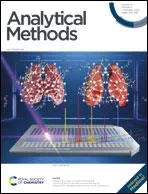
Analytical Methods welcomes early applications of new analytical and bioanalytical methods and technology demonstrating the potential for societal impact. We require that methods and technology reported in the journal are sufficiently innovative, robust, accurate, and compared to other available methods for the intended application. Developments with interdisciplinary approaches are particularly welcome. Systems should be proven with suitably complex and analytically challenging samples. We encourage developments within, but not limited to, the following technologies and applications: global health, point-of-care and molecular diagnostics biosensors and bioengineering drug development and pharmaceutical analysis applied microfluidics and nanotechnology omics studies, such as proteomics, metabolomics or glycomics environmental, agricultural and food science neuroscience biochemical and clinical analysis forensic analysis industrial process and method development
![(2E)-3-(3-Chlorophenyl)-N-{2-[4-(methylsulfonyl)-1-piperazinyl]-2-oxoethyl}acrylamide structure](https://static.chemtradehub.com/structs/250/2505001-54-5-c1e9.webp "(2E)-3-(3-Chlorophenyl)-N-{2-[4-(methylsulfonyl)-1-piperazinyl]-2-oxoethyl}acrylamide structure")