












Precise temperature control and rapid heating/cooling of infrared spectroscopy samples with a two-stage thermoelectric device
Literature Information
Publication Date
2023-12-04
DOI
10.1039/D3AY01627G
Impact Factor
2.896
Authors
View Original
Abstract
The design and performance of an apparatus for heating and cooling samples during variable temperature infrared spectroscopy studies are described. The apparatus incorporates two thermoelectric device modules in a stacked configuration. The cascaded devices are powered in parallel and contained within a metal enclosure that maintains their alignment and applies clamping pressure between them to maximize thermal conductivity. By using this apparatus, sample temperatures can be increased or decreased at 2 °C s−1 rates and isothermal temperatures can be maintained precisely (±0.1 °C). The rapid heating and cooling capabilities of the apparatus facilitate programmed temperature step heating/cooling profiles with isothermal infrared spectrum measurements at pre-selected temperatures. Using linear heating and cooling temperature ramps, subtle temperature-dependent poly(styrene) infrared spectrum changes are elucidated and correlated with sample temperature. Results obtained by using a temperature step sample heating profile are compared with those obtained by using linear temperature ramp heating and cooling to characterize silica gel dehydration and re-hydration processes. By comparing infrared spectra acquired at different temperatures while heating and cooling the sample, silica gel spectrum changes associated with water desorption/adsorption and the thermal expansion/contraction of the Si–O–Si network are differentiated.
Related Literature
Vibrationally induced metallisation of the energetic azide α-NaN3
Svemir Rudić, Carole A. Morrison
2018-11-05
Paper
DOI: 10.1039/C8CP06161K
Water-mediated curvature change in graphene by single-walled carbon nanotubes
Hrushikesh M. Gade, Piyush P. Wanjari, Srihas V. V. Velpuri
2018-08-14
Paper
DOI: 10.1039/C8CP02394H
Oscillations of pH in the urea–urease system in a membrane reactor
František Muzika, Matěj Růžička, Lenka Schreiberová, Igor Schreiber
2019-04-02
Communication
DOI: 10.1039/C9CP00630C
Elucidating the morphological aspects and proton dynamics in a hybrid perfluorosulfonic acid membrane for medium-temperature fuel cell applications
Saeed Akbari, Mohammad Taghi Hamed Mosavian, Fatemeh Moosavi, Ali Ahmadpour
2018-11-05
Paper
DOI: 10.1039/C8CP05377D
An excited-state Wolff rearrangement reaction of 5-diazo Meldrum's acid: an ab initio on-the-fly nonadiabatic dynamics simulation
Chao Xu, Feng Long Gu
2018-08-07
Paper
DOI: 10.1039/C8CP04164D
Protonation-induced molecular permeation at the oil/water interface in an electric field
2018-09-15
Paper
DOI: 10.1039/C8CP04028A
Electronic structures and transport properties of SnS–SnSe nanoribbon lateral heterostructures
Zhuang Luo, Yandong Guo, Dewei Rao
2019-03-27
Paper
DOI: 10.1039/C9CP00427K
Excited interatomic potential energy surfaces of Rb + He that correlate with Rb terms 52S through 72S
Amit R. Sharma, David E. Weeks
2018-11-09
Paper
DOI: 10.1039/C8CP05550E
A comparative study of the structure, stability and energetic performance of 5,5′-bitetrazole-1,1′-diolate based energetic ionic salts: future high energy density materials
B. Moses Abraham, Vikas D. Ghule
2018-11-09
Paper
DOI: 10.1039/C8CP06635C
You might also like
Compound Q&A
What are the main uses of 4-Nitrophenyl phosphate disodium salt hexahydrate (CAS: 333338-18-4)?
4-Nitrophenyl phosphate disodium salt hexahydrate is primarily used as a substra...
333338-18-44-Nitrophenyl phosph...
Compound Q&A
What are the main uses of 2-(Trifluoromethyl)-1,3-oxazole-4-carboxylic Acid (CAS: 1060816-01-4)?
2-(Trifluoromethyl)-1,3-oxazole-4-carboxylic Acid (CAS: 1060816-01-4) is widely ...
1060816-01-42-(Trifluoromethyl)-...
Compound Q&A
How should 2-Fluoro-4-biphenylcarboxylic acid (CAS: 137045-30-8) be stored?
2-Fluoro-4-biphenylcarboxylic acid should be stored in a cool, dry place at room...
137045-30-82-Fluoro-4-biphenylc...
Compound Q&A
What industries use Prednisolone-21-Carboxylic Acid (CAS: 61549-70-0)?
Prednisolone-21-Carboxylic Acid is primarily used in the pharmaceutical industry...
61549-70-0Prednisolone-21-Carb...
Compound Q&A
How should 4-(Hydrazinomethyl)-1,2,3-benzenetriol (CAS: 3614-72-0) be stored?
4-(Hydrazinomethyl)-1,2,3-benzenetriol (CAS: 3614-72-0) should be stored in a co...
3614-72-04-(Hydrazinomethyl)-...
Compound Q&A
What industries use 4-Amino-1-methyl-1H-pyrazole-5-carboxylic acid hydrochloride (CAS: 92534-70-8)?
4-Amino-1-methyl-1H-pyrazole-5-carboxylic acid hydrochloride (CAS: 92534-70-8) i...
92534-70-84-Amino-1-methyl-1H-...
Compound Q&A
What regulatory guidelines apply to dehydropachymic acid (CAS: 77012-31-8)?
Dehydropachymic acid (CAS: 77012-31-8) is regulated by various agencies. It fall...
77012-31-8Dehydropachymic acid
Compound Q&A
What is the market or research trend for 6-[(2,2-Dimethylpropanoyl)amino]nicotinic acid (CAS: 898561-66-5)?
The market and research trends for 6-[(2,2-Dimethylpropanoyl)amino]nicotinic aci...
898561-66-56-[(2,2-Dimethylprop...
Compound Q&A
How should 1,10-Phenanthroline-2,9-dicarbaldehyde (CAS: 57709-62-3) be stored?
1,10-Phenanthroline-2,9-dicarbaldehyde should be stored in a cool, dry place awa...
57709-62-31,10-Phenanthroline-...
Compound Q&A
How is 5-Carbamoyl-11-oxo-10,11-dihydro-5H-dibenzo[b,f]azepin-10-yl acetate (CAS: 113952-21-9) typically synthesized?
5-Carbamoyl-11-oxo-10,11-dihydro-5H-dibenzo[b,f]azepin-10-yl acetate can be synt...
113952-21-95-Carbamoyl-11-oxo-1...
Source Journal
Analytical Methods

CiteScore:
5.1
Self-citation Rate:
3.7%
Articles per Year:
655
Analytical Methods welcomes early applications of new analytical and bioanalytical methods and technology demonstrating the potential for societal impact. We require that methods and technology reported in the journal are sufficiently innovative, robust, accurate, and compared to other available methods for the intended application. Developments with interdisciplinary approaches are particularly welcome. Systems should be proven with suitably complex and analytically challenging samples. We encourage developments within, but not limited to, the following technologies and applications: global health, point-of-care and molecular diagnostics biosensors and bioengineering drug development and pharmaceutical analysis applied microfluidics and nanotechnology omics studies, such as proteomics, metabolomics or glycomics environmental, agricultural and food science neuroscience biochemical and clinical analysis forensic analysis industrial process and method development
Recommended Compounds
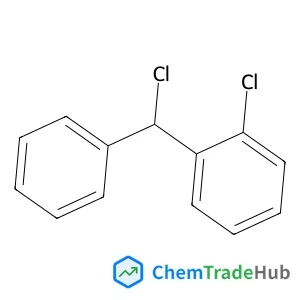
phosphoryl}methyl 4-methylbenzenesulfonate structure](https://static.chemtradehub.com/structs/864/864068-45-1-ba7c.webp "{[3-(Hexadecyloxy)propoxy](hydroxy)phosphoryl}methyl 4-methylbenzenesulfonate structure")
{[3-(Hexadecyloxy)propoxy](hydroxy)phosphoryl}methyl 4-methylbenzenesulfonate
CAS Number:
864068-45-1
Molecular Formula:
C27H49O7PS
Recommended Suppliers






Disclaimer
This page provides academic journal information for reference and research purposes only. We are not affiliated with any journal publishers and do not handle publication submissions. For publication-related inquiries, please contact the respective journal publishers directly.
If you notice any inaccuracies in the information displayed, please contact us at support@chemtradehub.com. We will promptly review and address your concerns.