












![N-[2-(4-Hydroxyphenoxy)-4-nitrophenyl]methanesulfonamide structure](https://static.chemtradehub.com/structs/109/109032-22-6-7c88.webp "N-[2-(4-Hydroxyphenoxy)-4-nitrophenyl]methanesulfonamide structure")
N-[2-(4-Hydroxyphenoxy)-4-nitrophenyl]methanesulfonamide
CAS Number:
109032-22-6
Molecular Formula:
C13H12N2O6S
Wenyao Liang, Zemin Xia, Jianhua Tan
Human exposure to polyfluoroalkyl substances (PFASs) via cosmetics has been of increasing concern due to the tremendous detrimental health impacts of PFASs. Developing an effective method for extracting and determining PFASs in cosmetics is crucial in accurately assessing their corresponding human exposure risk. Herein, this study developed a new sample pre-treatment method to address the challenges posed by the variety and complexity of cosmetic matrices. Seventeen PFASs in cosmetic products, including 9 perfluoro carboxylic acids and 8 perfluorosulfonic acids, were simultaneously determined using ultra-high-performance liquid chromatography-tandem mass spectrometry (UHPLC-MS/MS). The whole pre-treatment process can be divided into three steps. In step 1, cosmetics with diverse matrix types can be effectively dispersed during extraction by using saturated sodium chloride–acetonitrile and saturated sodium chloride–tetrahydrofuran as extraction solvents. In step 2, the pre-purification step employs a potassium ferrocyanide–zinc acetate co-precipitant to remove high molecular weight interferents from the extraction solution, thereby enhancing the efficiency of solid-phase extraction (SPE). In step 3, WAX-SPE is utilized to further eliminate interferents from the extraction solution while concentrating the analytes, meeting the trace analysis requirements for PFASs in cosmetics. The method detection limits were 0.09–0.26 ng g−1. The recoveries ranged from 70.1% to 114.7%, with relative standard deviations in the range of 2.0–19.1%. The method was applied to cosmetic samples in the Guangzhou market, and the total concentration of PFASs ranged from 0 to 10.8 ng g−1. This method has strong anti-interference ability, good applicability, high sensitivity, and good reproducibility, making it suitable for the analysis and detection of perfluorinated acids in cosmetic samples. It provides technical support for cosmetics safety regulation.
Yong Zhou, Xiaowei Xu, Aiying Wang, Kwang-Ryeol Lee
DOI: 10.1039/C9CP01305A
Fuping Wang, Lang Chen, Deshen Geng, Jianying Lu, Junying Wu
DOI: 10.1039/C8CP03010C
Mohammad Mofared, Elnaz Irani, Rasoul Sadighi-Bonabi
DOI: 10.1039/C8CP07619G
Joanna E. Rode, Marcin Górecki, Stanisław Witkowski, Jadwiga Frelek
DOI: 10.1039/C8CP02491J
Rositsa Yakimova
DOI: 10.1039/C8CP03306D
F. Crasto de Lima, Gerson J. Ferreira, R. H. Miwa
DOI: 10.1039/C8CP03792B
Jutao Jiao, Yusheng Hou, Hui Wang, Dapeng Wu, Tianxing Wang, Zhaoming Fu, Guoliang Xu, Ruqian Wu
DOI: 10.1039/C8CP04272A
Xiaobo Sun, Trevor A. Hamlin
DOI: 10.1039/C8CP07671E
Gaoqi Weng, Ercheng Wang, Fu Chen, Huiyong Sun, Zhe Wang
DOI: 10.1039/C9CP01674K
Monika Schönhoff, Cornelia Cramer, Florian Schmidt
DOI: 10.1039/C8CP06075D
4-Nitrophenyl phosphate disodium salt hexahydrate is primarily used as a substra...
2-(Trifluoromethyl)-1,3-oxazole-4-carboxylic Acid (CAS: 1060816-01-4) is widely ...
2-Fluoro-4-biphenylcarboxylic acid should be stored in a cool, dry place at room...
Prednisolone-21-Carboxylic Acid is primarily used in the pharmaceutical industry...
4-(Hydrazinomethyl)-1,2,3-benzenetriol (CAS: 3614-72-0) should be stored in a co...
4-Amino-1-methyl-1H-pyrazole-5-carboxylic acid hydrochloride (CAS: 92534-70-8) i...
Dehydropachymic acid (CAS: 77012-31-8) is regulated by various agencies. It fall...
The market and research trends for 6-[(2,2-Dimethylpropanoyl)amino]nicotinic aci...
1,10-Phenanthroline-2,9-dicarbaldehyde should be stored in a cool, dry place awa...
5-Carbamoyl-11-oxo-10,11-dihydro-5H-dibenzo[b,f]azepin-10-yl acetate can be synt...

Analytical Methods welcomes early applications of new analytical and bioanalytical methods and technology demonstrating the potential for societal impact. We require that methods and technology reported in the journal are sufficiently innovative, robust, accurate, and compared to other available methods for the intended application. Developments with interdisciplinary approaches are particularly welcome. Systems should be proven with suitably complex and analytically challenging samples. We encourage developments within, but not limited to, the following technologies and applications: global health, point-of-care and molecular diagnostics biosensors and bioengineering drug development and pharmaceutical analysis applied microfluidics and nanotechnology omics studies, such as proteomics, metabolomics or glycomics environmental, agricultural and food science neuroscience biochemical and clinical analysis forensic analysis industrial process and method development
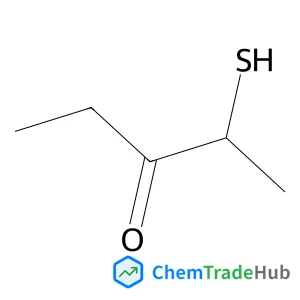
![(3R,5R)-1-[(Benzyloxy)carbonyl]-5-methyl-3-piperidinecarboxylic acid structure](https://static.chemtradehub.com/structs/126/1269757-29-0-c552.webp "(3R,5R)-1-[(Benzyloxy)carbonyl]-5-methyl-3-piperidinecarboxylic acid structure")
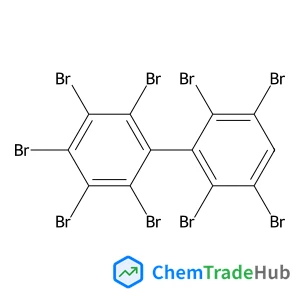
phosphoryl}methyl 4-methylbenzenesulfonate structure](https://static.chemtradehub.com/structs/864/864068-45-1-ba7c.webp "{[3-(Hexadecyloxy)propoxy](hydroxy)phosphoryl}methyl 4-methylbenzenesulfonate structure")




