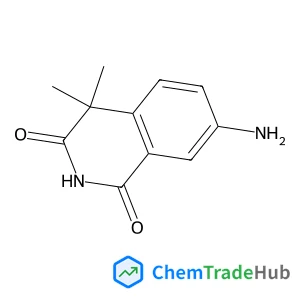
cis-3-Amino-1-(trifluoromethyl)cyclobutanol hydrochloride (1:1)
CAS Number:
1408075-16-0
Molecular Formula:
C5H9ClF3NO
Antonio Marín-Romero, Salvatore Pernagallo
Drug-Induced Liver Injury (DILI) is a grave global adverse event that can result in fatal consequences, causing drug failures, market withdrawals, and regulatory warnings, leading to substantial financial losses. The early detection of DILI remains a significant challenge in global healthcare. Although circulating microRNAs (miRs) show promise as clinical biomarkers for DILI, the current analytical methods for their measurement are insufficient. There is a pressing need for rapid and reliable miR detection methods that eliminate the need for nucleic acid extraction and PCR-based amplification. This review highlights recent advancements achieved by integrating Dynamic Chemical Labelling (DCL) with Luminex xMAP technology. This powerful combination has resulted in groundbreaking bead-based assays that allow (1) the direct, multiplex detection of miRs, and (2) the simultaneous testing of miR and protein biomarkers. This triple capability enables a comprehensive assessment that significantly enhances the detection and analysis of crucial biomarkers, thus improving the understanding and diagnosis of DILI. In conclusion, this review offers valuable insights into the capabilities and potential applications of these groundbreaking assays in DILI research, as well as their potential use in other diagnostic and research domains that require direct or multiplex analysis of miRs or analysis of miRs in combination with proteins.
Kristen D. Fulfer, Daniel G. Kuroda
DOI: 10.1039/C8CP03315C
Wook Lee, Inkoo Kim, Young Min Rhee
DOI: 10.1039/C8CP02939C
Serena Cozzolino, Rosario Oliva, Giuseppe Graziano, Pompea Del Vecchio
DOI: 10.1039/C8CP04421J
Guennadi Evmenenko, Timothy T. Fister, Fernando C. Castro, Byeongdu Lee, D. Bruce Buchholz, Vinayak P. Dravid, Paul Fenter
DOI: 10.1039/C9CP01527B
Shihu H. M. Deng, Gao-Lei Hou, Marat Valiev, Xue-Bin Wang
DOI: 10.1039/C8CP03896A
Xiaobo Sun, Trevor A. Hamlin
DOI: 10.1039/C8CP07671E
Hikaru Sotome, Daichi Kitagawa, Tatsumoto Nakahama, Syoji Ito, Seiya Kobatake, Masahiro Irie, Hiroshi Miyasaka
DOI: 10.1039/C8CP07393G
Nicolò Azzaroli, Justin R. Caram, Timothy S. Sinclair, Lorenzo Cupellini, Sandro Jurinovich, Benedetta Mennucci, Gloria Zanotti, Anna Maria Paoletti, Giovanna Pennesi
DOI: 10.1039/C8CP02172D
Lorenz Kranabetter, Paul Martini, Norbert Gitzl, Martin Kuhn, Fatima Saleem, Bilal Rasul, Masoomeh Mahmoodi Darian, Elias Jabbour Al Maalouf, Ivan Sukuba, Alexander Kaiser, Marcelo Goulart, Diethard K. Böhme, Paul Scheier
DOI: 10.1039/C8CP02207K
4-Nitrophenyl phosphate disodium salt hexahydrate is primarily used as a substra...
2-(Trifluoromethyl)-1,3-oxazole-4-carboxylic Acid (CAS: 1060816-01-4) is widely ...
2-Fluoro-4-biphenylcarboxylic acid should be stored in a cool, dry place at room...
Prednisolone-21-Carboxylic Acid is primarily used in the pharmaceutical industry...
4-(Hydrazinomethyl)-1,2,3-benzenetriol (CAS: 3614-72-0) should be stored in a co...
4-Amino-1-methyl-1H-pyrazole-5-carboxylic acid hydrochloride (CAS: 92534-70-8) i...
Dehydropachymic acid (CAS: 77012-31-8) is regulated by various agencies. It fall...
The market and research trends for 6-[(2,2-Dimethylpropanoyl)amino]nicotinic aci...
1,10-Phenanthroline-2,9-dicarbaldehyde should be stored in a cool, dry place awa...
5-Carbamoyl-11-oxo-10,11-dihydro-5H-dibenzo[b,f]azepin-10-yl acetate can be synt...
Analytical Methods welcomes early applications of new analytical and bioanalytical methods and technology demonstrating the potential for societal impact. We require that methods and technology reported in the journal are sufficiently innovative, robust, accurate, and compared to other available methods for the intended application. Developments with interdisciplinary approaches are particularly welcome. Systems should be proven with suitably complex and analytically challenging samples. We encourage developments within, but not limited to, the following technologies and applications: global health, point-of-care and molecular diagnostics biosensors and bioengineering drug development and pharmaceutical analysis applied microfluidics and nanotechnology omics studies, such as proteomics, metabolomics or glycomics environmental, agricultural and food science neuroscience biochemical and clinical analysis forensic analysis industrial process and method development

![(3R,5R)-1-[(Benzyloxy)carbonyl]-5-methyl-3-piperidinecarboxylic acid structure](https://static.chemtradehub.com/structs/126/1269757-29-0-c552.webp "(3R,5R)-1-[(Benzyloxy)carbonyl]-5-methyl-3-piperidinecarboxylic acid structure")