













Differences in the internal energies of ions in electrospray ionization mass spectrometers equipped with capillary–skimmer and capillary–RF lens interfaces
Literature Information
Publication Date
2023-10-03
DOI
10.1039/D3AY01450A
Impact Factor
2.896
Authors
Daiki Asakawa, Ryoma Yamamoto, Nobuyasu Hanari, Kazumi Saikusa
View Original
Abstract
Small metabolites are commonly analyzed using electrospray ionization mass spectrometry (ESI-MS). Although the protonated form of a compound of interest is typically the target ion in ESI-MS, the protonated forms of small metabolites occasionally undergo fragmentation during ion transmission from ambient conditions to vacuum conditions, hindering the unambiguous identification of analyte molecules. To estimate the fragmentation efficiency during ESI processes, the internal energy distribution of the ions (P(E)) must be evaluated. The common approach for the P(E) evaluation is the survival yield method, which uses thermometer ions. In this study, the P(E) of ions produced by an ESI source in a commercial triple quadrupole mass spectrometer equipped with a capillary–skimmer and capillary–RF lens interfaces was evaluated using benzyl ammonium thermometer ions. Furthermore, this study proposes the use of 3-(aminomethyl)indole and related compounds, which have the lowest Eapp values among the reported thermometer ions, to obtain P(E) values of the ions more accurately. Results showed that P(E) strongly depends on whether a capillary–skimmer interface or capillary–RF lens interface was used for ion transport to the vacuum. ESI-MS with a capillary–skimmer interface provided a considerably lower and narrower P(E) of ions than that with a capillary–RF lens interface, thereby producing intact protonated molecules without significant fragmentation of most small metabolites. However, ESI-MS equipped with capillary–RF lens interfaces provided a higher efficiency of ion transmission than ESI-MS equipped with a capillary–skimmer interface, allowing for highly sensitive analysis of metabolites.
Related Literature
Endohedral metal-nitride cluster ordering in metallofullerene–NiII(OEP) complexes and crystals: a theoretical study
Vasilii Dubrovin, Bernd Büchner, Alexey A. Popov, Stanislav M. Avdoshenko
2019-02-20
Communication
DOI: 10.1039/C9CP00634F
The metal–ionic liquid interface as characterized by impedance spectroscopy and in situ scanning tunneling microscopy
Claus Müller
2018-08-06
Perspective
DOI: 10.1039/C8CP02074D
Freezing of micrometer-sized liquid droplets of pure water evaporatively cooled in a vacuum
Kota Ando, Masashi Arakawa, Akira Terasaki
2018-10-26
Paper
DOI: 10.1039/C8CP05955A
Stability of small cationic platinum clusters
Piero Ferrari, Peter Lievens, Ewald Janssens
2018-11-09
Paper
DOI: 10.1039/C8CP06092D
Strain controlled electronic and transport anisotropies in two-dimensional borophene sheets
Vivekanand Shukla, Anton Grigoriev, Naresh K. Jena
2018-08-14
Paper
DOI: 10.1039/C8CP03815E
Self-adaptive multiscaling algorithm for efficient simulations of many-protein systems in crowded conditions
2018-10-29
Paper
DOI: 10.1039/C8CP05517C
Effect of density on the thermal decomposition mechanism of ε-CL-20: a ReaxFF reactive molecular dynamics simulation study
Fuping Wang, Lang Chen, Deshen Geng, Jianying Lu, Junying Wu
2018-08-08
Paper
DOI: 10.1039/C8CP03010C
Factors governing when a metal-bound water is deprotonated in proteins
Cédric Grauffel
2018-11-05
Paper
DOI: 10.1039/C8CP04776F
You might also like
Compound Q&A
What are the main uses of 4-Nitrophenyl phosphate disodium salt hexahydrate (CAS: 333338-18-4)?
4-Nitrophenyl phosphate disodium salt hexahydrate is primarily used as a substra...
333338-18-44-Nitrophenyl phosph...
Compound Q&A
What are the main uses of 2-(Trifluoromethyl)-1,3-oxazole-4-carboxylic Acid (CAS: 1060816-01-4)?
2-(Trifluoromethyl)-1,3-oxazole-4-carboxylic Acid (CAS: 1060816-01-4) is widely ...
1060816-01-42-(Trifluoromethyl)-...
Compound Q&A
How should 2-Fluoro-4-biphenylcarboxylic acid (CAS: 137045-30-8) be stored?
2-Fluoro-4-biphenylcarboxylic acid should be stored in a cool, dry place at room...
137045-30-82-Fluoro-4-biphenylc...
Compound Q&A
What industries use Prednisolone-21-Carboxylic Acid (CAS: 61549-70-0)?
Prednisolone-21-Carboxylic Acid is primarily used in the pharmaceutical industry...
61549-70-0Prednisolone-21-Carb...
Compound Q&A
How should 4-(Hydrazinomethyl)-1,2,3-benzenetriol (CAS: 3614-72-0) be stored?
4-(Hydrazinomethyl)-1,2,3-benzenetriol (CAS: 3614-72-0) should be stored in a co...
3614-72-04-(Hydrazinomethyl)-...
Compound Q&A
What industries use 4-Amino-1-methyl-1H-pyrazole-5-carboxylic acid hydrochloride (CAS: 92534-70-8)?
4-Amino-1-methyl-1H-pyrazole-5-carboxylic acid hydrochloride (CAS: 92534-70-8) i...
92534-70-84-Amino-1-methyl-1H-...
Compound Q&A
What regulatory guidelines apply to dehydropachymic acid (CAS: 77012-31-8)?
Dehydropachymic acid (CAS: 77012-31-8) is regulated by various agencies. It fall...
77012-31-8Dehydropachymic acid
Compound Q&A
What is the market or research trend for 6-[(2,2-Dimethylpropanoyl)amino]nicotinic acid (CAS: 898561-66-5)?
The market and research trends for 6-[(2,2-Dimethylpropanoyl)amino]nicotinic aci...
898561-66-56-[(2,2-Dimethylprop...
Compound Q&A
How should 1,10-Phenanthroline-2,9-dicarbaldehyde (CAS: 57709-62-3) be stored?
1,10-Phenanthroline-2,9-dicarbaldehyde should be stored in a cool, dry place awa...
57709-62-31,10-Phenanthroline-...
Compound Q&A
How is 5-Carbamoyl-11-oxo-10,11-dihydro-5H-dibenzo[b,f]azepin-10-yl acetate (CAS: 113952-21-9) typically synthesized?
5-Carbamoyl-11-oxo-10,11-dihydro-5H-dibenzo[b,f]azepin-10-yl acetate can be synt...
113952-21-95-Carbamoyl-11-oxo-1...
Source Journal
Analytical Methods

CiteScore:
5.1
Self-citation Rate:
3.7%
Articles per Year:
655
Analytical Methods welcomes early applications of new analytical and bioanalytical methods and technology demonstrating the potential for societal impact. We require that methods and technology reported in the journal are sufficiently innovative, robust, accurate, and compared to other available methods for the intended application. Developments with interdisciplinary approaches are particularly welcome. Systems should be proven with suitably complex and analytically challenging samples. We encourage developments within, but not limited to, the following technologies and applications: global health, point-of-care and molecular diagnostics biosensors and bioengineering drug development and pharmaceutical analysis applied microfluidics and nanotechnology omics studies, such as proteomics, metabolomics or glycomics environmental, agricultural and food science neuroscience biochemical and clinical analysis forensic analysis industrial process and method development
Recommended Compounds


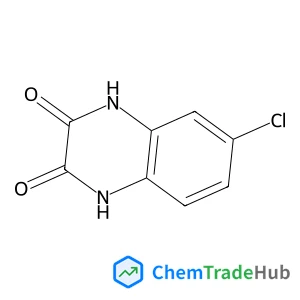
6-CHLORO-2,3-DIOXO-1,2,3,4-TETRAHYDROQUINOXALINE, 97
CAS Number:
169-14-2
Molecular Formula:
C8H5ClN2O2
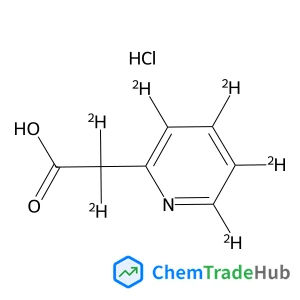
2,2-dideuterio-2-(3,4,5,6-tetradeuterio-2-pyridyl)acetic acid;hydrochloride
CAS Number:
1329799-67-8
Molecular Formula:
C7H2ClD6NO2
Recommended Suppliers







Disclaimer
This page provides academic journal information for reference and research purposes only. We are not affiliated with any journal publishers and do not handle publication submissions. For publication-related inquiries, please contact the respective journal publishers directly.
If you notice any inaccuracies in the information displayed, please contact us at support@chemtradehub.com. We will promptly review and address your concerns.