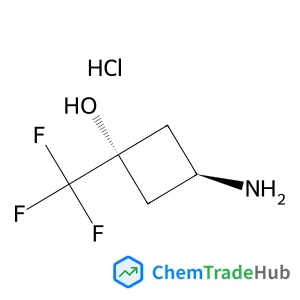
cis-3-Amino-1-(trifluoromethyl)cyclobutanol hydrochloride (1:1)
CAS Number:
1408075-16-0
Molecular Formula:
C5H9ClF3NO
Sabina Susmel, Federico Figueredo
Microplastics are a major modern challenge that must be addressed to protect the environment, particularly the marine environment. Microplastics, defined as particles ≤5 mm, are ubiquitous in the environment. Their small size for a relatively large surface area, high persistence and easy distribution in water, soil and air require the development of new analytical methods to monitor their presence. At present, the availability of analytical techniques that are easy to use, automated, inexpensive and based on new approaches to improve detection remains an open challenge. This review aims to outline the evolution and novelties of classical and advanced methods, in particular the recently reported electroanalytical detectors, methods and devices. Among all the studies reviewed here, we highlight the great advantages of electroanalytical tools over spectroscopic and thermal analysis, especially for the rapid and accurate detection of microplastics in the sub-micron range. Finally, the challenges faced in the development of automated analytical methods are discussed, highlighting recent trends in artificial intelligence (AI) in microplastics analysis.
Mahalingavelar Paramasivam, Ramesh Kumar Chitumalla, Joonkyung Jang, Ji Ho Youk
DOI: 10.1039/C8CP02709A
Vasilii Dubrovin, Bernd Büchner, Alexey A. Popov, Stanislav M. Avdoshenko
DOI: 10.1039/C9CP00634F
Joanna E. Rode, Marcin Górecki, Stanisław Witkowski, Jadwiga Frelek
DOI: 10.1039/C8CP02491J
Rositsa Yakimova
DOI: 10.1039/C8CP03306D
Mosè Casalegno, Tommaso Nicolini, Antonino Famulari, Guido Raos, Riccardo Po, Stefano V. Meille
DOI: 10.1039/C8CP05820B
Hrushikesh M. Gade, Piyush P. Wanjari, Srihas V. V. Velpuri
DOI: 10.1039/C8CP02394H
František Muzika, Matěj Růžička, Lenka Schreiberová, Igor Schreiber
DOI: 10.1039/C9CP00630C
DOI: 10.1039/C8CP04145H
Jessica Exner, Steffen Eusterwiemann, Oliver Janka, Oliver Niehaus, Constantin G. Daniliuc, Rainer Pöttgen, Armido Studer
DOI: 10.1039/C8CP05837G
4-Nitrophenyl phosphate disodium salt hexahydrate is primarily used as a substra...
2-(Trifluoromethyl)-1,3-oxazole-4-carboxylic Acid (CAS: 1060816-01-4) is widely ...
2-Fluoro-4-biphenylcarboxylic acid should be stored in a cool, dry place at room...
Prednisolone-21-Carboxylic Acid is primarily used in the pharmaceutical industry...
4-(Hydrazinomethyl)-1,2,3-benzenetriol (CAS: 3614-72-0) should be stored in a co...
4-Amino-1-methyl-1H-pyrazole-5-carboxylic acid hydrochloride (CAS: 92534-70-8) i...
Dehydropachymic acid (CAS: 77012-31-8) is regulated by various agencies. It fall...
The market and research trends for 6-[(2,2-Dimethylpropanoyl)amino]nicotinic aci...
1,10-Phenanthroline-2,9-dicarbaldehyde should be stored in a cool, dry place awa...
5-Carbamoyl-11-oxo-10,11-dihydro-5H-dibenzo[b,f]azepin-10-yl acetate can be synt...
Analytical Methods welcomes early applications of new analytical and bioanalytical methods and technology demonstrating the potential for societal impact. We require that methods and technology reported in the journal are sufficiently innovative, robust, accurate, and compared to other available methods for the intended application. Developments with interdisciplinary approaches are particularly welcome. Systems should be proven with suitably complex and analytically challenging samples. We encourage developments within, but not limited to, the following technologies and applications: global health, point-of-care and molecular diagnostics biosensors and bioengineering drug development and pharmaceutical analysis applied microfluidics and nanotechnology omics studies, such as proteomics, metabolomics or glycomics environmental, agricultural and food science neuroscience biochemical and clinical analysis forensic analysis industrial process and method development