


![(2E)-3-(3-Chlorophenyl)-N-{2-[4-(methylsulfonyl)-1-piperazinyl]-2-oxoethyl}acrylamide structure](https://static.chemtradehub.com/structs/250/2505001-54-5-c1e9.webp "(2E)-3-(3-Chlorophenyl)-N-{2-[4-(methylsulfonyl)-1-piperazinyl]-2-oxoethyl}acrylamide structure")
(2E)-3-(3-Chlorophenyl)-N-{2-[4-(methylsulfonyl)-1-piperazinyl]-2-oxoethyl}acrylamide
CAS Number:
2505001-54-5
Molecular Formula:
C16H20ClN3O4S
Qiuyan Zhao, Mingyue Ding, Dangshuai Pei, Xiuhua Qi, Yexuan Mao, Xianqing Huang, Lianjun Song, Jingnan Zuo, Huijuan Yang, Xiya Zhang
To monitor benzoic acid (BA) residues in liquid food samples, a monoclonal antibody (mAb)-based lateral flow immunoassay (LFA) was developed in this study. First, 2-aminobenzoic acid (2-AA), 3-aminobenzoic acid (3-AA), and 4-aminobenzoic acid (4-AA) were conjugated to BSA and used as immunogens. After cell fusion, mAb 6D8 from 4-AA-BSA performed best with an IC50 value of 0.21 mg L−1 using 3-AA-OVA as a heterogeneous antigen, which represented a 3.4-fold improvement compared with the homogeneous antigen 4-AA-BSA. Subsequently, eight kinds of CGNPs with sizes varying from 20.94 nm to 90.00 nm were synthesized for screening the suitable size to develop a sensitive LFA. Finally, a sensitive LFA based on colloidal gold (23.27 nm) nanoparticles was developed for screening BA with a cut-off value of 4 mg L−1, which could meet the requirement of BA detection in milk, Fanta, Sprite, Coca-Cola, and Smart samples.

Russian Journal of Coordination Chemistry

Russian Journal of Organic Chemistry

Russian Journal of Bioorganic Chemistry

Russian Chemical Bulletin

Chemistry Education Research and Practice

New Journal of Chemistry

Chemical Communications

Journal of Natural Medicines

Current Opinion in Colloid & Interface Science

Russian Journal of Applied Chemistry
Xiqi Zhang, Bin Yang, Meiying Liu, Wanyun Liu, Yiwang Chen, Yen Wei
DOI: 10.1039/C3PY00984J
Christophe Detrembleur, Marie Hurtgen, Antoine Debuigne, Marie-Claire De Pauw-Gillet, Stéphane Mornet, Etienne Duguet, Christine Jérôme
DOI: 10.1039/C3PY00839H
Peng Liu, Caixia Yue, Zonghai Sheng, Guanhui Gao, Mingxing Li, Huqiang Yi, Cuifang Zheng, Bi Wang, Lintao Cai
DOI: 10.1039/C3PY01173A
Christophe Navarro
DOI: 10.1039/C3PY00935A
L. Sambe, F. Stoffelbach, J. Lyskawa, F. Delattre, M. Bria, F. X. Sauvage, M. Sliwa, V. Humblot, B. Charleux, G. Cooke, P. Woisel
DOI: 10.1039/C3PY01093G
Shampa R. Samanta, Hao-Jan Sun, David M. Haddleton, Virgil Percec
DOI: 10.1039/C3PY01007D
Xianwen Lou, Joost L. J. van Dongen, Yasmine Braeken, Jeroen Brebels, Gijs W. P. van Pruissen, Weiwei Li, Martijn M. Wienk, René A. J. Janssen
DOI: 10.1039/C3PY00933E
Weiwei He, Liang Cheng, Lifen Zhang, Zhuang Liu, Zhenping Cheng, Xiulin Zhu
DOI: 10.1039/C3PY00920C
Yizhi Qi
DOI: 10.1039/C3PY01089A
Naoya Sakai, Mingoo Jin, Shin-ichiro Sato, Toshifumi Satoh, Toyoji Kakuchi
DOI: 10.1039/C3PY00972F
4-Nitrophenyl phosphate disodium salt hexahydrate is primarily used as a substra...
2-(Trifluoromethyl)-1,3-oxazole-4-carboxylic Acid (CAS: 1060816-01-4) is widely ...
2-Fluoro-4-biphenylcarboxylic acid should be stored in a cool, dry place at room...
Prednisolone-21-Carboxylic Acid is primarily used in the pharmaceutical industry...
4-(Hydrazinomethyl)-1,2,3-benzenetriol (CAS: 3614-72-0) should be stored in a co...
4-Amino-1-methyl-1H-pyrazole-5-carboxylic acid hydrochloride (CAS: 92534-70-8) i...
Dehydropachymic acid (CAS: 77012-31-8) is regulated by various agencies. It fall...
The market and research trends for 6-[(2,2-Dimethylpropanoyl)amino]nicotinic aci...
1,10-Phenanthroline-2,9-dicarbaldehyde should be stored in a cool, dry place awa...
5-Carbamoyl-11-oxo-10,11-dihydro-5H-dibenzo[b,f]azepin-10-yl acetate can be synt...
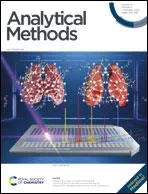
Analytical Methods welcomes early applications of new analytical and bioanalytical methods and technology demonstrating the potential for societal impact. We require that methods and technology reported in the journal are sufficiently innovative, robust, accurate, and compared to other available methods for the intended application. Developments with interdisciplinary approaches are particularly welcome. Systems should be proven with suitably complex and analytically challenging samples. We encourage developments within, but not limited to, the following technologies and applications: global health, point-of-care and molecular diagnostics biosensors and bioengineering drug development and pharmaceutical analysis applied microfluidics and nanotechnology omics studies, such as proteomics, metabolomics or glycomics environmental, agricultural and food science neuroscience biochemical and clinical analysis forensic analysis industrial process and method development


![1-[(4-Methylphenyl)sulfonyl]-3-(4,4,5,5-tetramethyl-1,3,2-dioxaborolan-2-yl)-1H-pyrrolo[2,3-b]pyridine-5-carbonitrile structure](https://static.chemtradehub.com/structs/143/1434747-57-5-fc0d.webp "1-[(4-Methylphenyl)sulfonyl]-3-(4,4,5,5-tetramethyl-1,3,2-dioxaborolan-2-yl)-1H-pyrrolo[2,3-b]pyridine-5-carbonitrile structure")




