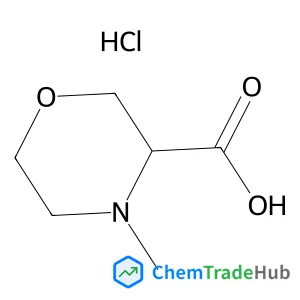
4-Methyl-3-morpholinecarboxylic acid hydrochloride (1:1)
CAS Number:
1240518-90-4
Molecular Formula:
C6H12ClNO3
Emmanuvel Arputharaj, Shivangi Singh, Raghavendra Rao Pasupuleti, Chun-An Kuo, Wei-Jyun Ya, Yu-Hui Huang, You-Rong Wu
We established an innovative and easy-to-use methodology for selenium (Se) extraction and determination from real water samples utilizing a magnetic nanocomposite adsorbent (MNC-SPE) aided by an inductively coupled plasma mass spectrometry (ICP-MS) approach. The MNC-SPE adsorbent was fabricated by hybridizing Fe3O4 nanoparticles on the surface of carbon nitride nanosheets (GCN NSs) that were coated with 1-hexyl-3-methylimidazolium hexafluorophosphate ionic liquid (P-IL). A variety of techniques were used to thoroughly analyze the structural and chemical characteristics of MNC-SPE, and appear to have a great number of diverse active surface functional units (imidazole ring and –NH3+). In order to optimize the key factors affecting the Se extraction, parameters including the adsorbent dosage, contact time, eluent type, eluent volume, eluent time, and reusability of adsorbent were extensively studied. The proposed approach was validated under the optimal reaction conditions, and it showed good linearity between 0.15 and 100 pg μL−1 with a significant R2 value (R2 = 0.9994) toward Se metal. Besides, the Se limit of detection (LOD) and limit of quantification (LOQ) are 0.063 pg μL−1 and 0.147 pg μL−1, respectively. Further, by utilizing tap and river water samples, the applicability of the validated method was tested; the approach showed high Se recovery values in the range of 87.6–115.5% for the spiked real-world samples and the interday and intraday precision (RSD%) values of the approach were 4.8% (n = 6). The MNC-SPE can be regenerated and reused for four consecutive extraction–desorption cycles by employing 0.5 M NaOH eluent.
Do Won Kang, Hong Lae Kim, Chan Ho Kwon
DOI: 10.1039/C9CP00766K
Muzhong Luo, Shengjiang Yang, Xuebo Quan, Delin Sun, Jian Zhou
DOI: 10.1039/C9CP01638D
Serena Cozzolino, Rosario Oliva, Giuseppe Graziano, Pompea Del Vecchio
DOI: 10.1039/C8CP04421J
Mosè Casalegno, Tommaso Nicolini, Antonino Famulari, Guido Raos, Riccardo Po, Stefano V. Meille
DOI: 10.1039/C8CP05820B
František Muzika, Matěj Růžička, Lenka Schreiberová, Igor Schreiber
DOI: 10.1039/C9CP00630C
Gary S. Harlow, Iain M. Aldous, Yvonne Gründer, Laurence J. Hardwick, Christopher A. Lucas
DOI: 10.1039/C9CP00499H
Zhuang Luo, Yandong Guo, Dewei Rao
DOI: 10.1039/C9CP00427K
DOI: 10.1039/C8CP04145H
4-Nitrophenyl phosphate disodium salt hexahydrate is primarily used as a substra...
2-(Trifluoromethyl)-1,3-oxazole-4-carboxylic Acid (CAS: 1060816-01-4) is widely ...
2-Fluoro-4-biphenylcarboxylic acid should be stored in a cool, dry place at room...
Prednisolone-21-Carboxylic Acid is primarily used in the pharmaceutical industry...
4-(Hydrazinomethyl)-1,2,3-benzenetriol (CAS: 3614-72-0) should be stored in a co...
4-Amino-1-methyl-1H-pyrazole-5-carboxylic acid hydrochloride (CAS: 92534-70-8) i...
Dehydropachymic acid (CAS: 77012-31-8) is regulated by various agencies. It fall...
The market and research trends for 6-[(2,2-Dimethylpropanoyl)amino]nicotinic aci...
1,10-Phenanthroline-2,9-dicarbaldehyde should be stored in a cool, dry place awa...
5-Carbamoyl-11-oxo-10,11-dihydro-5H-dibenzo[b,f]azepin-10-yl acetate can be synt...
Analytical Methods welcomes early applications of new analytical and bioanalytical methods and technology demonstrating the potential for societal impact. We require that methods and technology reported in the journal are sufficiently innovative, robust, accurate, and compared to other available methods for the intended application. Developments with interdisciplinary approaches are particularly welcome. Systems should be proven with suitably complex and analytically challenging samples. We encourage developments within, but not limited to, the following technologies and applications: global health, point-of-care and molecular diagnostics biosensors and bioengineering drug development and pharmaceutical analysis applied microfluidics and nanotechnology omics studies, such as proteomics, metabolomics or glycomics environmental, agricultural and food science neuroscience biochemical and clinical analysis forensic analysis industrial process and method development
![S-[2,3-Bis(palmitoyloxy)propyl]-N-[(9H-fluoren-9-ylmethoxy)(hydroxy)methylene]cysteine structure](https://static.chemtradehub.com/structs/210/210532-98-2-f6a7.webp "S-[2,3-Bis(palmitoyloxy)propyl]-N-[(9H-fluoren-9-ylmethoxy)(hydroxy)methylene]cysteine structure")