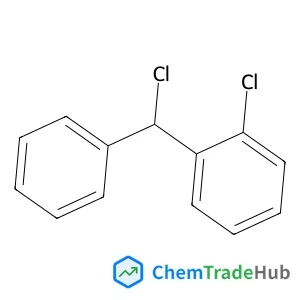
![(3R,5R)-1-[(Benzyloxy)carbonyl]-5-methyl-3-piperidinecarboxylic acid structure](https://static.chemtradehub.com/structs/126/1269757-29-0-c552.webp "(3R,5R)-1-[(Benzyloxy)carbonyl]-5-methyl-3-piperidinecarboxylic acid structure")
(3R,5R)-1-[(Benzyloxy)carbonyl]-5-methyl-3-piperidinecarboxylic acid
CAS Number:
1269757-29-0
Molecular Formula:
C15H19NO4
Greicy Kelly Cerqueira Caldas, Guilherme de Abreu Souza, Alan Silva de Menezes, Silma Regina Ferreira Pereira, Rita de Cássia Silva Luz, Flavio Santos Damos
This work describes the development of a membraneless, self-powered immunosensor exploiting a photoelectrochemical system based on two photoelectrodes for cardiac troponin I (cTn). An electrode based on CaBi2Ta2O9 combined with bismuth oxyiodides (BiOI/Bi4O5I2/Bi5O7I) was modified with the cTnI antibody (anti-cTnI) and applied in a photoelectrochemical cell as a photoanode. To perform the cTnI detection exploiting a self-powered photoelectrochemical setup, the immunosensor (anti-cTnI/BiOI/Bi4O5I2/Bi5O7I/CaBi2Ta2O9/FTO) was coupled to a photoelectrochemical cell containing a photocathode based on CuBi2O4 (CBO/FTO) for zero-biased photoelectrochemical immunosensing of cardiac troponin I (cTnI) biomarker. For comparison purposes, the photoanode was applied for cTnI detection in a three-electrode electrochemical cell. The spectroscopic, structural, and morphological characteristics of the photoelectrochemical (PEC) materials were evaluated using scanning electron microscopy (SEM), energy-dispersive X-ray spectroscopy (EDS), and X-ray diffraction (XRD). Electrochemical impedance spectroscopy (EIS) measurements were performed in the presence and absence of light to investigate the effects of photons on the charge transfer resistance of the photoanode. The influence of the cTnI biomarker on the photoelectrochemical response of the anti-cTnI antibody-modified photoelectrochemical platform (anti-cTnI/BiOI/Bi4O5I2/Bi5O7I/CaBi2Ta2O9/FTO) was evaluated by measuring the photocurrent of the system. The immunosensor presented a linear response ranging from 1 pg mL−1 to 200 ng mL−1 as well as a mean recovery percentage between 95.7% and 108.0% in real human serum samples for the cTnI biomarker.
Anuj Bhargava, Cindy Y. Chen, Kenneth D. Finkelstein, Richard D. Robinson
DOI: 10.1039/C8CP04628J
Alonso Gamero-Quijano, Andrés F. Molina-Osorio, Pekka Peljo
DOI: 10.1039/C9CP00774A
Fuping Wang, Lang Chen, Deshen Geng, Jianying Lu, Junying Wu
DOI: 10.1039/C8CP03010C
Gaoqi Weng, Ercheng Wang, Fu Chen, Huiyong Sun, Zhe Wang
DOI: 10.1039/C9CP01674K
Sankar Ghorai, Pulak Naskar, Pinaki Chaudhury
DOI: 10.1039/C8CP03779E
DOI: 10.1039/C8CP04145H
Vasilii Dubrovin, Bernd Büchner, Alexey A. Popov, Stanislav M. Avdoshenko
DOI: 10.1039/C9CP00634F
Christoph Scherer, Denis Andrienko
DOI: 10.1039/C8CP00746B
Dominik Legut, Timothy C. Germann, Shiyu Du, Joseph S. Francisco
DOI: 10.1039/C8CP06458J
4-Nitrophenyl phosphate disodium salt hexahydrate is primarily used as a substra...
2-(Trifluoromethyl)-1,3-oxazole-4-carboxylic Acid (CAS: 1060816-01-4) is widely ...
2-Fluoro-4-biphenylcarboxylic acid should be stored in a cool, dry place at room...
Prednisolone-21-Carboxylic Acid is primarily used in the pharmaceutical industry...
4-(Hydrazinomethyl)-1,2,3-benzenetriol (CAS: 3614-72-0) should be stored in a co...
4-Amino-1-methyl-1H-pyrazole-5-carboxylic acid hydrochloride (CAS: 92534-70-8) i...
Dehydropachymic acid (CAS: 77012-31-8) is regulated by various agencies. It fall...
The market and research trends for 6-[(2,2-Dimethylpropanoyl)amino]nicotinic aci...
1,10-Phenanthroline-2,9-dicarbaldehyde should be stored in a cool, dry place awa...
5-Carbamoyl-11-oxo-10,11-dihydro-5H-dibenzo[b,f]azepin-10-yl acetate can be synt...
Analytical Methods welcomes early applications of new analytical and bioanalytical methods and technology demonstrating the potential for societal impact. We require that methods and technology reported in the journal are sufficiently innovative, robust, accurate, and compared to other available methods for the intended application. Developments with interdisciplinary approaches are particularly welcome. Systems should be proven with suitably complex and analytically challenging samples. We encourage developments within, but not limited to, the following technologies and applications: global health, point-of-care and molecular diagnostics biosensors and bioengineering drug development and pharmaceutical analysis applied microfluidics and nanotechnology omics studies, such as proteomics, metabolomics or glycomics environmental, agricultural and food science neuroscience biochemical and clinical analysis forensic analysis industrial process and method development