












Method development for forensic oil identification by direct analysis in real time time-of-flight mass spectrometry
Literature Information
Publication Date
2023-11-02
DOI
10.1039/D3AY01282D
Impact Factor
2.896
Authors
Krishnaja Tikkisetty, Taylor Filewood, Jeffrey Yan, Honoria Kwok, Pamela Brunswick, Robert Cody, Dayue Shang
View Original
Abstract
The current well-established chromatography and mass spectrometry based oil spill identification procedures, such as those outlined by the European Committee for Standardization, are highly reliable as methods, highly defensible in the court of law, and widely applicable to the majority of oil spill situations. Nevertheless, the methodology is time consuming and labour intensive, which may not be ideal when dealing with an emergency oil spill situation. In this study, direct analysis in real time time-of-flight mass spectrometry (DART/TOFMS) was used to successfully develop an efficient oil identification method. To confirm the accuracy of this method spilled oil samples were tested from five previous years of blind round robin testing organized by the oil spill identification network of experts (OSINET) under the Bonn Agreement. Heatmap inspection, principal component analysis and finally discriminant analysis of principal components were used to arrive at final predictions regarding the identities of the spilled oil samples. The results were compared with the results of previous gas chromatography flame ionization detection (GC/FID) and gas chromatography triple quadrupole mass spectrometry (GC/MS/MS) analyses of the same oils. While taking only about a tenth of the time, the DART/TOFMS analysis produced results similar to those of classical GC/FID and GC/MS/MS (EI+) procedures. The ability of DART/TOFMS to display this level of validity exemplifies its potential to be a new tool for supplementing classical analyses for oil spill forensics.
Related Literature
Extreme electron transport suppression in siloxane ring-based molecular devices
Jie Li, Yunrui Duan, Tao Li, Hui Li
2018-08-21
Paper
DOI: 10.1039/C8CP03616K
Quantum anomalous Hall effect in metal-bis(dithiolene), magnetic properties, doping and interfacing graphene
F. Crasto de Lima, Gerson J. Ferreira, R. H. Miwa
2018-08-10
Paper
DOI: 10.1039/C8CP03792B
Why does 4-biphenyl carbonyl azide have ultra-short lived excited states? An ultrafast UV-vis spectroscopic and computational study
2018-11-06
Paper
DOI: 10.1039/C8CP05963B
Counteraction of denaturant-induced protein unfolding is a general property of stabilizing agents
Serena Cozzolino, Rosario Oliva, Giuseppe Graziano, Pompea Del Vecchio
2018-11-07
Paper
DOI: 10.1039/C8CP04421J
Assessing the performance of MM/PBSA and MM/GBSA methods. 9. Prediction reliability of binding affinities and binding poses for protein–peptide complexes
Gaoqi Weng, Ercheng Wang, Fu Chen, Huiyong Sun, Zhe Wang
2019-04-22
Paper
DOI: 10.1039/C9CP01674K
Total electron scattering cross sections from para-benzoquinone in the energy range 1–200 eV
A. I. Lozano, J. C. Oller, D. B. Jones, M. T. do N. Varella, M. H. F. Bettega, F. Ferreira da Silva, P. Limão-Vieira, M. A. P. Lima, R. D. White, M. J. Brunger, F. Blanco, A. Muñoz, G. García
2018-08-13
Paper
DOI: 10.1039/C8CP03297A
Role of the carbon source in the transformation of amorphous carbon to graphene during rapid thermal processing
Yong Zhou, Xiaowei Xu, Aiying Wang, Kwang-Ryeol Lee
2019-04-08
Paper
DOI: 10.1039/C9CP01305A
Factors governing when a metal-bound water is deprotonated in proteins
Cédric Grauffel
2018-11-05
Paper
DOI: 10.1039/C8CP04776F
Defect generation in TiO2 nanotube anodes via heat treatment in various atmospheres for lithium-ion batteries
Andreas I. Savva, Kassiopeia A. Smith, Matthew Lawson, Sterling R. Croft, Ariel E. Weltner, Chris D. Jones, Hailey Bull, Paul J. Simmonds, Lan Li, Hui Xiong
2018-08-16
Paper
DOI: 10.1039/C8CP04368J
Distribution of water in the pores of periodic mesoporous organosilicates – a proton solid state MAS NMR study
V. S. Veena, Kavya Illath, Anish Lazar, C. P. Vinod, T. G. Ajithkumar, S. Jayanthi
2018-11-01
Paper
DOI: 10.1039/C8CP04902E
You might also like
Compound Q&A
What are the main uses of 4-Nitrophenyl phosphate disodium salt hexahydrate (CAS: 333338-18-4)?
4-Nitrophenyl phosphate disodium salt hexahydrate is primarily used as a substra...
333338-18-44-Nitrophenyl phosph...
Compound Q&A
What are the main uses of 2-(Trifluoromethyl)-1,3-oxazole-4-carboxylic Acid (CAS: 1060816-01-4)?
2-(Trifluoromethyl)-1,3-oxazole-4-carboxylic Acid (CAS: 1060816-01-4) is widely ...
1060816-01-42-(Trifluoromethyl)-...
Compound Q&A
How should 2-Fluoro-4-biphenylcarboxylic acid (CAS: 137045-30-8) be stored?
2-Fluoro-4-biphenylcarboxylic acid should be stored in a cool, dry place at room...
137045-30-82-Fluoro-4-biphenylc...
Compound Q&A
What industries use Prednisolone-21-Carboxylic Acid (CAS: 61549-70-0)?
Prednisolone-21-Carboxylic Acid is primarily used in the pharmaceutical industry...
61549-70-0Prednisolone-21-Carb...
Compound Q&A
How should 4-(Hydrazinomethyl)-1,2,3-benzenetriol (CAS: 3614-72-0) be stored?
4-(Hydrazinomethyl)-1,2,3-benzenetriol (CAS: 3614-72-0) should be stored in a co...
3614-72-04-(Hydrazinomethyl)-...
Compound Q&A
What industries use 4-Amino-1-methyl-1H-pyrazole-5-carboxylic acid hydrochloride (CAS: 92534-70-8)?
4-Amino-1-methyl-1H-pyrazole-5-carboxylic acid hydrochloride (CAS: 92534-70-8) i...
92534-70-84-Amino-1-methyl-1H-...
Compound Q&A
What regulatory guidelines apply to dehydropachymic acid (CAS: 77012-31-8)?
Dehydropachymic acid (CAS: 77012-31-8) is regulated by various agencies. It fall...
77012-31-8Dehydropachymic acid
Compound Q&A
What is the market or research trend for 6-[(2,2-Dimethylpropanoyl)amino]nicotinic acid (CAS: 898561-66-5)?
The market and research trends for 6-[(2,2-Dimethylpropanoyl)amino]nicotinic aci...
898561-66-56-[(2,2-Dimethylprop...
Compound Q&A
How should 1,10-Phenanthroline-2,9-dicarbaldehyde (CAS: 57709-62-3) be stored?
1,10-Phenanthroline-2,9-dicarbaldehyde should be stored in a cool, dry place awa...
57709-62-31,10-Phenanthroline-...
Compound Q&A
How is 5-Carbamoyl-11-oxo-10,11-dihydro-5H-dibenzo[b,f]azepin-10-yl acetate (CAS: 113952-21-9) typically synthesized?
5-Carbamoyl-11-oxo-10,11-dihydro-5H-dibenzo[b,f]azepin-10-yl acetate can be synt...
113952-21-95-Carbamoyl-11-oxo-1...
Source Journal
Analytical Methods

CiteScore:
5.1
Self-citation Rate:
3.7%
Articles per Year:
655
Analytical Methods welcomes early applications of new analytical and bioanalytical methods and technology demonstrating the potential for societal impact. We require that methods and technology reported in the journal are sufficiently innovative, robust, accurate, and compared to other available methods for the intended application. Developments with interdisciplinary approaches are particularly welcome. Systems should be proven with suitably complex and analytically challenging samples. We encourage developments within, but not limited to, the following technologies and applications: global health, point-of-care and molecular diagnostics biosensors and bioengineering drug development and pharmaceutical analysis applied microfluidics and nanotechnology omics studies, such as proteomics, metabolomics or glycomics environmental, agricultural and food science neuroscience biochemical and clinical analysis forensic analysis industrial process and method development
Recommended Compounds
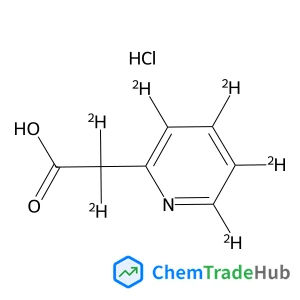
2,2-dideuterio-2-(3,4,5,6-tetradeuterio-2-pyridyl)acetic acid;hydrochloride
CAS Number:
1329799-67-8
Molecular Formula:
C7H2ClD6NO2
![S-[2,3-Bis(palmitoyloxy)propyl]-N-[(9H-fluoren-9-ylmethoxy)(hydroxy)methylene]cysteine structure](https://static.chemtradehub.com/structs/210/210532-98-2-f6a7.webp "S-[2,3-Bis(palmitoyloxy)propyl]-N-[(9H-fluoren-9-ylmethoxy)(hydroxy)methylene]cysteine structure")
S-[2,3-Bis(palmitoyloxy)propyl]-N-[(9H-fluoren-9-ylmethoxy)(hydroxy)methylene]cysteine
CAS Number:
210532-98-2
Molecular Formula:
C53H83NO8S
Recommended Suppliers





Disclaimer
This page provides academic journal information for reference and research purposes only. We are not affiliated with any journal publishers and do not handle publication submissions. For publication-related inquiries, please contact the respective journal publishers directly.
If you notice any inaccuracies in the information displayed, please contact us at support@chemtradehub.com. We will promptly review and address your concerns.