












A homogeneous label-free electrochemical aptasensor based on an omega-like DNA nanostructure for progesterone detection
Literature Information
Publication Date
2023-11-13
DOI
10.1039/D3AY01255G
Impact Factor
2.896
Authors
Zaofen Wang, Weiping Shi, Yunzhu Tan, Bingqian Liu
View Original
Abstract
A novel homogeneous label-free electrochemical aptamer sensor for the detection of progesterone was prepared by combining a well-designed omega (Ω)-like DNA (Ω-DNA) nanostructure, with an isothermal cycling amplification strategy based on the highly efficient exonuclease III (Exo III). The omega-like (Ω) DNA is composed of two oligonucleotide strands: DNA1 and DNA2. The Pro aptamer triggers a chain displacement reaction of Ω-DNA nanostructures, forms a new double-stranded DNA structure (aptamer precursor-DNA2), and releases DNA1. Then, Exo III selectively cleaves the DNA duplex and releases the Pro aptamer to participate in a new displacement reaction. Meanwhile, the released DNA1 strands gain access to the strongly bound hemin, forming a hemin/G-quadruplex (DNAzyme). In the presence of hydrogen peroxide (H2O2), differential pulse voltammetry (DPV) was used to detect the current signal from the oxidation of o-phenylenediamine (OPD) to aminoazobenzene (DAP) catalyzed by DNAzyme. However, the amount of released DNA1 from the Ω-DNA nanostructures is reduced in the presence of the target Pro, and the DPV signal declines because of the small amount of DNAzyme formed. The developed electrochemical aptasensor has a wide dynamic linear relationship in the range of 1 pg mL−1 to 10 ng mL−1 under optimal conditions. Its detection limit is down to 0.3 pg mL−1, providing a potential platform for a sensitive Pro assay among electrochemical assays.
Related Literature
Effect of density on the thermal decomposition mechanism of ε-CL-20: a ReaxFF reactive molecular dynamics simulation study
Fuping Wang, Lang Chen, Deshen Geng, Jianying Lu, Junying Wu
2018-08-08
Paper
DOI: 10.1039/C8CP03010C
Reply to the ‘Comment on “Negative effective Li transference numbers in Li salt/ionic liquid mixtures: does Li drift in the “Wrong” direction?”’ by K. R. Harris, Phys. Chem. Chem. Phys., 2018, 20, DOI: 10.1039/C8CP02595A
Monika Schönhoff, Cornelia Cramer, Florian Schmidt
2018-11-21
Comment
DOI: 10.1039/C8CP06075D
Defect generation in TiO2 nanotube anodes via heat treatment in various atmospheres for lithium-ion batteries
Andreas I. Savva, Kassiopeia A. Smith, Matthew Lawson, Sterling R. Croft, Ariel E. Weltner, Chris D. Jones, Hailey Bull, Paul J. Simmonds, Lan Li, Hui Xiong
2018-08-16
Paper
DOI: 10.1039/C8CP04368J
Distribution of water in the pores of periodic mesoporous organosilicates – a proton solid state MAS NMR study
V. S. Veena, Kavya Illath, Anish Lazar, C. P. Vinod, T. G. Ajithkumar, S. Jayanthi
2018-11-01
Paper
DOI: 10.1039/C8CP04902E
Operando investigations of lithiation and delithiation processes in a BiVO4 anode material
Amund Ruud, Jonas Sottmann, Ponniah Vajeeston, Helmer Fjellvåg
2018-11-09
Paper
DOI: 10.1039/C8CP05330H
Elucidating the morphological aspects and proton dynamics in a hybrid perfluorosulfonic acid membrane for medium-temperature fuel cell applications
Saeed Akbari, Mohammad Taghi Hamed Mosavian, Fatemeh Moosavi, Ali Ahmadpour
2018-11-05
Paper
DOI: 10.1039/C8CP05377D
Vibrationally induced metallisation of the energetic azide α-NaN3
Svemir Rudić, Carole A. Morrison
2018-11-05
Paper
DOI: 10.1039/C8CP06161K
Ab initio paramagnetic NMR shifts via point-dipole approximation in a large magnetic-anisotropy Co(ii) complex
Jiří Mareš, Juha Vaara
2018-08-20
Paper
DOI: 10.1039/C8CP04123G
Influence of argon and D2 tagging on the hydrogen bond network in Cs+(H2O)3; kinetic trapping below 40 K
Tim K. Esser, Harald Knorke, Flavio Siro-Brigiano, Daria Ruth Galimberti, Knut R. Asmis, Marie-Pierre Gaigeot, James M. Lisy
2018-10-30
Paper
DOI: 10.1039/C8CP06020G
You might also like
Compound Q&A
What are the main uses of 4-Nitrophenyl phosphate disodium salt hexahydrate (CAS: 333338-18-4)?
4-Nitrophenyl phosphate disodium salt hexahydrate is primarily used as a substra...
333338-18-44-Nitrophenyl phosph...
Compound Q&A
What are the main uses of 2-(Trifluoromethyl)-1,3-oxazole-4-carboxylic Acid (CAS: 1060816-01-4)?
2-(Trifluoromethyl)-1,3-oxazole-4-carboxylic Acid (CAS: 1060816-01-4) is widely ...
1060816-01-42-(Trifluoromethyl)-...
Compound Q&A
How should 2-Fluoro-4-biphenylcarboxylic acid (CAS: 137045-30-8) be stored?
2-Fluoro-4-biphenylcarboxylic acid should be stored in a cool, dry place at room...
137045-30-82-Fluoro-4-biphenylc...
Compound Q&A
What industries use Prednisolone-21-Carboxylic Acid (CAS: 61549-70-0)?
Prednisolone-21-Carboxylic Acid is primarily used in the pharmaceutical industry...
61549-70-0Prednisolone-21-Carb...
Compound Q&A
How should 4-(Hydrazinomethyl)-1,2,3-benzenetriol (CAS: 3614-72-0) be stored?
4-(Hydrazinomethyl)-1,2,3-benzenetriol (CAS: 3614-72-0) should be stored in a co...
3614-72-04-(Hydrazinomethyl)-...
Compound Q&A
What industries use 4-Amino-1-methyl-1H-pyrazole-5-carboxylic acid hydrochloride (CAS: 92534-70-8)?
4-Amino-1-methyl-1H-pyrazole-5-carboxylic acid hydrochloride (CAS: 92534-70-8) i...
92534-70-84-Amino-1-methyl-1H-...
Compound Q&A
What regulatory guidelines apply to dehydropachymic acid (CAS: 77012-31-8)?
Dehydropachymic acid (CAS: 77012-31-8) is regulated by various agencies. It fall...
77012-31-8Dehydropachymic acid
Compound Q&A
What is the market or research trend for 6-[(2,2-Dimethylpropanoyl)amino]nicotinic acid (CAS: 898561-66-5)?
The market and research trends for 6-[(2,2-Dimethylpropanoyl)amino]nicotinic aci...
898561-66-56-[(2,2-Dimethylprop...
Compound Q&A
How should 1,10-Phenanthroline-2,9-dicarbaldehyde (CAS: 57709-62-3) be stored?
1,10-Phenanthroline-2,9-dicarbaldehyde should be stored in a cool, dry place awa...
57709-62-31,10-Phenanthroline-...
Compound Q&A
How is 5-Carbamoyl-11-oxo-10,11-dihydro-5H-dibenzo[b,f]azepin-10-yl acetate (CAS: 113952-21-9) typically synthesized?
5-Carbamoyl-11-oxo-10,11-dihydro-5H-dibenzo[b,f]azepin-10-yl acetate can be synt...
113952-21-95-Carbamoyl-11-oxo-1...
Source Journal
Analytical Methods

CiteScore:
5.1
Self-citation Rate:
3.7%
Articles per Year:
655
Analytical Methods welcomes early applications of new analytical and bioanalytical methods and technology demonstrating the potential for societal impact. We require that methods and technology reported in the journal are sufficiently innovative, robust, accurate, and compared to other available methods for the intended application. Developments with interdisciplinary approaches are particularly welcome. Systems should be proven with suitably complex and analytically challenging samples. We encourage developments within, but not limited to, the following technologies and applications: global health, point-of-care and molecular diagnostics biosensors and bioengineering drug development and pharmaceutical analysis applied microfluidics and nanotechnology omics studies, such as proteomics, metabolomics or glycomics environmental, agricultural and food science neuroscience biochemical and clinical analysis forensic analysis industrial process and method development
Recommended Compounds
![(3R,5R)-1-[(Benzyloxy)carbonyl]-5-methyl-3-piperidinecarboxylic acid structure](https://static.chemtradehub.com/structs/126/1269757-29-0-c552.webp "(3R,5R)-1-[(Benzyloxy)carbonyl]-5-methyl-3-piperidinecarboxylic acid structure")
(3R,5R)-1-[(Benzyloxy)carbonyl]-5-methyl-3-piperidinecarboxylic acid
CAS Number:
1269757-29-0
Molecular Formula:
C15H19NO4

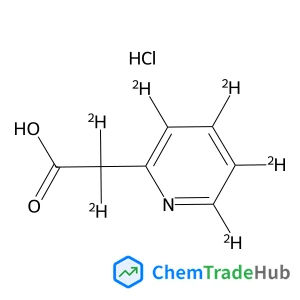
2,2-dideuterio-2-(3,4,5,6-tetradeuterio-2-pyridyl)acetic acid;hydrochloride
CAS Number:
1329799-67-8
Molecular Formula:
C7H2ClD6NO2
Recommended Suppliers





Disclaimer
This page provides academic journal information for reference and research purposes only. We are not affiliated with any journal publishers and do not handle publication submissions. For publication-related inquiries, please contact the respective journal publishers directly.
If you notice any inaccuracies in the information displayed, please contact us at support@chemtradehub.com. We will promptly review and address your concerns.