












Fluorescent covalent organic frameworks for environmental pollutant detection sensors and enrichment sorbents: a mini-review
Literature Information
Publication Date
2023-10-18
DOI
10.1039/D3AY01166F
Impact Factor
2.896
Authors
Qiuyi Liu, Yulian Yang, Yuemeng Zou, Luchun Wang, Zhu Li, Mingyue Wang, Lingling Li, Meng Tian, Dandan Wang, Die Gao
View Original
Abstract
Covalent organic frameworks (COFs) are a class of porous crystalline materials based on organic building blocks containing light elements, such as C, H, O, N, and B, interconnected by covalent bonds. Because of their regular crystal structure, high porosity, stable mechanical structure, satisfactory specific surface area, easy functionalization, and high tunability, they have important applications in several fields. Currently, most of the established methods based on COFs can only be used for individual detection or adsorption of the target. Impressively, fluorescent COFs as a special member of the COF family are able to achieve highly selective and sensitive detection of target pollutants by fluorescence enhancement or quenching. The construction of a dual-functional platform for detection and adsorption based on fluorescent COFs can enable the simultaneous realization of visual monitoring and adsorption of target pollutants. Therefore, this paper reviews the research progress of fluorescent COFs as fluorescence sensors and adsorbents. First, the fluorescent COFs were classified according to the different bonding modes between the building blocks, and then the applications of fluorescent COF-based detection and adsorption bifunctional materials for various environmental contaminants were highlighted. Finally, the challenges and future application prospects of fluorescent COFs are discussed.
Recommended Journals
Related Literature
van der Waals interaction-induced photoluminescence weakening and multilayer growth in epitaxially aligned WS2
Hyun Goo Ji, Mina Maruyama, Adha Sukma Aji, Susumu Okada, Kazunari Matsuda
2018-11-07
Paper
DOI: 10.1039/C8CP04418J
Understanding the influence of disorder on the exciton dynamics and energy transfer in Zn-phthalocyanine H-aggregates
Nicolò Azzaroli, Justin R. Caram, Timothy S. Sinclair, Lorenzo Cupellini, Sandro Jurinovich, Benedetta Mennucci, Gloria Zanotti, Anna Maria Paoletti, Giovanna Pennesi
2018-08-03
Paper
DOI: 10.1039/C8CP02172D
Understanding three-body contributions to coarse-grained force fields
Christoph Scherer, Denis Andrienko
2018-08-10
Paper
DOI: 10.1039/C8CP00746B
Stability of small cationic platinum clusters
Piero Ferrari, Peter Lievens, Ewald Janssens
2018-11-09
Paper
DOI: 10.1039/C8CP06092D
Effects of double-atom vacancies on the electronic properties of graphyne: a DFT investigation
Si Wu, Yuan Yuan, Hongqi Ai, Baotao Kang
2018-08-10
Paper
DOI: 10.1039/C8CP03359E
Charge polarization in partially lithiated single-walled carbon nanotubes
A. A. Makarova
2018-07-23
Paper
DOI: 10.1039/C8CP01510D
Vibrationally induced metallisation of the energetic azide α-NaN3
Svemir Rudić, Carole A. Morrison
2018-11-05
Paper
DOI: 10.1039/C8CP06161K
Atomistic reverse nonequilibrium molecular dynamics simulation of the viscosity of ionic liquid 1-n-butyl 3-methylimidazolium bis(trifluoromethylsulfonyl)imide [bmim][Tf2N]
Rouhollah Safinejad, Nargess Mehdipour, Hossein Eslami
2018-08-02
Paper
DOI: 10.1039/C8CP02393J
Nonadiabatic fragmentation of H2O+ and isotopomers. Wave packet propagation using ab initio wavefunctions
Jaime Suárez, L. Méndez, I. Rabadán
2018-11-12
Paper
DOI: 10.1039/C8CP03725F
Protonation-induced molecular permeation at the oil/water interface in an electric field
2018-09-15
Paper
DOI: 10.1039/C8CP04028A
You might also like
Compound Q&A
What are the main uses of 4-Nitrophenyl phosphate disodium salt hexahydrate (CAS: 333338-18-4)?
4-Nitrophenyl phosphate disodium salt hexahydrate is primarily used as a substra...
333338-18-44-Nitrophenyl phosph...
Compound Q&A
What are the main uses of 2-(Trifluoromethyl)-1,3-oxazole-4-carboxylic Acid (CAS: 1060816-01-4)?
2-(Trifluoromethyl)-1,3-oxazole-4-carboxylic Acid (CAS: 1060816-01-4) is widely ...
1060816-01-42-(Trifluoromethyl)-...
Compound Q&A
How should 2-Fluoro-4-biphenylcarboxylic acid (CAS: 137045-30-8) be stored?
2-Fluoro-4-biphenylcarboxylic acid should be stored in a cool, dry place at room...
137045-30-82-Fluoro-4-biphenylc...
Compound Q&A
What industries use Prednisolone-21-Carboxylic Acid (CAS: 61549-70-0)?
Prednisolone-21-Carboxylic Acid is primarily used in the pharmaceutical industry...
61549-70-0Prednisolone-21-Carb...
Compound Q&A
How should 4-(Hydrazinomethyl)-1,2,3-benzenetriol (CAS: 3614-72-0) be stored?
4-(Hydrazinomethyl)-1,2,3-benzenetriol (CAS: 3614-72-0) should be stored in a co...
3614-72-04-(Hydrazinomethyl)-...
Compound Q&A
What industries use 4-Amino-1-methyl-1H-pyrazole-5-carboxylic acid hydrochloride (CAS: 92534-70-8)?
4-Amino-1-methyl-1H-pyrazole-5-carboxylic acid hydrochloride (CAS: 92534-70-8) i...
92534-70-84-Amino-1-methyl-1H-...
Compound Q&A
What regulatory guidelines apply to dehydropachymic acid (CAS: 77012-31-8)?
Dehydropachymic acid (CAS: 77012-31-8) is regulated by various agencies. It fall...
77012-31-8Dehydropachymic acid
Compound Q&A
What is the market or research trend for 6-[(2,2-Dimethylpropanoyl)amino]nicotinic acid (CAS: 898561-66-5)?
The market and research trends for 6-[(2,2-Dimethylpropanoyl)amino]nicotinic aci...
898561-66-56-[(2,2-Dimethylprop...
Compound Q&A
How should 1,10-Phenanthroline-2,9-dicarbaldehyde (CAS: 57709-62-3) be stored?
1,10-Phenanthroline-2,9-dicarbaldehyde should be stored in a cool, dry place awa...
57709-62-31,10-Phenanthroline-...
Compound Q&A
How is 5-Carbamoyl-11-oxo-10,11-dihydro-5H-dibenzo[b,f]azepin-10-yl acetate (CAS: 113952-21-9) typically synthesized?
5-Carbamoyl-11-oxo-10,11-dihydro-5H-dibenzo[b,f]azepin-10-yl acetate can be synt...
113952-21-95-Carbamoyl-11-oxo-1...
Source Journal
Analytical Methods

CiteScore:
5.1
Self-citation Rate:
3.7%
Articles per Year:
655
Analytical Methods welcomes early applications of new analytical and bioanalytical methods and technology demonstrating the potential for societal impact. We require that methods and technology reported in the journal are sufficiently innovative, robust, accurate, and compared to other available methods for the intended application. Developments with interdisciplinary approaches are particularly welcome. Systems should be proven with suitably complex and analytically challenging samples. We encourage developments within, but not limited to, the following technologies and applications: global health, point-of-care and molecular diagnostics biosensors and bioengineering drug development and pharmaceutical analysis applied microfluidics and nanotechnology omics studies, such as proteomics, metabolomics or glycomics environmental, agricultural and food science neuroscience biochemical and clinical analysis forensic analysis industrial process and method development
Recommended Compounds
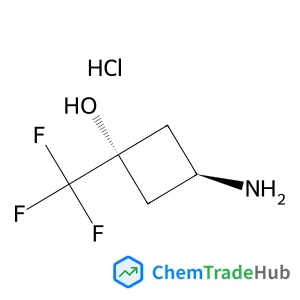
cis-3-Amino-1-(trifluoromethyl)cyclobutanol hydrochloride (1:1)
CAS Number:
1408075-16-0
Molecular Formula:
C5H9ClF3NO
Recommended Suppliers





Disclaimer
This page provides academic journal information for reference and research purposes only. We are not affiliated with any journal publishers and do not handle publication submissions. For publication-related inquiries, please contact the respective journal publishers directly.
If you notice any inaccuracies in the information displayed, please contact us at support@chemtradehub.com. We will promptly review and address your concerns.