












Simultaneous derivatization and extraction of amphetamine and methamphetamine using dispersive liquid–liquid microextraction prior to their analysis using GC-FID in creatine supplements
Literature Information
Publication Date
2023-10-18
DOI
10.1039/D3AY00828B
Impact Factor
2.896
Authors
Mahdi Golsanamlou
View Original
Abstract
This study was focused on the development of a sensitive, reliable, and efficient extraction procedure for the determination of amphetamine and methamphetamine utilized in the adulteration of creatine sports supplements. The separation and detection of the analytes were conducted using the gas chromatography-flame ionization detection method. In this study, the analytes were extracted from a supplement powder into a proper solvent by sonication. Then, the extract was mixed with butyl chloroformate to obtain their butylated derivatives and then concentrated by a dispersive liquid–liquid microextraction procedure. The method was performed in a short time. Under optimized extraction conditions, a linear range of 2.01–500 ng g−1 was obtained by a coefficient of determination ≥0.996. Low detection (0.22 ng g−1 and 0.61 ng g−1 for amphetamine and methamphetamine, respectively) and quantification (0.73 ng g−1 and 2.01 ng g−1 for amphetamine and methamphetamine, respectively) limits, good precision (relative standard deviations ≤8.2%), and high extraction recoveries (79% and 86% for amphetamine and methamphetamine, respectively) were achieved. The usefulness of the method in the analysis of the target compounds was confirmed by studying the matrix effect and analysis of the analytes in different real samples.
Related Literature
Nonadiabatic fragmentation of H2O+ and isotopomers. Wave packet propagation using ab initio wavefunctions
Jaime Suárez, L. Méndez, I. Rabadán
2018-11-12
Paper
DOI: 10.1039/C8CP03725F
Boron-based binary Be6B102− cluster: three-layered aromatic sandwich, electronic transmutation, and dynamic structural fluxionality
Lin-Yan Feng, Peng-Fei Li, Hua-Jin Zhai
2018-08-13
Paper
DOI: 10.1039/C8CP04332A
Cyclization reaction dynamics of an inverse type diarylethene derivative as revealed by time-resolved absorption and fluorescence spectroscopies
Hikaru Sotome, Daichi Kitagawa, Tatsumoto Nakahama, Syoji Ito, Seiya Kobatake, Masahiro Irie, Hiroshi Miyasaka
2019-02-22
Paper
DOI: 10.1039/C8CP07393G
Atomistic reverse nonequilibrium molecular dynamics simulation of the viscosity of ionic liquid 1-n-butyl 3-methylimidazolium bis(trifluoromethylsulfonyl)imide [bmim][Tf2N]
Rouhollah Safinejad, Nargess Mehdipour, Hossein Eslami
2018-08-02
Paper
DOI: 10.1039/C8CP02393J
An excited-state Wolff rearrangement reaction of 5-diazo Meldrum's acid: an ab initio on-the-fly nonadiabatic dynamics simulation
Chao Xu, Feng Long Gu
2018-08-07
Paper
DOI: 10.1039/C8CP04164D
Reactive convective-dissolution in a porous medium: stability and nonlinear dynamics
Silvana S. S. Cardoso
2018-07-26
Paper
DOI: 10.1039/C8CP03064B
Water-mediated curvature change in graphene by single-walled carbon nanotubes
Hrushikesh M. Gade, Piyush P. Wanjari, Srihas V. V. Velpuri
2018-08-14
Paper
DOI: 10.1039/C8CP02394H
The role of hydrophobic, aromatic and electrostatic interactions between amino acid residues and a titanium dioxide surface
Avia Leader, Daniel Mandler, Meital Reches
2018-11-06
Paper
DOI: 10.1039/C8CP05775C
Rate constants for collision-induced emission of O2(a1Δg) with He, Ne, Ar, Kr, N2, CO2 and SF6 as collisional partners
2018-11-15
Paper
DOI: 10.1039/C8CP06231E
Polarized absorbance and Davydov splitting in bulk and thin-film pentacene polymorphs
Caterina Cocchi, Tobias Breuer, Gregor Witte, Claudia Draxl
2018-11-14
Paper
DOI: 10.1039/C8CP06384B
You might also like
Compound Q&A
What are the main uses of 4-Nitrophenyl phosphate disodium salt hexahydrate (CAS: 333338-18-4)?
4-Nitrophenyl phosphate disodium salt hexahydrate is primarily used as a substra...
333338-18-44-Nitrophenyl phosph...
Compound Q&A
What are the main uses of 2-(Trifluoromethyl)-1,3-oxazole-4-carboxylic Acid (CAS: 1060816-01-4)?
2-(Trifluoromethyl)-1,3-oxazole-4-carboxylic Acid (CAS: 1060816-01-4) is widely ...
1060816-01-42-(Trifluoromethyl)-...
Compound Q&A
How should 2-Fluoro-4-biphenylcarboxylic acid (CAS: 137045-30-8) be stored?
2-Fluoro-4-biphenylcarboxylic acid should be stored in a cool, dry place at room...
137045-30-82-Fluoro-4-biphenylc...
Compound Q&A
What industries use Prednisolone-21-Carboxylic Acid (CAS: 61549-70-0)?
Prednisolone-21-Carboxylic Acid is primarily used in the pharmaceutical industry...
61549-70-0Prednisolone-21-Carb...
Compound Q&A
How should 4-(Hydrazinomethyl)-1,2,3-benzenetriol (CAS: 3614-72-0) be stored?
4-(Hydrazinomethyl)-1,2,3-benzenetriol (CAS: 3614-72-0) should be stored in a co...
3614-72-04-(Hydrazinomethyl)-...
Compound Q&A
What industries use 4-Amino-1-methyl-1H-pyrazole-5-carboxylic acid hydrochloride (CAS: 92534-70-8)?
4-Amino-1-methyl-1H-pyrazole-5-carboxylic acid hydrochloride (CAS: 92534-70-8) i...
92534-70-84-Amino-1-methyl-1H-...
Compound Q&A
What regulatory guidelines apply to dehydropachymic acid (CAS: 77012-31-8)?
Dehydropachymic acid (CAS: 77012-31-8) is regulated by various agencies. It fall...
77012-31-8Dehydropachymic acid
Compound Q&A
What is the market or research trend for 6-[(2,2-Dimethylpropanoyl)amino]nicotinic acid (CAS: 898561-66-5)?
The market and research trends for 6-[(2,2-Dimethylpropanoyl)amino]nicotinic aci...
898561-66-56-[(2,2-Dimethylprop...
Compound Q&A
How should 1,10-Phenanthroline-2,9-dicarbaldehyde (CAS: 57709-62-3) be stored?
1,10-Phenanthroline-2,9-dicarbaldehyde should be stored in a cool, dry place awa...
57709-62-31,10-Phenanthroline-...
Compound Q&A
How is 5-Carbamoyl-11-oxo-10,11-dihydro-5H-dibenzo[b,f]azepin-10-yl acetate (CAS: 113952-21-9) typically synthesized?
5-Carbamoyl-11-oxo-10,11-dihydro-5H-dibenzo[b,f]azepin-10-yl acetate can be synt...
113952-21-95-Carbamoyl-11-oxo-1...
Source Journal
Analytical Methods

CiteScore:
5.1
Self-citation Rate:
3.7%
Articles per Year:
655
Analytical Methods welcomes early applications of new analytical and bioanalytical methods and technology demonstrating the potential for societal impact. We require that methods and technology reported in the journal are sufficiently innovative, robust, accurate, and compared to other available methods for the intended application. Developments with interdisciplinary approaches are particularly welcome. Systems should be proven with suitably complex and analytically challenging samples. We encourage developments within, but not limited to, the following technologies and applications: global health, point-of-care and molecular diagnostics biosensors and bioengineering drug development and pharmaceutical analysis applied microfluidics and nanotechnology omics studies, such as proteomics, metabolomics or glycomics environmental, agricultural and food science neuroscience biochemical and clinical analysis forensic analysis industrial process and method development
Recommended Compounds

![1-[(4-Methylphenyl)sulfonyl]-3-(4,4,5,5-tetramethyl-1,3,2-dioxaborolan-2-yl)-1H-pyrrolo[2,3-b]pyridine-5-carbonitrile structure](https://static.chemtradehub.com/structs/143/1434747-57-5-fc0d.webp "1-[(4-Methylphenyl)sulfonyl]-3-(4,4,5,5-tetramethyl-1,3,2-dioxaborolan-2-yl)-1H-pyrrolo[2,3-b]pyridine-5-carbonitrile structure")
1-[(4-Methylphenyl)sulfonyl]-3-(4,4,5,5-tetramethyl-1,3,2-dioxaborolan-2-yl)-1H-pyrrolo[2,3-b]pyridine-5-carbonitrile
CAS Number:
1434747-57-5
Molecular Formula:
C21H22BN3O4S
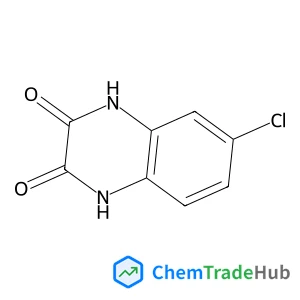
6-CHLORO-2,3-DIOXO-1,2,3,4-TETRAHYDROQUINOXALINE, 97
CAS Number:
169-14-2
Molecular Formula:
C8H5ClN2O2
![N-[2-(4-Hydroxyphenoxy)-4-nitrophenyl]methanesulfonamide structure](https://static.chemtradehub.com/structs/109/109032-22-6-7c88.webp "N-[2-(4-Hydroxyphenoxy)-4-nitrophenyl]methanesulfonamide structure")
N-[2-(4-Hydroxyphenoxy)-4-nitrophenyl]methanesulfonamide
CAS Number:
109032-22-6
Molecular Formula:
C13H12N2O6S
Recommended Suppliers






Disclaimer
This page provides academic journal information for reference and research purposes only. We are not affiliated with any journal publishers and do not handle publication submissions. For publication-related inquiries, please contact the respective journal publishers directly.
If you notice any inaccuracies in the information displayed, please contact us at support@chemtradehub.com. We will promptly review and address your concerns.