












Back cover
Literature Information
Publication Date
2022-07-12
DOI
10.1039/D2QI90051C
Impact Factor
6.569
Authors
View Original
Abstract
A graphical abstract is available for this content
Related Literature
pH-Responsive non-ionic diblock copolymers: protonation of a morpholine end-group induces an order–order transition
N. J. W. Penfold, J. R. Lovett, N. J. Warren, P. Verstraete, J. Smets, S. P. Armes
2015-10-13
Paper
DOI: 10.1039/C5PY01510C
Dual stimuli-responsive oligo(ethylene glycol)-based microgels: insight into the role of internal structure in volume phase transitions and loading of magnetic nanoparticles to design stable thermoresponsive hybrid microgels
Elise Deniau-Lejeune, Valérie Alard, Jean-François Tranchant, Laurent Billon, Maud Save
2015-10-22
Paper
DOI: 10.1039/C5PY01078K
Synthesis of fluorinated gradient copolymers via in situ transesterification with fluoroalcohols in tandem living radical polymerization
Yusuke Ogura, Takaya Terashima, Mitsuo Sawamoto
2017-02-09
Paper
DOI: 10.1039/C7PY00073A
Tunable doubly responsive UCST-type phosphonium poly(ionic liquid): a thermosensitive dispersant for carbon nanotubes
Yajnaseni Biswas, Tanmoy Maji, Madhab Dule, Tarun K. Mandal
2015-11-30
Paper
DOI: 10.1039/C5PY01574J
Tetraphenylethene-containing supramolecular hyperbranched polymers: aggregation-induced emission by supramolecular polymerization in aqueous solution
Ling-Bao Xing, Xiao-Jun Wang, Jing-Li Zhang, Ziyan Zhou, Shuping Zhuo
2015-11-05
Communication
DOI: 10.1039/C5PY01741F
Development of polycarbonate-containing block copolymers for thin film self-assembly applications
Ankit Vora, Rudy J. Wojtecki, Kristin Schmidt, Anindarupa Chunder, Joy Y. Cheng, Alshakim Nelson, Daniel P. Sanders
2015-12-10
Paper
DOI: 10.1039/C5PY01846C
Ru(bpy)32+ derivatized polystyrenes constructed by nitroxide-mediated radical polymerization. Relationship between polymer chain length, structure and photophysical properties
Gyu Leem, Shahar Keinan, Junlin Jiang, Zhuo Chen, Toan Pho, Zachary A. Morseth, Zhenya Hu, Egle Puodziukynaite, Zhen Fang, John M. Papanikolas, John R. Reynolds, Kirk S. Schanze
2015-10-01
Paper
DOI: 10.1039/C5PY01289A
Dibenzoyldiethylgermane as a visible light photo-reducing agent for CuAAC click reactions
Mustafa Arslan, Gorkem Yilmaz, Yusuf Yagci
2015-10-05
Paper
DOI: 10.1039/C5PY01465D
You might also like
Compound Q&A
What are the main uses of 4-Nitrophenyl phosphate disodium salt hexahydrate (CAS: 333338-18-4)?
4-Nitrophenyl phosphate disodium salt hexahydrate is primarily used as a substra...
333338-18-44-Nitrophenyl phosph...
Compound Q&A
What are the main uses of 2-(Trifluoromethyl)-1,3-oxazole-4-carboxylic Acid (CAS: 1060816-01-4)?
2-(Trifluoromethyl)-1,3-oxazole-4-carboxylic Acid (CAS: 1060816-01-4) is widely ...
1060816-01-42-(Trifluoromethyl)-...
Compound Q&A
How should 2-Fluoro-4-biphenylcarboxylic acid (CAS: 137045-30-8) be stored?
2-Fluoro-4-biphenylcarboxylic acid should be stored in a cool, dry place at room...
137045-30-82-Fluoro-4-biphenylc...
Compound Q&A
What industries use Prednisolone-21-Carboxylic Acid (CAS: 61549-70-0)?
Prednisolone-21-Carboxylic Acid is primarily used in the pharmaceutical industry...
61549-70-0Prednisolone-21-Carb...
Compound Q&A
How should 4-(Hydrazinomethyl)-1,2,3-benzenetriol (CAS: 3614-72-0) be stored?
4-(Hydrazinomethyl)-1,2,3-benzenetriol (CAS: 3614-72-0) should be stored in a co...
3614-72-04-(Hydrazinomethyl)-...
Compound Q&A
What industries use 4-Amino-1-methyl-1H-pyrazole-5-carboxylic acid hydrochloride (CAS: 92534-70-8)?
4-Amino-1-methyl-1H-pyrazole-5-carboxylic acid hydrochloride (CAS: 92534-70-8) i...
92534-70-84-Amino-1-methyl-1H-...
Compound Q&A
What regulatory guidelines apply to dehydropachymic acid (CAS: 77012-31-8)?
Dehydropachymic acid (CAS: 77012-31-8) is regulated by various agencies. It fall...
77012-31-8Dehydropachymic acid
Compound Q&A
What is the market or research trend for 6-[(2,2-Dimethylpropanoyl)amino]nicotinic acid (CAS: 898561-66-5)?
The market and research trends for 6-[(2,2-Dimethylpropanoyl)amino]nicotinic aci...
898561-66-56-[(2,2-Dimethylprop...
Compound Q&A
How should 1,10-Phenanthroline-2,9-dicarbaldehyde (CAS: 57709-62-3) be stored?
1,10-Phenanthroline-2,9-dicarbaldehyde should be stored in a cool, dry place awa...
57709-62-31,10-Phenanthroline-...
Compound Q&A
How is 5-Carbamoyl-11-oxo-10,11-dihydro-5H-dibenzo[b,f]azepin-10-yl acetate (CAS: 113952-21-9) typically synthesized?
5-Carbamoyl-11-oxo-10,11-dihydro-5H-dibenzo[b,f]azepin-10-yl acetate can be synt...
113952-21-95-Carbamoyl-11-oxo-1...
Source Journal
Inorganic Chemistry Frontiers

CiteScore:
10.4
Self-citation Rate:
6.6%
Articles per Year:
625
Inorganic Chemistry Frontiers publishes research articles, reviews, notes, comments and methods covering all areas of inorganic chemistry. Emphases are placed on interdisciplinary studies where inorganic chemistry and organometallic chemistry meet related areas, such as catalysis, biochemistry, nanoscience, energy and materials science. For publication in Inorganic Chemistry Frontiers, papers should report high-quality work of exceptional novelty, which will be of significant interest to the wide readership of the journal.
Recommended Compounds

4-Methyl-3-morpholinecarboxylic acid hydrochloride (1:1)
CAS Number:
1240518-90-4
Molecular Formula:
C6H12ClNO3
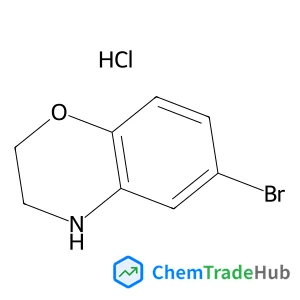
6-Bromo-3,4-dihydro-2H-1,4-benzoxazine hydrochloride (1:1)
CAS Number:
1260803-10-8
Molecular Formula:
C8H9BrClNO
Recommended Suppliers






Disclaimer
This page provides academic journal information for reference and research purposes only. We are not affiliated with any journal publishers and do not handle publication submissions. For publication-related inquiries, please contact the respective journal publishers directly.
If you notice any inaccuracies in the information displayed, please contact us at support@chemtradehub.com. We will promptly review and address your concerns.