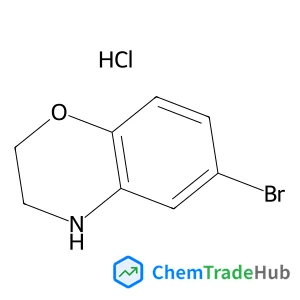
6-Bromo-3,4-dihydro-2H-1,4-benzoxazine hydrochloride (1:1)
CAS Number:
1260803-10-8
Molecular Formula:
C8H9BrClNO
Shinya Kokuryo, Kazuya Tamura, Koji Miyake, Yoshiaki Uchida, Manabu Miyamoto, Yasunori Oumi, Atsushi Mizusawa, Tadashi Kubo, Norikazu Nishiyama
A Cr-loaded zeolite cannot be considerably deactivated by coke deposition and can be reused for LDPE cracking without regeneration. The Cr species interact with hydroxyl groups derived from structural defects in the zeolite framework to inhibit coking. This study provides useful information on coking inhibition in various chemical industries.
Rouhollah Safinejad, Nargess Mehdipour, Hossein Eslami
DOI: 10.1039/C8CP02393J
William C. Bailey
DOI: 10.1039/C8CP01539B
Hyun Goo Ji, Mina Maruyama, Adha Sukma Aji, Susumu Okada, Kazunari Matsuda
DOI: 10.1039/C8CP04418J
Shihu H. M. Deng, Gao-Lei Hou, Marat Valiev, Xue-Bin Wang
DOI: 10.1039/C8CP03896A
B. Moses Abraham, Vikas D. Ghule
DOI: 10.1039/C8CP06635C
Muzhong Luo, Shengjiang Yang, Xuebo Quan, Delin Sun, Jian Zhou
DOI: 10.1039/C9CP01638D
DOI: 10.1039/C8CP04028A
Wook Lee, Inkoo Kim, Young Min Rhee
DOI: 10.1039/C8CP02939C
Monika Schönhoff, Cornelia Cramer, Florian Schmidt
DOI: 10.1039/C8CP06075D
Vasilii Dubrovin, Bernd Büchner, Alexey A. Popov, Stanislav M. Avdoshenko
DOI: 10.1039/C9CP00634F
4-Nitrophenyl phosphate disodium salt hexahydrate is primarily used as a substra...
2-(Trifluoromethyl)-1,3-oxazole-4-carboxylic Acid (CAS: 1060816-01-4) is widely ...
2-Fluoro-4-biphenylcarboxylic acid should be stored in a cool, dry place at room...
Prednisolone-21-Carboxylic Acid is primarily used in the pharmaceutical industry...
4-(Hydrazinomethyl)-1,2,3-benzenetriol (CAS: 3614-72-0) should be stored in a co...
4-Amino-1-methyl-1H-pyrazole-5-carboxylic acid hydrochloride (CAS: 92534-70-8) i...
Dehydropachymic acid (CAS: 77012-31-8) is regulated by various agencies. It fall...
The market and research trends for 6-[(2,2-Dimethylpropanoyl)amino]nicotinic aci...
1,10-Phenanthroline-2,9-dicarbaldehyde should be stored in a cool, dry place awa...
5-Carbamoyl-11-oxo-10,11-dihydro-5H-dibenzo[b,f]azepin-10-yl acetate can be synt...

Catalysis Science & Technology is committed to publishing research reporting high-quality, cutting-edge developments across the catalysis community at large. The journal places equal focus on publications from the heterogeneous, homogeneous, thermo-, electro-, photo-, organo- and biocatalysis communities. Works published in the journal feature a balanced mix of fundamental, technology-oriented, experimental, computational, digital and data-driven original research, thus appealing to catalysis practitioners in both academic and industrial environments. Original research articles published in the journal must demonstrate new catalytic discoveries and/or methodological advances that represent a significant advance on previously published work, from the molecular to the process scales. We welcome rigorous research in a wide range of timely or emerging applications related to the environment, health, energy and materials. Catalysis Science & Technology publishes Communications, Articles, Reviews and Perspectives. More details regarding manuscript types may be found in the Information for Authors section.
![(2E)-3-(3-Chlorophenyl)-N-{2-[4-(methylsulfonyl)-1-piperazinyl]-2-oxoethyl}acrylamide structure](https://static.chemtradehub.com/structs/250/2505001-54-5-c1e9.webp "(2E)-3-(3-Chlorophenyl)-N-{2-[4-(methylsulfonyl)-1-piperazinyl]-2-oxoethyl}acrylamide structure")