












Study on the luminescence properties of ionic [Cu(N^N)(P^P)]+ complexes: influence of ligands, counteranions and weak interactions
Literature Information
Publication Date
2022-09-27
DOI
10.1039/D2CE01177H
Impact Factor
3.545
Authors
Zi-Xi Li, Zhen-Zhou Sun, Guo Wang, Wei Yang, Hong-Liang Han, Yu-Ping Yang, Zhong-Feng Li, Yi-Shan Yao
View Original
Abstract
Herein, a series of ionic mononuclear Cu(I) complexes, [Cu(phen)(bdppmapy)]Cl (1a), [Cu(phen)(bdppmapy)]Br (2a), [Cu(phen)(bdppmapy)]I (3a), [Cu(phen)(bdppmapy)]SCN (4a), [Cu(Dpq)(bdppmapy)]Cl (1b), [Cu(Dpq)(bdppmapy)]Br (2b), [Cu(Dpq)(bdppmapy)]I (3b) and [Cu(Dpq)(bdppmapy)]SCN (4b) {phen = [1,10]phenanthroline; Dpq = pyrazino[2,3-f][1,10]-phenanthroline; bdppmapy = N,N-bis((diphenylphosphino)methyl)-2-pyridinamine} have been synthesized and characterized by using IR, NMR, elemental analysis, single crystal X-ray diffraction analysis, fluorescence spectroscopy methods, and UV-vis and terahertz (THz) time-domain absorption spectroscopy. Their crystal structures were elucidated by X-ray crystallography and their photophysical properties were investigated in detail. All the above complexes exhibit a 1D to 3D supramolecular structure which is linked together by intermolecular weak interaction forces and hydrogen bonds. By regulating ligands and anions, the emission wavelengths of these complexes are quite different in the range from 533 nm to 604 nm. Theoretical calculations and photophysical properties indicate that luminescence is derived from metal-to-ligand charge transfer (MLCT) excited states. In the meantime, the results of calculations show that the stabilization of the increased conjugation of the ligand-based π* orbital is ascribed to the observed bathochromic-shift in the MLCT transitions.
Related Literature
Rheological behavior and molecular relaxation of polycations with macrocounterions in aqueous solutions
Shangguan Yonggang, Qiang Zheng
2015-10-12
Paper
DOI: 10.1039/C5PY01022E
Chemical vapour deposition of soluble poly(p-xylylene) copolymers with tuneable properties
Ilka E. Paulus, Andreas Greiner
2015-10-07
Paper
DOI: 10.1039/C5PY01343G
Ionic hydrogen bond donor organocatalyst for fast living ring-opening polymerization
Xu Zhi, Jingjing Liu, Zhenjiang Li, Huiying Wang, Xin Wang, Saide Cui, Cheng Chen, Chengxu Zhao, Xiaopei Li, Kai Guo
2015-10-21
Paper
DOI: 10.1039/C5PY01315A
Entropically-driven ring-opening metathesis polymerization (ED-ROMP) of macrocyclic olefins prepared from deoxycholic acid to give functionalized polymers‡
Philip Hodge, Abdel Chakiri
2015-04-30
Paper
DOI: 10.1039/C5PY00272A
Wafer-scale synthesis of defined polymer brushes under ambient conditions
Tao Zhang, Yunhao Du, Jana Kalbacova, René Schubel, Raul D. Rodriguez, Tao Chen, Dietrich R. T. Zahn, Rainer Jordan
2015-09-21
Paper
DOI: 10.1039/C5PY01274K
Facile production of nanoaggregates with tuneable morphologies from thermoresponsive P(DEGMA-co-HPMA)
Nghia P. Truong, Michael R. Whittaker, John F. Quinn
2015-11-16
Paper
DOI: 10.1039/C5PY01467K
Di(naphthalen-2-yl)-1,2-diphenylethene-based conjugated polymers: aggregation-enhanced emission and explosive detection
Mengxia Gao, Yue Wu, Bin Chen, Bairong He, Han Nie, Tingyan Li, Fupeng Wu, Wenjun Zhou, Jian Zhou, Zujin Zhao
2015-10-08
Communication
DOI: 10.1039/C5PY01458A
You might also like
Compound Q&A
What are the main uses of 4-Nitrophenyl phosphate disodium salt hexahydrate (CAS: 333338-18-4)?
4-Nitrophenyl phosphate disodium salt hexahydrate is primarily used as a substra...
333338-18-44-Nitrophenyl phosph...
Compound Q&A
What are the main uses of 2-(Trifluoromethyl)-1,3-oxazole-4-carboxylic Acid (CAS: 1060816-01-4)?
2-(Trifluoromethyl)-1,3-oxazole-4-carboxylic Acid (CAS: 1060816-01-4) is widely ...
1060816-01-42-(Trifluoromethyl)-...
Compound Q&A
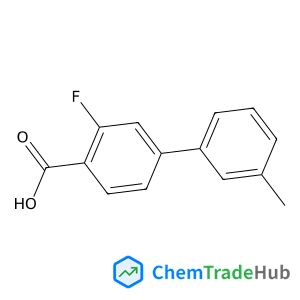
How should 2-Fluoro-4-biphenylcarboxylic acid (CAS: 137045-30-8) be stored?
2-Fluoro-4-biphenylcarboxylic acid should be stored in a cool, dry place at room...
137045-30-82-Fluoro-4-biphenylc...
Compound Q&A
What industries use Prednisolone-21-Carboxylic Acid (CAS: 61549-70-0)?
Prednisolone-21-Carboxylic Acid is primarily used in the pharmaceutical industry...
61549-70-0Prednisolone-21-Carb...
Compound Q&A
How should 4-(Hydrazinomethyl)-1,2,3-benzenetriol (CAS: 3614-72-0) be stored?
4-(Hydrazinomethyl)-1,2,3-benzenetriol (CAS: 3614-72-0) should be stored in a co...
3614-72-04-(Hydrazinomethyl)-...
Compound Q&A
What industries use 4-Amino-1-methyl-1H-pyrazole-5-carboxylic acid hydrochloride (CAS: 92534-70-8)?
4-Amino-1-methyl-1H-pyrazole-5-carboxylic acid hydrochloride (CAS: 92534-70-8) i...
92534-70-84-Amino-1-methyl-1H-...
Compound Q&A
What regulatory guidelines apply to dehydropachymic acid (CAS: 77012-31-8)?
Dehydropachymic acid (CAS: 77012-31-8) is regulated by various agencies. It fall...
77012-31-8Dehydropachymic acid
Compound Q&A
What is the market or research trend for 6-[(2,2-Dimethylpropanoyl)amino]nicotinic acid (CAS: 898561-66-5)?
The market and research trends for 6-[(2,2-Dimethylpropanoyl)amino]nicotinic aci...
898561-66-56-[(2,2-Dimethylprop...
Compound Q&A
How should 1,10-Phenanthroline-2,9-dicarbaldehyde (CAS: 57709-62-3) be stored?
1,10-Phenanthroline-2,9-dicarbaldehyde should be stored in a cool, dry place awa...
57709-62-31,10-Phenanthroline-...
Compound Q&A
How is 5-Carbamoyl-11-oxo-10,11-dihydro-5H-dibenzo[b,f]azepin-10-yl acetate (CAS: 113952-21-9) typically synthesized?
5-Carbamoyl-11-oxo-10,11-dihydro-5H-dibenzo[b,f]azepin-10-yl acetate can be synt...
113952-21-95-Carbamoyl-11-oxo-1...
Source Journal
CrystEngComm

CiteScore:
5.5
Self-citation Rate:
7.7%
Articles per Year:
643
CrystEngComm is the forum for the design and understanding of crystalline materials. We welcome studies on the investigation of molecular behaviour within crystals, control of nucleation and crystal growth, engineering of crystal structures, and construction of crystalline materials with tuneable properties and functions. We publish hypothesis-driven research into… how crystal design affects thermodynamics, phase transitional behaviours, polymorphism, morphology control, solid state reactivity (crystal-crystal solution-crystal, and gas-crystal reactions), optoelectronics, ferroelectric materials, non-linear optics, molecular and bulk magnetism, conductivity and quantum computing, catalysis, absorption and desorption, and mechanical properties. Using Techniques and methods including… Single crystal and powder X-ray, electron, and neutron diffraction, solid-state spectroscopy, spectrometry, and microscopy, modelling and data mining, and empirical, semi-empirical and ab-initio theoretical evaluations. On crystalline and solid-state materials. We particularly welcome work on MOFs, coordination polymers, nanocrystals, host-guest and multi-component molecular materials. We also accept work on peptides and liquid crystals. All papers should involve the use or development of a design or optimisation strategy. Routine structural reports or crystal morphology descriptions, even when combined with an analysis of properties or potential applications, are generally considered to be outside the scope of the journal and are unlikely to be accepted.
Recommended Compounds
![1-[(4-Methylphenyl)sulfonyl]-3-(4,4,5,5-tetramethyl-1,3,2-dioxaborolan-2-yl)-1H-pyrrolo[2,3-b]pyridine-5-carbonitrile structure](https://static.chemtradehub.com/structs/143/1434747-57-5-fc0d.webp "1-[(4-Methylphenyl)sulfonyl]-3-(4,4,5,5-tetramethyl-1,3,2-dioxaborolan-2-yl)-1H-pyrrolo[2,3-b]pyridine-5-carbonitrile structure")
1-[(4-Methylphenyl)sulfonyl]-3-(4,4,5,5-tetramethyl-1,3,2-dioxaborolan-2-yl)-1H-pyrrolo[2,3-b]pyridine-5-carbonitrile
CAS Number:
1434747-57-5
Molecular Formula:
C21H22BN3O4S
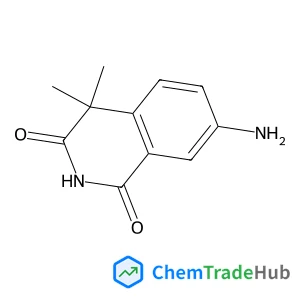
1,3(2H,4H)-Isoquinolinedione, 7-amino-4,4-dimethyl-
CAS Number:
14576-22-8
Molecular Formula:
C11H12N2O2

Recommended Suppliers




Disclaimer
This page provides academic journal information for reference and research purposes only. We are not affiliated with any journal publishers and do not handle publication submissions. For publication-related inquiries, please contact the respective journal publishers directly.
If you notice any inaccuracies in the information displayed, please contact us at support@chemtradehub.com. We will promptly review and address your concerns.