












Dinuclear osmium complexes as mitochondrion-targeting antitumor photothermal agents in vivo
Literature Information
Publication Date
2022-10-18
DOI
10.1039/D2CC05230J
Impact Factor
6.222
Authors
Meng-Fan Wang, Yu-Ang Deng, Qing-Fang Li, Shi-Jie Tang, Rong Yang, Run-Yu Zhao, Fu-Dan Liu, Xiaoxia Ren, Dan Zhang, Feng Gao
View Original
Abstract
Four dinuclear osmium complexes have been constructed for antitumor phototherapy. The most potent Os4 has extremely high photothermal conversion capability under irradiation of an 808 nm low-power laser, targets mitochondria in human melanoma cells without nucleus affinity, and acts as an antitumor photothermal therapy agent in vitro and in vivo.
Related Literature
Dual stimuli-responsive oligo(ethylene glycol)-based microgels: insight into the role of internal structure in volume phase transitions and loading of magnetic nanoparticles to design stable thermoresponsive hybrid microgels
Elise Deniau-Lejeune, Valérie Alard, Jean-François Tranchant, Laurent Billon, Maud Save
2015-10-22
Paper
DOI: 10.1039/C5PY01078K
Toughening of photo-curable polymer networks: a review
Martin Schwentenwein
2015-11-20
Review Article
DOI: 10.1039/C5PY01631B
Regio- and stereoselective construction of stimuli-responsive macromolecules by a sequential coupling-hydroamination polymerization route
2015-10-06
Paper
DOI: 10.1039/C5PY01424G
Facile production of nanoaggregates with tuneable morphologies from thermoresponsive P(DEGMA-co-HPMA)
Nghia P. Truong, Michael R. Whittaker, John F. Quinn
2015-11-16
Paper
DOI: 10.1039/C5PY01467K
Controlling the morphology of glyco-nanoparticles in water using block copolymer mixtures: the effect on cellular uptake
Hongxu Lu, Martina Stenzel
2015-09-15
Paper
DOI: 10.1039/C5PY01360G
An aromatic/aliphatic polyester prepared via ring-opening polymerisation and its remarkably selective and cyclable depolymerisation to monomer
Jarret P. MacDonald, Michael P. Shaver
2015-11-12
Paper
DOI: 10.1039/C5PY01606A
Tailored high performance shape memory epoxy–silica nanocomposites. Structure design
S. Ponyrko, L. Matějka
2015-11-20
Paper
DOI: 10.1039/C5PY01450F
Synthesis of photoresponsive polymeric propesticide micelles based on PEG for the controlled release of a herbicide
Kaikai Ding, Liyan Shi, Ling Zhang, Tian Zeng, Yihua Yin, Ying Yi
2015-12-03
Paper
DOI: 10.1039/C5PY01690H
You might also like
Compound Q&A
What are the main uses of 4-Nitrophenyl phosphate disodium salt hexahydrate (CAS: 333338-18-4)?
4-Nitrophenyl phosphate disodium salt hexahydrate is primarily used as a substra...
333338-18-44-Nitrophenyl phosph...
Compound Q&A
What are the main uses of 2-(Trifluoromethyl)-1,3-oxazole-4-carboxylic Acid (CAS: 1060816-01-4)?
2-(Trifluoromethyl)-1,3-oxazole-4-carboxylic Acid (CAS: 1060816-01-4) is widely ...
1060816-01-42-(Trifluoromethyl)-...
Compound Q&A
How should 2-Fluoro-4-biphenylcarboxylic acid (CAS: 137045-30-8) be stored?
2-Fluoro-4-biphenylcarboxylic acid should be stored in a cool, dry place at room...
137045-30-82-Fluoro-4-biphenylc...
Compound Q&A
What industries use Prednisolone-21-Carboxylic Acid (CAS: 61549-70-0)?
Prednisolone-21-Carboxylic Acid is primarily used in the pharmaceutical industry...
61549-70-0Prednisolone-21-Carb...
Compound Q&A
How should 4-(Hydrazinomethyl)-1,2,3-benzenetriol (CAS: 3614-72-0) be stored?
4-(Hydrazinomethyl)-1,2,3-benzenetriol (CAS: 3614-72-0) should be stored in a co...
3614-72-04-(Hydrazinomethyl)-...
Compound Q&A
What industries use 4-Amino-1-methyl-1H-pyrazole-5-carboxylic acid hydrochloride (CAS: 92534-70-8)?
4-Amino-1-methyl-1H-pyrazole-5-carboxylic acid hydrochloride (CAS: 92534-70-8) i...
92534-70-84-Amino-1-methyl-1H-...
Compound Q&A
What regulatory guidelines apply to dehydropachymic acid (CAS: 77012-31-8)?
Dehydropachymic acid (CAS: 77012-31-8) is regulated by various agencies. It fall...
77012-31-8Dehydropachymic acid
Compound Q&A
What is the market or research trend for 6-[(2,2-Dimethylpropanoyl)amino]nicotinic acid (CAS: 898561-66-5)?
The market and research trends for 6-[(2,2-Dimethylpropanoyl)amino]nicotinic aci...
898561-66-56-[(2,2-Dimethylprop...
Compound Q&A
How should 1,10-Phenanthroline-2,9-dicarbaldehyde (CAS: 57709-62-3) be stored?
1,10-Phenanthroline-2,9-dicarbaldehyde should be stored in a cool, dry place awa...
57709-62-31,10-Phenanthroline-...
Compound Q&A
How is 5-Carbamoyl-11-oxo-10,11-dihydro-5H-dibenzo[b,f]azepin-10-yl acetate (CAS: 113952-21-9) typically synthesized?
5-Carbamoyl-11-oxo-10,11-dihydro-5H-dibenzo[b,f]azepin-10-yl acetate can be synt...
113952-21-95-Carbamoyl-11-oxo-1...
Source Journal
Chemical Communications

CiteScore:
8.6
Self-citation Rate:
4.7%
Articles per Year:
2458
ChemComm publishes urgent research which is of outstanding significance and interest to experts in the field, while also appealing to the journal’s broad chemistry readership. Our communication format is ideally suited to short, urgent studies that are of such importance that they require accelerated publication. Our scope covers all topics in chemistry, and research at the interface of chemistry and other disciplines (such as materials science, nanoscience, physics, engineering and biology) where there is a significant novelty in the chemistry aspects. Major topic areas covered include: Analytical Chemistry Catalysis Chemical Biology and medicinal chemistry Computational Chemistry and Machine Learning Energy and sustainable chemistry Environmental Chemistry Green Chemistry Inorganic Chemistry Materials Chemistry Nanoscience Organic Chemistry Physical Chemistry Polymer Chemistry Supramolecular Chemistry
Recommended Compounds
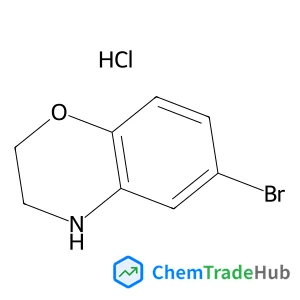
6-Bromo-3,4-dihydro-2H-1,4-benzoxazine hydrochloride (1:1)
CAS Number:
1260803-10-8
Molecular Formula:
C8H9BrClNO

Recommended Suppliers







Disclaimer
This page provides academic journal information for reference and research purposes only. We are not affiliated with any journal publishers and do not handle publication submissions. For publication-related inquiries, please contact the respective journal publishers directly.
If you notice any inaccuracies in the information displayed, please contact us at support@chemtradehub.com. We will promptly review and address your concerns.