












An autocatalytic CO hydrogenation approach for the fabrication of stable Fe-based superhydrophobic surfaces
Literature Information
Publication Date
2022-07-04
DOI
10.1039/D2CC03113B
Impact Factor
6.222
Authors
Yingying Xue, Shengyang Duan, Zihao Liu, Miaomiao Cui, Zhanghui Xiong, Zengchen Liu, Jiangang Chen
View Original
Abstract
Stable Fe-based superhydrophobic surfaces are constructed via a hydrothermal method and an autocatalytic CO hydrogenation reaction. The platform molecule of syngas is proposed as an alternative to traditional low-free-energy materials. Syngas may be a powerful tool for fabricating superhydrophobic surfaces that can catalyze the CO hydrogenation reaction.
Related Literature
Synthesis of poly(N-acryloylmorpholine) macromonomers using RAFT and their copolymerization with methacrylic acid for the design of graft copolymer additives for concrete
T. Boursier, S. Georges, M. Mosquet, D. Rinaldi, F. D'Agosto
2015-12-01
Paper
DOI: 10.1039/C5PY01730K
Hydrolytically degradable, dendritic polyglycerol sulfate based injectable hydrogels using strain promoted azide–alkyne cycloaddition reaction
Pradip Dey, Shabnam Hemmati-Sadeghi, Rainer Haag
2015-11-09
Paper
DOI: 10.1039/C5PY01326G
Facile synthesis of a multifunctional copolymer via a concurrent RAFT-enzymatic system for theranostic applications
Changkui Fu, Andre Bongers, Ke Wang, Bin Yang, Yuan Zhao, Yen Wei, Hien T. T. Duong, Zhiming Wang, Lei Tao
2015-11-11
Paper
DOI: 10.1039/C5PY01652E
Selective monophosphorylation of chitosan via phosphorus oxychloride
Dakota J. Suchyta, Robert J. Soto, Mark H. Schoenfisch
2017-03-31
Paper
DOI: 10.1039/C7PY00123A
Aziridine-functionalized polydimethylsiloxanes for tailorable polymeric scaffolds: aziridine as a clickable moiety for structural modification of materials
Hyun Kyung Moon, Seohyun Kang, Hyo Jae Yoon
2017-03-15
Communication
DOI: 10.1039/C7PY00317J
A reduction-responsive polypeptide nanogel encapsulating NIR photosensitizer for imaging guided photodynamic therapy
Titao Jing, Liyi Fu, Le Liu, Lifeng Yan
2015-11-25
Paper
DOI: 10.1039/C5PY01629K
Rheological behavior and molecular relaxation of polycations with macrocounterions in aqueous solutions
Shangguan Yonggang, Qiang Zheng
2015-10-12
Paper
DOI: 10.1039/C5PY01022E
Dithiocarbamate RAFT agents with broad applicability – the 3,5-dimethyl-1H-pyrazole-1-carbodithioates
James Gardiner, Ivan Martinez-Botella, John Tsanaktsidis, Graeme Moad
2015-11-06
Paper
DOI: 10.1039/C5PY01382H
Saturated and stabilized white electroluminescence with simultaneous three-color emission from a six-armed star-shaped single-polymer system
Yuan-Da Jiu, Cheng-Fang Liu, Jian-Yun Wang, Yi Jiang, Wei-Dong Xu, Xin-Wen Zhang
2015-09-28
Paper
DOI: 10.1039/C5PY01480H
Model-based design of the polymer microstructure: bridging the gap between polymer chemistry and engineering
Paul H. M. Van Steenberge, Pieter Derboven, Marie-Françoise Reyniers, Guy B. Marin
2015-08-20
Review Article
DOI: 10.1039/C5PY01069A
You might also like
Compound Q&A
What are the main uses of 4-Nitrophenyl phosphate disodium salt hexahydrate (CAS: 333338-18-4)?
4-Nitrophenyl phosphate disodium salt hexahydrate is primarily used as a substra...
333338-18-44-Nitrophenyl phosph...
Compound Q&A
What are the main uses of 2-(Trifluoromethyl)-1,3-oxazole-4-carboxylic Acid (CAS: 1060816-01-4)?
2-(Trifluoromethyl)-1,3-oxazole-4-carboxylic Acid (CAS: 1060816-01-4) is widely ...
1060816-01-42-(Trifluoromethyl)-...
Compound Q&A
How should 2-Fluoro-4-biphenylcarboxylic acid (CAS: 137045-30-8) be stored?
2-Fluoro-4-biphenylcarboxylic acid should be stored in a cool, dry place at room...
137045-30-82-Fluoro-4-biphenylc...
Compound Q&A
What industries use Prednisolone-21-Carboxylic Acid (CAS: 61549-70-0)?
Prednisolone-21-Carboxylic Acid is primarily used in the pharmaceutical industry...
61549-70-0Prednisolone-21-Carb...
Compound Q&A
How should 4-(Hydrazinomethyl)-1,2,3-benzenetriol (CAS: 3614-72-0) be stored?
4-(Hydrazinomethyl)-1,2,3-benzenetriol (CAS: 3614-72-0) should be stored in a co...
3614-72-04-(Hydrazinomethyl)-...
Compound Q&A
What industries use 4-Amino-1-methyl-1H-pyrazole-5-carboxylic acid hydrochloride (CAS: 92534-70-8)?
4-Amino-1-methyl-1H-pyrazole-5-carboxylic acid hydrochloride (CAS: 92534-70-8) i...
92534-70-84-Amino-1-methyl-1H-...
Compound Q&A
What regulatory guidelines apply to dehydropachymic acid (CAS: 77012-31-8)?
Dehydropachymic acid (CAS: 77012-31-8) is regulated by various agencies. It fall...
77012-31-8Dehydropachymic acid
Compound Q&A
What is the market or research trend for 6-[(2,2-Dimethylpropanoyl)amino]nicotinic acid (CAS: 898561-66-5)?
The market and research trends for 6-[(2,2-Dimethylpropanoyl)amino]nicotinic aci...
898561-66-56-[(2,2-Dimethylprop...
Compound Q&A
How should 1,10-Phenanthroline-2,9-dicarbaldehyde (CAS: 57709-62-3) be stored?
1,10-Phenanthroline-2,9-dicarbaldehyde should be stored in a cool, dry place awa...
57709-62-31,10-Phenanthroline-...
Compound Q&A
How is 5-Carbamoyl-11-oxo-10,11-dihydro-5H-dibenzo[b,f]azepin-10-yl acetate (CAS: 113952-21-9) typically synthesized?
5-Carbamoyl-11-oxo-10,11-dihydro-5H-dibenzo[b,f]azepin-10-yl acetate can be synt...
113952-21-95-Carbamoyl-11-oxo-1...
Source Journal
Chemical Communications

CiteScore:
8.6
Self-citation Rate:
4.7%
Articles per Year:
2458
ChemComm publishes urgent research which is of outstanding significance and interest to experts in the field, while also appealing to the journal’s broad chemistry readership. Our communication format is ideally suited to short, urgent studies that are of such importance that they require accelerated publication. Our scope covers all topics in chemistry, and research at the interface of chemistry and other disciplines (such as materials science, nanoscience, physics, engineering and biology) where there is a significant novelty in the chemistry aspects. Major topic areas covered include: Analytical Chemistry Catalysis Chemical Biology and medicinal chemistry Computational Chemistry and Machine Learning Energy and sustainable chemistry Environmental Chemistry Green Chemistry Inorganic Chemistry Materials Chemistry Nanoscience Organic Chemistry Physical Chemistry Polymer Chemistry Supramolecular Chemistry
Recommended Compounds
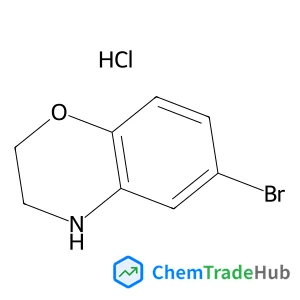
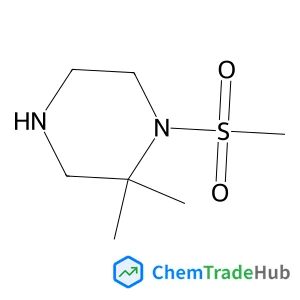
6-Bromo-3,4-dihydro-2H-1,4-benzoxazine hydrochloride (1:1)
CAS Number:
1260803-10-8
Molecular Formula:
C8H9BrClNO
Recommended Suppliers






Disclaimer
This page provides academic journal information for reference and research purposes only. We are not affiliated with any journal publishers and do not handle publication submissions. For publication-related inquiries, please contact the respective journal publishers directly.
If you notice any inaccuracies in the information displayed, please contact us at support@chemtradehub.com. We will promptly review and address your concerns.